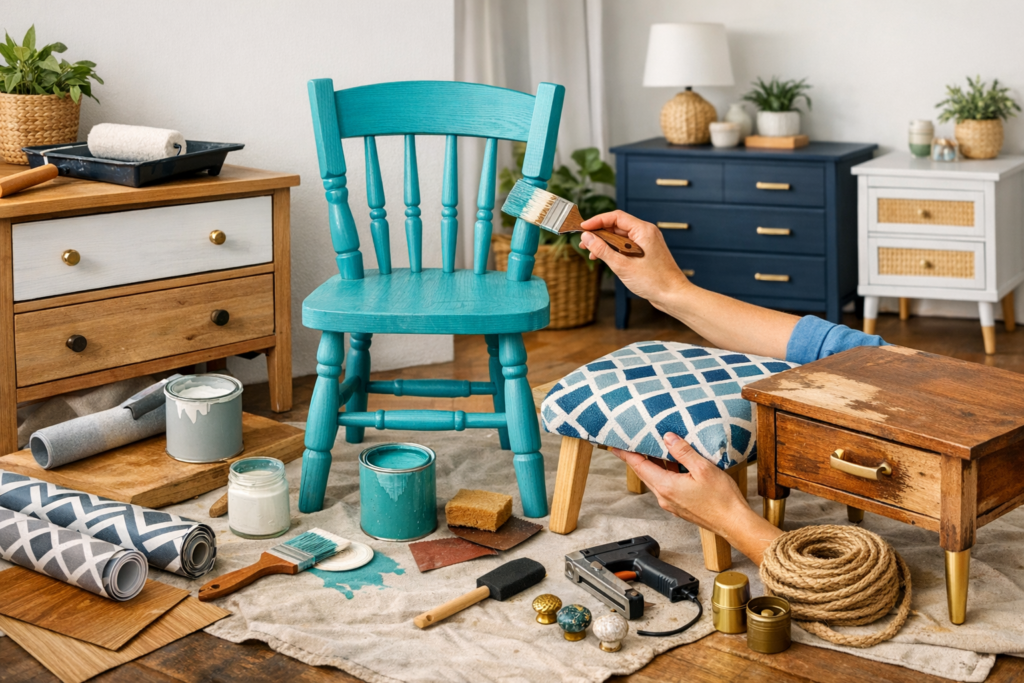
Budget-Friendly Furniture Makeover Ideas
January 13, 2026Giving your space a fresh look doesn’t have to mean buying all-new furniture. With a little planning (and a few smart upgrades), you can make tired pieces look intentional, modern, and “you”—without spending like you’re furnishing a showroom. Below are budget-friendly furniture makeover ideas that work for homeowners and renters alike, with practical comparisons so you can choose the approach that fits your time, skill level, and living situation.
1) Start With a Game Plan: What to Upgrade (and What to Leave Alone)
The most cost-effective makeovers begin with a quick audit. Not every piece deserves a full transformation, and some changes deliver a bigger impact than others.
Focus on “high-visibility, high-use” pieces first
These tend to make the room feel updated fast:
- Coffee tables and side tables (center of the living room, easy to refresh)
- Dressers (large surface area, huge style payoff with paint and hardware)
- Dining chairs (reupholstery or slipcovers instantly change the vibe)
- TV stands/media consoles (often dated, but simple to modernize)
Decide: “Repair, refresh, or replace?”
Use these quick guidelines:
- Repair if the structure is solid but wobbly: tighten joints, replace missing screws, add corner braces.
- Refresh if the shape is good but the finish is tired: paint, stain, peel-and-stick, or new hardware.
- Replace if it’s unsafe or severely warped: a bargain isn’t a bargain if it won’t last.
Budget comparison: quick refresh vs. full makeover
To help you plan, here’s a realistic range:
- Quick refresh (new knobs, touch-up markers, styling): typically lower cost and often done in an hour or two.
- Full makeover (sand, prime, paint, seal, new hardware): higher cost, but can make a piece look custom and new.
If you want to keep spending controlled, start with one weekend project. Many shoppers browsing LifeDeals find that pairing a small makeover with a couple of well-chosen accessories (like lighting or storage) makes the entire room feel upgraded.
2) Paint, Stain, or Wrap? Choosing the Best Finish for Your Piece
Finishes are where most transformations happen. The trick is choosing the method that matches your furniture material, your patience level, and whether you’re renting.
Option A: Painting for the biggest style shift
Best for: laminate, MDF, and previously painted wood (when properly prepped).
Why it works: Paint hides dated tones and creates a clean, modern look. It’s also great for mixing old and new pieces since one color can unify a room.
Smart paint approach:
- Clean thoroughly (grease and dust ruin adhesion).
- Lightly scuff sand or use a deglosser.
- Use a bonding primer for slick surfaces.
- Apply thin coats and allow proper dry time.
- Seal high-use surfaces (like tabletops) with a durable topcoat.
Paint finish comparison:
- Matte: modern and hides imperfections, but can mark more easily.
- Satin: balanced look, easier to wipe clean.
- Semi-gloss: most durable, shows flaws more, best for trim-like pieces.
Option B: Staining for a “real wood” upgrade
Best for: solid wood or wood veneer in decent condition.
Why it works: Stain keeps the grain visible and can make older pieces feel higher-end—especially when paired with modern hardware.
When staining is not worth it: If your piece is laminate or heavily damaged veneer, stain will look uneven and highlight flaws. In that case, paint or wrap is the better budget-friendly path.
Option C: Peel-and-stick wraps for renters and quick results
Best for: smooth surfaces like tabletops, shelf panels, cabinet fronts, and drawer faces.
Why it works: It’s fast, low-mess, and often removable. You can mimic marble, oak, walnut, concrete, or high-gloss finishes without the price tag.
Wrap vs. paint comparison:
- Speed: wraps usually win (often same-day).
- Durability: paint with a proper topcoat tends to last longer on high-use surfaces.
- Reversibility: wraps are typically easier to undo, helpful for renters.
- Learning curve: wraps require careful smoothing and trimming, but no drying time.
If you’re browsing for tools, contact paper, liners, or storage that complements your new finish, it’s worth checking what’s available online at LifeDeals so you can bundle the essentials without multiple store runs.
3) Hardware, Legs, and Trim: Small Changes That Make Furniture Look New
If you want the fastest makeover with the most “before and after” impact, focus on the details. These upgrades often cost less than a full refinishing project, and they can make inexpensive pieces look custom.
Swap hardware to instantly modernize dressers and cabinets
Changing knobs and pulls is one of the simplest updates—and it can shift the style dramatically:
- Modern: slim bar pulls in matte black or brushed nickel
- Warm minimal: soft brass or champagne tones
- Classic: cup pulls or rounded knobs
Pro tip: Measure the “center-to-center” hole spacing on pulls before you order. If you keep the same spacing, installation is easy and you avoid patching holes.
Add new legs for a lighter, more elevated look
Short, boxy furniture can feel dated. Raising a piece with new legs creates an airy look and makes cleaning underneath easier.
Best candidates:
- TV stands and low consoles
- Nightstands
- Upholstered chairs and small ottomans
Leg style comparison:
- Tapered wood legs: mid-century vibe, warm and classic
- Metal hairpin legs: modern, slim, great for small spaces
- Block legs: sturdy, best for heavier pieces
Use trim and molding to “fake” higher-end furniture
Flat drawer fronts can look basic. Adding thin trim frames or simple molding creates dimension, similar to custom cabinetry.
Where it works best: dressers, sideboards, and cabinet doors.
Finish tip: Paint the piece and trim the same color for a seamless, premium look. This is especially effective in deep shades like forest green, navy, or charcoal.
4) Upholstery and Soft Makeovers: Comfort Upgrades Without Replacing Furniture
Upholstered pieces can be expensive to replace. The good news: you can refresh them in layers, from simplest to more advanced.
Slipcovers: the renter-friendly reset
Best for: sofas, armchairs, dining chairs.
Why it works: A slipcover can hide worn fabric, unify mismatched seating, and make seasonal style changes easy.
Slipcover comparison:
- Stretch slipcovers: affordable, quick fit, best for casual looks.
- Structured slipcovers: cleaner lines, more tailored appearance, typically a bit more investment.
Reupholster just the part that matters
If a full reupholstery job feels like too much, start small:
- Dining seat pads: staple on new fabric for an instant update.
- Headboards: wrap foam and fabric around plywood for a high-impact bedroom upgrade.
- Ottomans: ideal starter project and often looks custom when finished.
Fabric choice tip: For daily use, look for tighter weaves and textures that hide wear. In homes with kids or pets, darker mid-tones and patterned fabrics can be more forgiving than flat, light colors.
Cushion inserts: the “why does my sofa feel new?” trick
If your couch looks okay but feels tired, the problem may be sagging inserts. Replacing cushion inserts is often cheaper than replacing the entire sofa, and the comfort difference is immediate.
Foam vs. fiber comparison:
- Foam: supportive, holds shape longer, great for seat cushions.
- Fiber fill: softer, more “sink-in,” may need fluffing more often.
Pairing refreshed upholstery with a few intentional add-ons—like a throw, lumbar pillow, or compact side table—can make the whole corner feel designed. If you’re curating those finishing touches, explore the home finds on LifeDeals to see what fits your new color palette.
5) Smart Styling That Makes Any Makeover Look More Expensive
Even a simple paint job can look high-end with the right styling. Think of styling as the final 10% that delivers 50% of the “wow.”
Use the “rule of three” on surfaces
For coffee tables, consoles, and dressers, group items in threes with varied height:
- Tall: a vase, lamp, or candlestick
- Medium: a framed photo or stacked books
- Low: a tray, bowl, or sculptural object
Add a tray to make clutter look intentional
Trays corral remotes, candles, and small items so your space feels calm—even if life is busy. Choose a tray finish that complements your makeover:
- Wood: warms up painted furniture
- Metal: adds contrast and polish
- Woven: casual, great for coastal or boho spaces
Lighting is the fastest “upgrade multiplier”
A refreshed end table looks twice as good with a modern lamp. If your makeover budget is tight, prioritize:
- Warm bulbs (soft white tones feel inviting)
- Matching color temperature in the same room
- One statement light to anchor the space
Coordinate metals so the room feels cohesive
If you’re adding hardware, lamp bases, curtain rods, or mirror frames, keep metals consistent:
- Matte black: bold, modern, hides fingerprints
- Brushed nickel: flexible, works with most palettes
- Brass tones: warm, elevated, looks great with deep colors
When you’re ready to tie everything together, browsing home accessories online can help you compare finishes and sizes quickly. LifeDeals is a convenient place to start if you want practical options that still look intentional.
FAQ: Budget-Friendly Furniture Makeover Ideas
1) What’s the cheapest furniture makeover that still looks high-end?
Swapping hardware and adding styling (a tray, a lamp, and one decorative object) is usually the lowest-cost upgrade with a surprisingly premium result. If you add new legs to a low piece, it can look like a completely different product.
2) Can I paint laminate furniture without it peeling?
Yes, but prep matters. Clean it well, lightly scuff sand (or use deglosser), apply a bonding primer, then use thin paint coats. Finish with a durable topcoat for tabletops and high-touch areas.
3) What’s better for renters: peel-and-stick wrap or paint?
Peel-and-stick wrap is often better for renters because it’s low-mess and typically removable. Paint can still work if your lease allows it, but it’s harder to reverse and requires more ventilation and dry time.
4) How do I make mismatched furniture look cohesive?
Unify pieces with a consistent element: matching hardware finish, a shared paint color, or a repeated wood tone. Then use accessories (pillows, art, rugs) to echo that palette across the room.
Conclusion: Small Upgrades, Big Impact
A budget-friendly furniture makeover is less about perfection and more about smart choices: pick the right finish, focus on the details (hardware, legs, trim), and use styling to make the result feel complete. Whether you tackle one side table or refresh an entire room over a few weekends, these ideas help you get a “new space” feeling without the “new furniture” price. When you’re ready to round out your makeover with tools, organizers, lighting, or finishing touches, explore what’s available online through LifeDeals and build your upgrade one piece at a time.