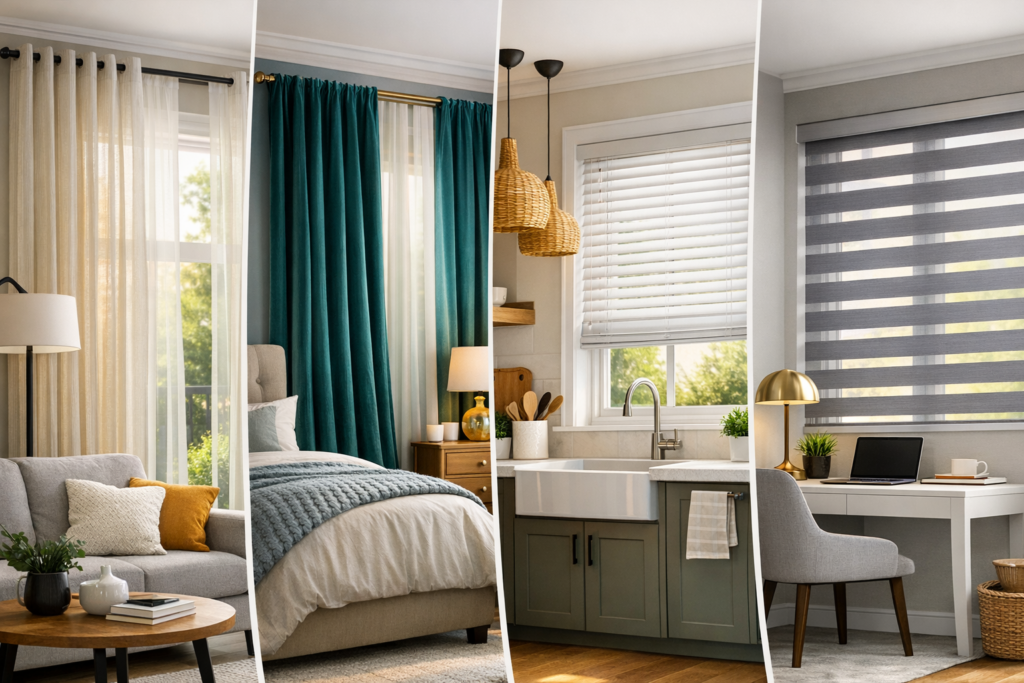
How to Choose Curtains and Blinds for Every Room
January 7, 2026Choosing curtains and blinds isn’t just a finishing touch—it’s one of the most practical upgrades you can make in a home. The right window covering can improve sleep, protect furniture from sun fading, boost privacy, and even make a room feel larger or more inviting. If you’re a homeowner or renter, you also want something that fits your budget, works with your lifestyle, and looks great without requiring constant maintenance.
This guide breaks down how to choose curtains and blinds for every room, with clear comparisons and room-by-room recommendations. You’ll also learn how to measure correctly and what details matter most when shopping online. If you’re browsing options, LifeDeals makes it easy to compare styles, materials, and light-control features in one place.
Start With the Basics: What Do You Need Your Window Coverings to Do?
Before you fall in love with a fabric or color, get clear on function. Most people need a mix of these goals depending on the room:
- Light control: soft filtering, room darkening, or blackout
- Privacy: daytime privacy, nighttime privacy, or both
- Insulation: keeping heat in during winter and sun out in summer
- Easy upkeep: dust resistance, washability, and durability
- Style: matching your décor, adding texture, or making ceilings look higher
Once you choose priorities, the best product type becomes much clearer.
Curtains vs. Blinds vs. Shades: A Quick Comparison
People often use “blinds” and “shades” interchangeably, but they behave differently. Here’s how to decide:
Curtains (and drapes) are fabric panels that hang from a rod. Drapes are usually heavier and lined for insulation and light-blocking. Curtains tend to feel softer and more decorative.
Blinds have slats (like wood, faux wood, or aluminum). They’re great for adjustable light control and are a strong choice for kitchens, bathrooms, and modern spaces.
Shades are made from a single continuous piece of fabric (like roller shades, cellular shades, or Roman shades). They offer a clean look and can be very effective for insulation and blackout needs.
Layering: The “Best of Both” Solution
If you want flexibility, layering is hard to beat. Common pairings include:
- Sheer curtains + blackout roller shades: soft daytime light, total darkness at night
- Wood/faux wood blinds + decorative curtains: adjustable light control with a finished designer look
- Cellular shades + curtains: energy efficiency plus texture and color
Layering can also help renters: you can install an inside-mount shade and add curtains with a tension rod or a simple rod bracket (check your lease terms for drilling).
Room-by-Room Guide: What Works Best and Why
Each room has different needs—humidity, sunlight, privacy, and how you use the space. Use these suggestions as a starting point and adjust based on your windows and lifestyle.
Bedroom: Prioritize Sleep, Privacy, and Calm
For most bedrooms, light control is the main event. If streetlights or early sun wakes you up, choose:
- Blackout curtains or drapes: best for maximum darkness and a cozy look
- Blackout roller shades: sleek and effective, especially for smaller rooms
- Layered setup: sheer curtains for daytime + blackout shade for night
Practical tip: If you’re using curtains for blackout, pick a wraparound rod or mount the rod wider than the window so fabric covers the edges. Light leaks often come from the sides and top, not the center.
Style tip: Bedrooms look more restful with solid colors, subtle textures, or tone-on-tone patterns. If your bedding is busy, keep window treatments simple.
Living Room: Balance Style, Glare Control, and Versatility
Living rooms often have the biggest windows, which means more natural light—and more glare and heat. The ideal solution depends on how you use the space.
- Sheer curtains: perfect for bright rooms where you want soft light and some daytime privacy
- Light-filtering shades: clean lines that reduce glare without darkening the room
- Wood or faux wood blinds: excellent adjustability for sun direction and TV glare
- Room-darkening curtains: good if you watch movies during the day or have strong afternoon sun
Design detail: Hanging curtains high (closer to the ceiling) and wider than the window makes the room feel taller and the window larger. This works especially well in rentals where you want a quick “upgrade” without remodeling.
If you’re exploring options online, LifeDeals is a convenient place to compare light-filtering vs. room-darkening fabrics and see which styles fit your living room vibe.
Kitchen: Choose Materials That Handle Heat, Grease, and Cleaning
Kitchens are all about practicality. Fabrics can absorb odors and grease, so keep things easy to wipe or wash.
- Faux wood blinds: moisture-resistant and easy to clean
- Aluminum blinds: budget-friendly and durable (choose a finish that resists fingerprints)
- Roller shades: simple, minimal, and easy to wipe
- Café curtains: great for privacy while still letting in light (best away from the stove)
Avoid: long, flowing drapes near cooking areas—they can collect stains and may be a safety concern.
Bathroom: Moisture Resistance and Privacy Come First
Bathrooms need privacy day and night, plus materials that won’t warp or mildew.
- Faux wood blinds: strong choice for humidity
- Vinyl roller shades: low maintenance and easy to wipe
- Top-down/bottom-up shades: excellent for privacy while still getting daylight
Privacy tip: If your bathroom window faces a neighbor or street, skip sheer-only solutions. Instead, use a textured light-filtering shade or frosted window film plus a simple blind.
Home Office: Reduce Screen Glare Without Feeling Like a Cave
Office window coverings should help you work comfortably. Too much sun causes glare; too little light feels draining.
- Solar shades: reduce glare and heat while preserving the view
- Light-filtering roller shades: clean look, good glare control
- Adjustable blinds: fine-tune light direction throughout the day
Workday tip: If you take video calls, avoid strong backlighting. A light-filtering shade can soften the window behind you so your face is better lit.
Nursery and Kids’ Room: Safety and Sleep-Friendly Light Control
Kids’ rooms benefit from darkness during naps and early mornings, plus durable materials that can handle wear and tear.
- Blackout shades or curtains: help regulate sleep routines
- Easy-clean fabrics: look for washable curtains or wipeable shades
- Cordless options: safer and cleaner-looking
Safety note: Cordless blinds and shades are typically recommended for homes with young children and pets.
Materials, Linings, and Features That Actually Matter
Two curtains can look similar online but perform very differently. These are the details that separate “looks fine” from “works perfectly.”
Light Control: Sheer vs. Light-Filtering vs. Room-Darkening vs. Blackout
- Sheer: soft glow, minimal privacy at night
- Light-filtering: bright but diffused, decent daytime privacy
- Room-darkening: noticeably reduces light, good for multipurpose rooms
- Blackout: blocks most light, best for bedrooms and nurseries
Shopping tip: If you’re sensitive to light, look for “blackout lining” rather than just “dark color.” Dark fabric alone doesn’t guarantee blackout performance.
Insulation and Energy Savings
If your home gets hot in summer or drafty in winter, window treatments can help.
- Thermal curtains/drapes: heavier fabric and lining reduce drafts
- Cellular (honeycomb) shades: excellent insulation due to air pockets
- Layering: shade + curtain can significantly improve comfort
For sunny rooms, lighter colors can reflect heat better than dark tones, even within the same product category.
Durability and Maintenance
Choose based on how much time you want to spend cleaning:
- Easy wipe: faux wood blinds, vinyl roller shades, aluminum blinds
- Low dust look: smooth roller shades (less texture to trap dust)
- Washable options: some curtains are machine washable; check care labels
Real-life rule: The busier the household (kids, pets, cooking), the more you’ll appreciate wipeable materials and medium tones that hide small marks.
Hardware and Fit: The Details That Make It Look Custom
Even affordable curtains can look high-end when installed well.
- Rod placement: mount higher to add height; mount wider to make windows look larger
- Header style: grommet tops feel modern, pinch pleats feel classic, rod pockets feel casual
- Fullness: use more panel width for a richer look (especially in living rooms)
If you’re refreshing multiple rooms, LifeDeals is a helpful spot to coordinate rods, finials, and matching sets so your home feels cohesive without overthinking it.
How to Measure for Curtains and Blinds (So You Don’t Have to Rebuy)
Measuring is where most mistakes happen. Grab a steel measuring tape and decide whether you want an inside mount or outside mount (mainly for blinds and shades).
Measuring for Blinds and Shades
Inside mount: the shade/blind fits inside the window frame for a clean, built-in look.
- Measure width at the top, middle, and bottom of the window opening; use the smallest measurement.
- Measure height at left, center, and right; use the largest measurement.
- Check depth: some window frames aren’t deep enough for certain products.
Outside mount: the product mounts above or outside the frame, covering the trim and reducing light gaps.
- Measure the width you want to cover (often window width plus extra on both sides).
- Measure height from where you’ll mount to where you want it to end.
Measuring for Curtains
- Width: measure the rod width, not just the window. For a fuller look, total curtain panel width should be about 1.5 to 2 times the rod width (more fullness for sheers, slightly less for heavy drapes).
- Length: decide where you want the fabric to fall: to the sill, below the sill, to the floor, or slightly pooling.
- Rod height: mounting closer to the ceiling usually looks more polished and makes ceilings feel taller.
Quick style cheat: Floor-length curtains tend to look most “finished” in living rooms and bedrooms, even on smaller windows.
Choosing Colors and Patterns Without Regret
Window coverings take up a lot of visual space, so color decisions matter. A simple approach:
- Match the walls: creates a calm, spacious look
- Match the trim: crisp and classic, especially with blinds
- Match a dominant furniture tone: ties the room together
- Add contrast: makes windows a feature (best when the rest of the room is simple)
If you’re unsure, choose a neutral base (white, ivory, beige, gray, or warm taupe) and add personality with texture: linen-look weaves, subtle stripes, or a lightly patterned Roman shade. Browsing LifeDeals online can help you compare textures and tones across different materials so you get the look you want without clashing finishes.
FAQ
1) Are curtains or blinds better for privacy?
It depends on the type. Blinds offer adjustable privacy throughout the day because you can tilt slats. Curtains provide strong privacy when closed, but sheers usually don’t offer nighttime privacy. For the best of both, combine a privacy-focused shade or blind with curtains for style.
2) What’s the difference between room-darkening and blackout?
Room-darkening significantly reduces light but may still allow glow around edges or through fabric. Blackout is designed to block most incoming light, especially when paired with proper mounting and a good lining. Bedrooms, nurseries, and media rooms often benefit most from blackout.
3) Should I choose inside-mount or outside-mount shades?
Inside-mount looks cleaner and more built-in, but can allow more light gaps at the sides. Outside-mount covers more area, improves privacy and light blocking, and can make small windows appear larger. If you’re prioritizing blackout, outside-mount often performs better.
4) What are the easiest window treatments to clean?
Roller shades, faux wood blinds, and aluminum blinds are typically easiest because they can be wiped down quickly. Curtains can be simple too if they’re machine washable, but they usually require more effort than wipeable options.
Conclusion: Pick Function First, Then Make It Beautiful
The best curtains and blinds are the ones that match how you live: blackout for better sleep, moisture-resistant materials for bathrooms, glare control for offices, and easy-clean options for kitchens. Once function is covered, you can fine-tune the style with color, texture, and hardware that makes your space feel intentional.
If you’re ready to upgrade your windows, take a look at LifeDeals to compare curtains, blinds, and shades by room, light control, and material. Shopping online is especially helpful when you want to coordinate multiple rooms and find the right balance of comfort, privacy, and style.