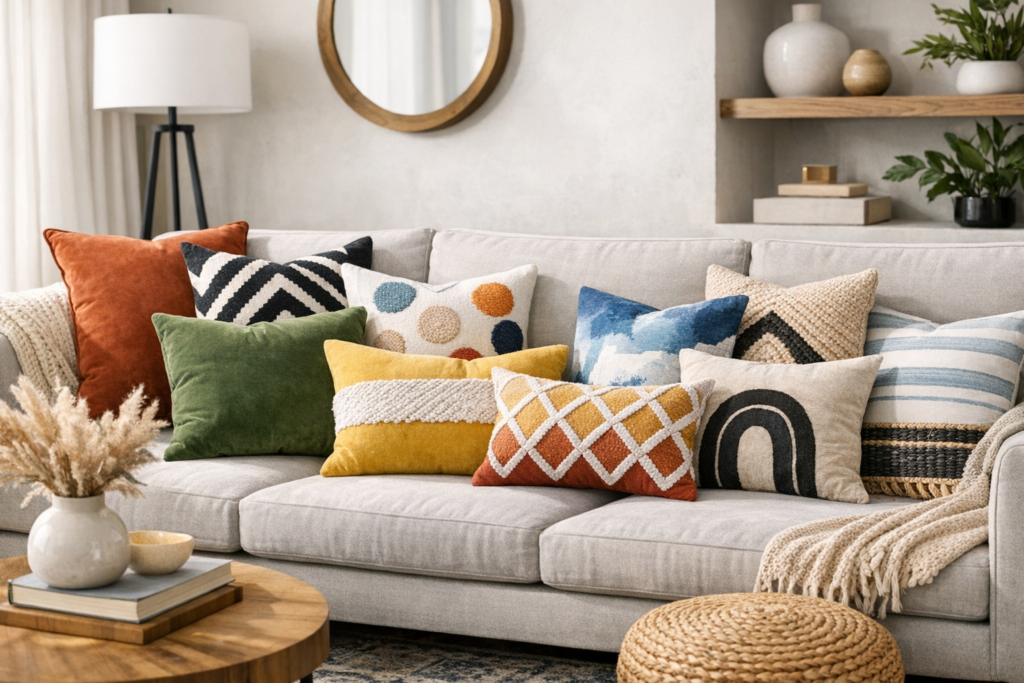
Decorative Throw Pillow Ideas for Any Sofa
January 5, 2026A throw pillow can do more for a sofa than almost any other accessory: it adds comfort, sets the color story, and makes a room feel finished. The best part is that you don’t need a full redesign to get a pulled-together look—you just need a smart mix of sizes, textures, and patterns. Below are decorative throw pillow ideas that work for any sofa style, from modern sectionals to classic loveseats, with practical tips you can use right away.
Start With Your Sofa: Size, Shape, and “Pillow Capacity”
Before choosing colors or patterns, consider what your sofa can realistically hold without looking crowded. The goal is a comfortable, styled look—not a barricade.
Choose a pillow count that fits your seating habits
Use these as flexible guidelines:
- Loveseat (55–70″): 2–4 pillows. Great for a simple, balanced look.
- Standard sofa (70–90″): 4–6 pillows. The easiest size to style with symmetry or a slight mix.
- Deep sofa or oversized sofa: 5–7 pillows. Deep seats can handle larger pillows without feeling cluttered.
- Sectional: 5–9 pillows, depending on length and corner depth. Use the corner to anchor bigger sizes.
Use the “size ladder” so pillows look intentional
Mixing sizes creates depth. A reliable formula for most sofas:
- Back layer: 22″ x 22″ or 24″ x 24″ squares for structure
- Middle layer: 20″ x 20″ squares or a pair of 18″ x 18″ if the sofa is smaller
- Front accent: 12″ x 20″ lumbar or a 16″ round pillow for contrast
If your sofa is sleek and low-profile, slightly smaller pillows (18″–20″) tend to look more tailored. For a plush, overstuffed sofa, 22″–24″ pillows feel proportional.
Insert quality matters more than most people think
Two pillow covers can look completely different depending on the insert. For a full, “designer” shape, choose an insert that’s about 2 inches larger than the cover (for example, a 20″ insert inside an 18″ cover). Down or down-alternative inserts usually give the best relaxed “karate chop” look, while firmer poly inserts hold a crisp square shape. If you’re shopping online at LifeDeals, check product details for cover sizes and recommended insert pairings to avoid flat pillows.
Color and Pattern Plans That Work in Real Homes
Great pillow styling doesn’t require complicated color theory. You just need a plan that ties to what you already have: rug, art, curtains, or even a favorite throw blanket.
The 3-color rule (with one “neutral bridge”)
A practical approach is to pick:
- One base neutral pulled from the sofa or walls (cream, tan, gray, ivory, camel)
- One main color that shows up in your room (navy, olive, terracotta, muted blue)
- One accent color used sparingly (mustard, blush, rust, black, deep teal)
Then add a “neutral bridge” texture like linen, boucle, or a subtle stripe to keep the mix cohesive. This is especially helpful for renters who want impact without repainting walls.
Pattern mixing: compare these two foolproof formulas
Formula A: One bold pattern + one simple pattern + one solid texture
This is the easiest way to avoid clashing. Example: a large-scale floral or geometric, plus a thin stripe, plus a solid velvet or linen.
Formula B: Same pattern family, different scales
Pick a theme (stripes, checks, botanicals) and vary the size. Example: wide stripe + pinstripe + solid in the same palette. This looks polished and works well in minimalist spaces.
How to style pillows on different sofa colors
Gray sofa: Gray is a chameleon but can look cold if everything is icy. Warm it up with camel, cream, rust, or olive. Add one darker anchor like charcoal or black piping for definition.
Beige or tan sofa: Lean into warmth with terracotta, chocolate, soft black, deep green, or denim blue. Beige also looks great with textured neutrals (boucle, knit, faux fur) for depth.
White or cream sofa: Add contrast and practicality with medium-to-dark tones and performance fabrics. A mix of navy, espresso, and muted patterns hides daily wear better than pure pastels.
Blue sofa: Keep it sophisticated with cream, cognac, mustard, and warm wood tones. If the blue is bright, choose patterns with a little white or tan to soften it.
Green sofa: Pair with natural neutrals, brass accents, and warm shades like blush or rust. A small black-and-white pattern can sharpen the look without fighting the green.
Texture: The Shortcut to a High-End, Cozy Look
Texture is what makes pillows look expensive—even when your palette is simple. If your sofa is a solid color, texture is often the difference between “nice” and “styled.”
Compare popular pillow materials (and where each shines)
Linen and cotton: Breathable, casual, and timeless. Linen looks best slightly relaxed, making it ideal for coastal, farmhouse, and modern organic rooms.
Velvet: Rich and light-catching. Great for fall and winter, and for adding depth to neutral sofas. Velvet also disguises minor wrinkles better than crisp fabrics.
Boucle: Soft, nubby texture that looks modern and elevated. Works well in monochrome spaces where texture does the heavy lifting.
Knits: Cozy and inviting, perfect for family rooms. Use knits as one or two accent pieces so the look stays tailored.
Faux fur: The fastest way to make a space feel warm. Best in small doses and in neutral tones to avoid overpowering the sofa.
Embroidered or woven patterns: Adds detail and durability. These often look more premium than printed designs because the pattern has dimension.
Use contrast deliberately: smooth + nubby + soft
A simple three-texture mix is easy to replicate:
- Smooth: cotton sateen, tight-weave linen, or a clean solid cover
- Nubby: boucle, woven slub, or a textured stripe
- Soft: velvet, knit, or faux fur
This combination works in nearly any style, including modern, transitional, and boho.
Ready-to-Copy Pillow Layouts for Any Sofa
If you’d rather follow a template than experiment, these layouts are designed to be quick wins. Adjust colors and fabrics to fit your room.
The classic “2 + 2 + 1” for a standard sofa
Best for: most 3-seat sofas, especially in living rooms that need structure.
- Two 22″ solids or subtle textures in the back corners
- Two 20″ patterned pillows layered in front
- One lumbar pillow centered (12″ x 20″) in a coordinating accent color
Why it works: symmetry feels clean, and the single lumbar keeps it from looking too matched.
The modern minimalist “2 + 1”
Best for: sleek sofas, small apartments, and people who don’t like fuss.
- Two 20″ pillows (same fabric) on each end
- One lumbar in the middle with a subtle pattern or texture
Pro tip: Choose covers with elevated details—piping, a woven stripe, or a tiny geometric—to keep it simple but not boring.
The cozy corner sectional layout
Best for: L-shaped sectionals and family rooms.
- One 24″ pillow in the corner as an anchor
- Two 22″ pillows on the long side
- Two 20″ pillows on the short side
- One lumbar near the corner or on the chaise for comfort
Why it works: the corner pillow solves the “empty triangle” and makes the sectional look inviting.
The eclectic “pattern-forward” set
Best for: boho, vintage, and maximalist spaces.
- One large-scale pattern (floral, geometric, or abstract)
- One stripe or check in a similar palette
- One solid velvet to ground the look
- One textured neutral (boucle or woven)
- Optional: one small round pillow for shape variety
Keep at least one color consistent across all pillows (even if it’s just a thin line in the pattern). That’s what makes eclectic look curated.
Practical Details: Durability, Cleaning, and Budget-Friendly Upgrades
Pillows should look good, but they also need to survive real life—pets, kids, snacks, and all.
What to look for if you have kids or pets
- Removable covers with zippers so you can wash or spot-clean easily
- Mid-tone colors and small patterns that hide lint and minor stains better than solids
- Tight weaves (woven cotton, canvas-style fabrics) that snag less than loose knits
- Spare covers you can rotate in—an easy online add-on when you shop at LifeDeals
Budget strategy: invest in inserts, rotate covers seasonally
If you want a high-end look without buying new pillows every time, put your budget into quality inserts, then swap covers for seasonal refreshes. For example:
- Spring/Summer: linen, light stripes, coastal blues, airy neutrals
- Fall: velvet, warm plaids, olive and rust accents
- Winter: boucle, faux fur, deeper tones and metallic threads
This approach also saves storage space—covers fold down small, while full pillows don’t.
Small upgrades that make pillows look more expensive
- Use larger inserts for a fuller shape (the “2-inch rule”)
- Add one pillow with trim like piping, fringe, or a subtle tassel edge
- Stick to a consistent finish (matte linens plus matte knits; shiny velvets plus sleek wovens)
- Repeat one color twice across the set to make it feel intentional
FAQ
How many throw pillows should be on a sofa?
Most standard sofas look best with 4–6 pillows. If you prefer a cleaner look, 3 can work (two ends and one lumbar). For sectionals, 5–9 is typical depending on size and depth.
What size throw pillows look best on a standard couch?
Start with 22″ x 22″ for the back layer, then add 20″ x 20″ in front, and finish with a 12″ x 20″ lumbar. If the sofa is smaller or very streamlined, use 18″–20″ squares so the pillows don’t overwhelm the frame.
How do I mix patterns without making it look messy?
Use one bold pattern, one simple pattern (like a stripe), and one solid textured pillow. Keep at least one color consistent across all pillows, and vary the scale so patterns don’t compete.
Are throw pillow covers or full pillows better to buy online?
Covers are usually the best value online because they’re easy to store, ship, and swap. If you already have good inserts, buying covers lets you refresh the look quickly. If your current pillows are flat, upgrade the inserts first, then choose covers that match your style.
Conclusion: Make Your Sofa Feel Styled, Not Staged
The best decorative throw pillow ideas come down to a few reliable choices: pick the right sizes for your sofa, use a simple color plan, mix textures for depth, and keep patterns balanced. Once you find a formula you love, refreshing your space becomes easy—swap a cover, add a lumbar, or rotate in a seasonal fabric.
If you’re ready to update your sofa without replacing furniture, explore pillow covers, inserts, and cozy textures online at LifeDeals. A small change—done thoughtfully—can make the whole room feel brand new.
For more home refresh finds and style-friendly essentials, keep an eye on LifeDeals and check back when you’re ready for your next seasonal switch-up.