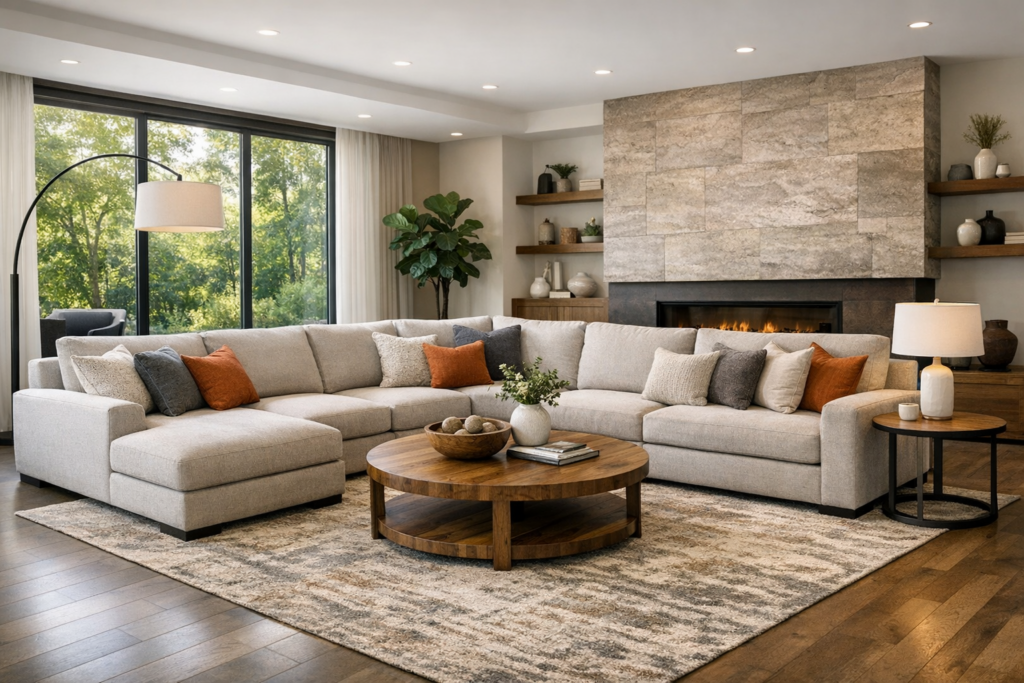
Best Sectional Sofas for Large Living Rooms
December 28, 2025A large living room is a gift: more space to gather, more options for layout, and more room to choose a sectional that actually fits your lifestyle (not just your wall measurements). The downside? Bigger rooms can make the wrong sofa look oddly small, feel uncomfortable in conversation zones, or wear out faster if it’s not built well.
This guide breaks down the best sectional sofa styles for large living rooms, what to look for in materials and construction, and how to compare popular configurations. Along the way, you’ll find practical sizing tips and shopping pointers so you can confidently browse options online at LifeDeals and narrow in on the right fit.
How to Choose a Sectional That Looks “Right” in a Large Living Room
Large spaces need proportion, defined zones, and seating that supports how you actually live. Before you fall for a pretty silhouette, make sure the sectional will anchor the room and hold up to everyday use.
1) Measure like a designer (not just wall-to-wall)
In big rooms, the goal isn’t “biggest couch possible.” It’s a balanced layout with comfortable walking paths and furniture that feels connected.
Use these quick rules of thumb:
- Leave about 30–36 inches for main walkways (entry to hallway, behind seating, to the kitchen).
- Keep the coffee table about 14–18 inches from the sofa edge for easy reach.
- Plan 18–24 inches between the coffee table and TV console if that’s a traffic zone.
- When possible, keep at least one side of the sectional “open” to avoid turning the room into a maze.
Pro tip: Tape the shape on the floor using painter’s tape. Include the chaise/return depth and the full back-to-front depth. Many shoppers only tape the length, then realize the chaise blocks a doorway or the corner seat overwhelms the room.
2) Pick the right configuration for how you gather
Large living rooms often serve multiple purposes: family movie nights, entertaining, kids’ play space, or work-from-home overflow. The sectional layout should support that.
- L-shaped sectional: Great for defining a seating zone without enclosing the room. Works well if you want open flow on one side.
- U-shaped sectional: Best for frequent hosting or large households. It creates an instant “conversation pit” feel and seats more people comfortably.
- Chaise sectional: Ideal for lounging without the bulk of a full return. Works well if you want one long stretch-out seat.
- Modular sectional: The most flexible. You can reconfigure for parties, rearrange after a move, or split pieces for multiple zones.
3) Decide what matters more: deep lounging or upright support
“Comfortable” means different things depending on seat depth, back height, and cushion firmness.
- Deep seats (22–26 inches): Best for curling up, movie nights, and taller loungers. Pair with extra throw pillows if you prefer more back support.
- Standard seats (20–22 inches): Better for chatting and everyday posture-friendly sitting.
- Higher backs and supportive arms: More comfortable for long conversations and older guests.
- Low-profile modern frames: Stylish, but can feel less supportive for some people.
4) Prioritize construction in a high-traffic household
In a big room, a sectional often becomes the home’s central hub. Durability matters.
- Frame: Look for kiln-dried hardwood or quality engineered wood. Avoid flimsy frames that creak early.
- Cushions: High-resilience foam wrapped in fiber is a solid balance of support and softness. If you love plush, look for higher-density foam so it doesn’t pancake.
- Suspension: Sinuous springs are common and reliable; eight-way hand-tied is premium and supportive (often pricier).
- Fabric performance: In busy homes, performance fabric, tightly woven polyester blends, and durable chenille tend to wear well. If you have pets, consider texture and snag resistance.
Best Sectional Sofa Styles for Large Living Rooms (With Pros, Cons, and Who They’re For)
Rather than listing random models, this section compares the sectional types that consistently work in larger spaces. Use this to match a style to your room size, lifestyle, and priorities.
1) U-Shaped Sectionals: The entertaining MVP
Why it works: A U-shape fills visual space, anchors a large area, and creates a naturally social setup. Everyone faces inward, which makes conversations easier.
Best for: Hosting, big families, open-concept homes, movie nights with lots of seats.
Watch-outs: U-shapes can dominate a room if the depth is too large or if you don’t leave enough walkway clearance. They can also feel heavy in a narrow space even if the room is long.
How to style it: Use an oversized rug (often 9×12 or larger) so at least the front legs of the sectional sit on it. Add a large coffee table or an upholstered ottoman that can serve as extra seating.
2) Large L-Shaped Sectionals: Big impact without closing off the room
Why it works: An L-shape gives you generous seating while keeping one side more open. It’s often easier to place than a U-shape, especially in rooms with multiple pathways.
Best for: Open floor plans, rooms with a fireplace or TV focal point, families that want both lounging and conversation.
Watch-outs: The corner seat can be the “dead spot” if the back cushions are too upright or the corner is too tight. Consider designs with a more usable corner module or a wedge.
How to style it: If your living room is extra wide, float the sectional away from the wall to create a walkway behind it. This makes the room feel intentional rather than “everything pushed to the edges.”
3) Modular Sectionals: The flexible, future-proof option
Why it works: Modular sectionals adapt to changing needs. You can expand over time, reconfigure for guests, or adjust after moving to a new place.
Best for: Renters, frequent movers, growing families, anyone who likes to refresh layouts.
Watch-outs: Not all modulars feel equally sturdy. Check connector quality and cushion consistency. Also consider whether the modules stay aligned on rugs or slippery floors.
How to shop smarter online: Look for clear module dimensions (width, depth, seat height) and confirm whether the ottoman is a free piece or attaches. When browsing at LifeDeals, filter by modular configurations and verify how many pieces are included in the price.
4) Sectionals with a Chaise: Lounge comfort with a cleaner footprint
Why it works: A chaise gives that stretch-out seat everyone fights over, but it often feels lighter than a full return. In a big living room, it can be part of a larger seating plan (for example, sectional plus two accent chairs).
Best for: Couples, smaller families, or large rooms where you also want to add a reading nook or game table.
Watch-outs: Make sure the chaise doesn’t cut off your primary walking path. Also confirm whether it’s reversible (left/right-facing) if you may rearrange later.
Style note: If your room is very large, consider a longer chaise or pair the sectional with a substantial ottoman so the seating area doesn’t feel undersized.
5) Reclining Sectional Sofas: Built for all-day comfort
Why it works: In big living rooms that double as media rooms, reclining sectionals are hard to beat. You get true relaxation without needing an extra lounge chair.
Best for: Movie lovers, households that prioritize comfort and support, anyone with back/leg comfort needs.
Watch-outs: Reclining mechanisms require clearance behind seats. Measure the recline depth. Also consider sightlines to the TV; some recliners sit higher and can block views if the room is tiered with multiple seating rows.
Practical advice: Look for models with a mix of reclining and stationary seats so you don’t sacrifice a clean corner seat or an easy spot for a side table.
Quick Comparison Guide: Which Sectional Type Should You Buy?
If you’re deciding between popular layouts, use this comparison to match function to form.
U-shape vs. L-shape
Choose a U-shape if you host often, want maximum seating, and have enough clearance on multiple sides.
Choose an L-shape if you need better traffic flow, want a flexible layout, or your room has multiple entry points.
Modular vs. fixed-frame sectional
Choose modular if you anticipate moving, like rearranging, or want the option to add pieces later.
Choose fixed-frame if you want a seamless look, fewer gaps, and a more “built-in” feel.
Fabric vs. leather (or leather-look)
Fabric offers more color and texture options and can feel warmer/cozier in big spaces. Performance fabrics are excellent for families.
Leather is easy to wipe, ages with character, and looks elevated in large rooms. If you have pets, be mindful of scratches; consider protected leather or high-quality alternatives designed for durability.
Deep seats vs. standard depth
Deep if lounging is the priority and you love “sink-in” comfort.
Standard if you entertain frequently and want upright, chat-friendly seating.
Design and Layout Tips to Make a Large Room Feel Cozy (Not Empty)
Even the best sectional can feel lost in a big room without the right supporting pieces. These fixes are straightforward and make a noticeable difference.
Anchor with the right rug size
A too-small rug is one of the fastest ways to make a large living room feel awkward. Aim for a rug big enough that the sectional’s front legs sit on it, with additional room for the coffee table and any adjacent chairs.
Add “weight” with substantial tables
Large sectionals pair best with larger-scale coffee tables or ottomans. If you prefer a lighter look, use two smaller tables grouped together; it creates width without feeling bulky.
Create a second seating moment
If your room is truly expansive, the sectional can define the main zone while a second area adds function: two swivel chairs by the window, a small reading nook, or a game table. This prevents the “floating furniture island” effect.
Use lighting to define zones
In large rooms, one overhead light won’t do the job. Add a floor lamp near the sectional corner, a table lamp on a console behind the sofa, and optional wall sconces if your layout allows. Layered light makes the seating area feel intentional and inviting.
Choose the right color strategy
Light neutrals keep the room airy, especially in open-concept spaces.
Mid-tone grays, taupes, and warm beiges are forgiving and cozy.
Deep colors (charcoal, navy, forest) can look stunning in large rooms, especially with bright walls and good natural light. If you go dark, balance it with lighter rugs and pillows so the space doesn’t feel heavy.
Shopping Online: What to Check Before You Click “Buy”
Online shopping makes it easy to compare options quickly, but sectionals come with details that can surprise you if you skip the fine print.
Confirm the “facing” direction
Sectionals are typically listed as left-facing or right-facing when you’re looking at the sofa. Double-check the diagram. If you’re unsure, choose a reversible chaise or a modular set that can flip.
Check delivery constraints
Measure doorways, hallways, and elevators, and compare them to the largest individual piece (not just the overall sectional width). Modular designs often help here because the pieces are smaller and easier to maneuver.
Look closely at cushion fill and care
If you want a tidy, always-tailored look, lean toward firmer foam cushions. If you love a relaxed look, softer fills are great, but plan to fluff them more often. Also check whether cushion covers are removable for cleaning.
Match the sectional to your real life
Pets, kids, frequent guests, or daily naps all suggest different best choices. Performance fabric and sturdy construction pay off over time. If you’re browsing LifeDeals, compare materials and configurations side-by-side and keep a shortlist of two or three finalists before deciding.
FAQ: Best Sectional Sofas for Large Living Rooms
1) What size sectional works best in a large living room?
It depends on your layout, but many large rooms can comfortably handle a sectional around 110–140 inches on the long side. For truly expansive spaces, U-shaped or modular sectionals can exceed that. Focus on maintaining 30–36 inches of main walkway clearance and keeping the coffee table within 14–18 inches of the seat edge.
2) Is a U-shaped sectional always better for big rooms?
Not always. U-shaped sectionals are excellent for maximizing seating and creating a conversation-friendly layout, but they can disrupt traffic flow in rooms with multiple entry points. If your space needs easier movement, a large L-shaped sectional plus accent chairs often feels more functional.
3) What fabric is best for a sectional in a high-traffic home?
Performance fabrics and tightly woven upholstery (often polyester or blended fabrics) tend to resist stains and wear well. Textured weaves can hide minor marks, while very loose weaves may snag more easily with pets. If spills are common, prioritize easy-clean materials and removable cushion covers.
4) Should I buy a modular sectional if I’m renting?
Yes, modular is often a smart choice for renters because it’s easier to move through tight hallways and you can reconfigure it to fit a new living room. Just confirm that the connectors are sturdy and that the modules won’t slide apart during everyday use.
Conclusion: The Right Sectional Makes a Big Room Feel Like Home
The best sectional sofas for large living rooms aren’t just “bigger.” They’re proportionate, durable, and chosen with real traffic flow and daily habits in mind. Whether you go for a social U-shape, a versatile L-shape, or a modular setup that evolves with you, the right configuration will make your space feel anchored, cozy, and ready for guests.
If you’re ready to start comparing styles, measurements, and upholstery options, explore sectional selections online at LifeDeals. With a clear plan and a few smart checks, you’ll land on a sectional that looks right in your large living room and feels even better to live with—day after day.