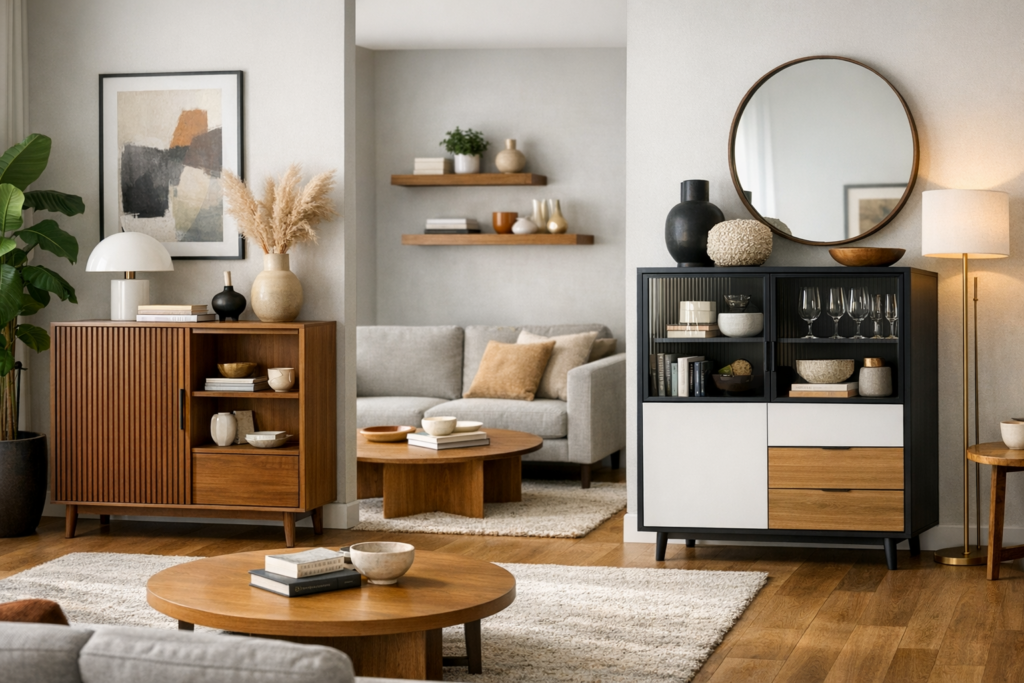
Best Storage Cabinets for Living Rooms
December 14, 2025A living room storage cabinet does more than hide clutter. The right piece can anchor your layout, add warmth and texture, and create “homes” for everything from board games to barware. Whether you’re furnishing a rental with limited closets or upgrading a long-time home, this guide breaks down the best storage cabinet styles for living rooms, what to look for, and how to choose one that fits your space and lifestyle. You’ll also find practical comparisons to help you shop confidently online at LifeDeals.
Why a Living Room Storage Cabinet Is Worth It
Even minimalist living rooms collect stuff: extra throws, charging cables, kids’ toys, candles, remotes, and the “where do we put this?” items that never find a place. A storage cabinet solves that problem while improving the room’s overall look.
Here’s what a great living room cabinet can do:
- Reduce visual clutter by keeping everyday items behind doors.
- Create functional zones (reading corner, media area, entry drop zone in open layouts).
- Upgrade the style with a statement finish like oak veneer, fluted doors, or matte black hardware.
- Add flexible storage that can move with you if you rent.
- Serve double duty as a bar cabinet, console, or low credenza under artwork.
When you shop on LifeDeals, you’ll see cabinets marketed as buffets, sideboards, credenzas, display cabinets, and console cabinets. The names overlap—focus on dimensions and features instead of labels.
Best Storage Cabinet Styles for Living Rooms (With Practical Comparisons)
Different cabinet types suit different living rooms. Use the comparisons below to match a style to your needs, not just your aesthetic.
1) Sideboards and Credenzas (Best for Everyday Hidden Storage)
Best for: families, frequent entertainers, anyone who wants a clean look fast.
Typical size: 55–80 inches wide, 15–20 inches deep, 28–36 inches tall.
Why they work: A sideboard or credenza offers broad, low-profile storage that won’t visually crowd a living room. It’s ideal behind a sofa (in large spaces), along a main wall, or under a big framed print.
What to look for:
- Adjustable shelves for board games, baskets, or taller décor.
- Cable cutouts if you’ll place a router, smart hub, or speaker inside.
- Soft-close hinges if you’re sensitive to noise or have kids.
- Center support legs on longer pieces to prevent sagging over time.
Quick comparison: If your priority is “hide everything,” choose solid doors over glass. If you want a lighter look, pick a floating-leg design or a cabinet with tapered legs.
2) Display Cabinets With Glass Doors (Best for Styling and Collectibles)
Best for: renters who want a curated look, collectors, book lovers, and anyone who enjoys styling shelves.
Typical size: 30–45 inches wide, 12–18 inches deep, 55–75 inches tall.
Glass-door cabinets bring a boutique feel to a living room—especially with warm lighting and thoughtful styling. They’re excellent for cookbooks, ceramics, framed photos, and travel finds.
What to look for:
- Tempered glass for improved safety and durability.
- Adjustable shelf pin systems to accommodate tall items.
- Interior lighting or room for puck lights if you like a gallery effect.
- Stability hardware (anti-tip kit) for taller cabinets.
Quick comparison: Clear glass looks airy but shows everything—great if you love styling, less ideal if you want to stash random items. Reeded or fluted glass offers a softer, more forgiving look that still feels elevated.
3) Bar Cabinets (Best for Entertaining in Small Spaces)
Best for: hosts, apartment dwellers, and anyone who wants a “destination” cabinet.
Typical size: 28–40 inches wide, 15–20 inches deep, 40–60 inches tall.
A bar cabinet turns an awkward corner into a feature. Many include wine racks, stemware rails, and a pull-out shelf for mixing.
What to look for:
- Mixed storage (drawers for tools, shelves for bottles, slots for glasses).
- Easy-clean surface such as sealed wood veneer or laminate on the prep shelf.
- Door clearance so it can open fully without hitting a sofa or wall.
Quick comparison: If you entertain often, prioritize layout: a shallow cabinet with smart compartments can outperform a larger cabinet that wastes space. If you rarely host, choose a bar cabinet that can double as a general storage piece.
4) Media Cabinets (Best for Tech-Friendly Storage)
Best for: streaming setups, gamers, and living rooms with visible tech.
Typical size: 47–70 inches wide, 15–20 inches deep, 20–28 inches tall.
If your living room includes a TV, a media cabinet can keep the space calm by hiding consoles, controllers, and cables—without blocking signals or airflow.
What to look for:
- Ventilation (back cutouts, slatted doors, or open sections) to prevent overheating.
- Wire management with grommets and a roomy back channel.
- Sturdy top capacity if your TV sits on the cabinet (confirm weight rating).
- Center leg support for wide spans.
Quick comparison: Solid doors hide clutter best but may interfere with remote signals. Slatted, cane, or mesh-front doors strike a nice balance—concealed storage with better signal pass-through.
5) Storage Cabinets With Drawers (Best for Small Essentials)
Best for: people who lose remotes, chargers, and batteries; anyone who wants “junk control.”
Doors are excellent for bulk storage. Drawers are better for the small stuff. In a living room, a cabinet with at least two drawers can keep the space functional day-to-day.
What to look for:
- Full-extension drawer glides so you can reach items in the back.
- Felt or lined top drawer if you’ll store delicate items or keep keys there.
- Drawer depth that fits your real items (game controllers, candles, notebooks).
Quick comparison: If you’re organizing a family room, drawers plus doors is the winning combo. If you’re aiming for a sleek look, a push-latch drawer front can keep the silhouette clean.
How to Choose the Right Storage Cabinet for Your Space
Cabinets can look perfect online and still disappoint if the proportions or features don’t match your room. Use this checklist to narrow down the best fit.
Measure for Real Life (Not Just “Where It Fits”)
Start with width, depth, and height, then consider how people move through the room.
- Leave 30–36 inches for comfortable walking paths in main traffic areas.
- Keep depth in check for narrow rooms: 14–16 inches deep often feels lighter than 20 inches.
- Plan door swing space if you’re placing the cabinet near a sectional or coffee table.
Match the Cabinet Height to What’s Around It
Height changes the vibe. A low credenza feels modern and relaxed. A tall cabinet adds presence and can balance high ceilings.
- Under art: Leave 6–10 inches between the cabinet top and the bottom of the frame.
- Under a wall-mounted TV: The cabinet should be wide enough to visually “ground” the screen.
- Behind a sofa: Console-height cabinets (around 28–34 inches) work best in larger spaces.
Pick Materials Based on Lifestyle (Kids, Pets, Rentals)
Style matters, but durability is what you’ll appreciate in a month.
- Veneer over engineered wood: often offers a clean look with better stability than solid wood in changing humidity.
- Solid wood frames: great for longevity, especially on legs and door rails.
- Scratch-resistant finishes: helpful if you have pets or move décor around often.
- Easy-clean surfaces: if the cabinet will serve as a snack station or bar.
Decide What You Want to Hide vs. Display
A cabinet should support how you actually live.
- Hide: toys, spare cables, paperwork, extra throws, game boxes.
- Display: books, ceramics, framed photos, plants, special glassware.
If you want both, choose a mixed-front piece: drawers on the bottom, glass doors on top, or open shelving paired with closed compartments.
Top Features That Make a Cabinet Feel “High Quality”
Two cabinets can look similar in photos but feel very different day-to-day. These details are usually worth paying attention to when comparing options on LifeDeals.
Sturdy Construction and Smart Support
- Reinforced back panels reduce wobble, especially on taller cabinets.
- Center legs or hidden support rails prevent bowing on long credenzas.
- Even door gaps and aligned hardware are signs of better build quality.
Hardware That Matches the Use
- Soft-close hinges reduce slamming and help doors stay aligned.
- Metal drawer glides tend to last longer than basic wooden runners.
- Grippable pulls are more practical than tiny knobs if you open doors frequently.
Finish and Maintenance
Look for finishes that suit your habits. Matte finishes hide fingerprints better than high gloss. Textured woods can disguise small dings, while smooth lacquer reads more modern but shows wear sooner.
Safety and Stability
If you’re considering a tall cabinet, an anti-tip kit is a must, especially with kids or pets. Even in rentals, many people use wall anchors with minimal patching later.
Styling Tips: Make the Cabinet Look Intentional (Not Like Extra Furniture)
A cabinet should feel like it belongs in the room, not like it was pushed against a wall as an afterthought.
Use the “Rule of Three” on Top
Group décor in threes for an easy, balanced look: a lamp, a stack of books, and a vase. Or a tray, a plant, and a sculptural object.
Add Baskets Inside for Fast Organization
Baskets turn deep shelves into easy zones. Try one basket for chargers, one for remotes, and one for candles or matches. This is especially helpful with kids’ items—quick cleanup without constant sorting.
Balance Closed Storage With One Display Moment
If your cabinet is fully closed, add interest above it: an oversized mirror, two framed prints, or a picture light. If the cabinet has glass doors, keep the styling inside simple and leave negative space so it doesn’t look busy.
Mind the Lighting
A small table lamp on a sideboard adds warmth and makes the room feel finished. If you choose a glass-front display cabinet, consider subtle interior lights or stick-on puck lights for a high-end effect.
FAQ: Best Storage Cabinets for Living Rooms
What size storage cabinet works best in a small living room?
Look for a cabinet that’s 12–16 inches deep to keep walkways open. A wider, lower credenza often feels less bulky than a tall, narrow cabinet, as long as you maintain clear paths around it.
Should I choose doors, drawers, or open shelves?
For most living rooms, a mix is the most practical: drawers for small essentials (remotes, chargers) and doors for bulk items (games, throws). Open shelves look great but require consistent styling to avoid visual clutter.
How do I choose a cabinet color that won’t feel dated?
Stick with wood tones (oak, walnut) for warmth, or classic neutrals like matte black, soft white, or greige. If you like trends, use hardware and décor to add personality rather than choosing a bold cabinet color that’s harder to restyle later.
What features matter most if I’m using the cabinet for media devices?
Prioritize ventilation, cable management cutouts, and doors that allow remote signals (slatted, cane, or mesh). Also confirm the top weight limit if a TV will sit on it, and check shelf spacing for consoles.
Conclusion: The Right Cabinet Makes the Whole Living Room Easier
The best storage cabinets for living rooms combine smart capacity, proportions that suit your layout, and details that hold up to everyday use. Whether you need a low credenza to hide clutter, a glass display cabinet to showcase your favorites, or a media-friendly piece that manages cables cleanly, a well-chosen cabinet can make your home feel calmer and more put-together.
If you’re ready to compare styles and sizes, explore the cabinet selection online at LifeDeals. With the right filters and a clear plan for what you want to store, you’ll find a piece that fits your room, your routine, and your budget—without compromising on style. For more home organization finds and living room upgrades, keep browsing LifeDeals to discover storage solutions that make everyday life smoother.