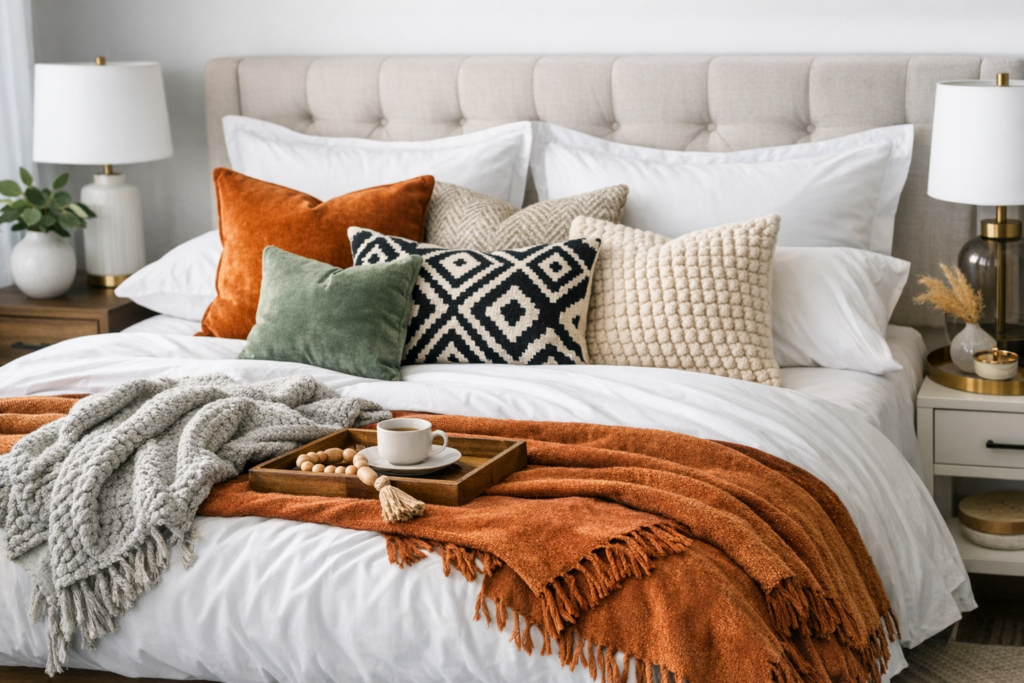
How to Style a Bed with Throws and Pillows
December 4, 2025A well-styled bed can make your whole room feel calmer, cleaner, and more “finished”—even if you’re renting, short on space, or working with an older bed frame. The secret isn’t buying a whole new bedding set. It’s learning how to layer throws and pillows with intention: choosing the right sizes, balancing colors and textures, and arranging everything so it looks inviting (not cluttered).
Below is a practical, step-by-step guide to styling a bed with throws and pillows, with comparisons to help you pick what actually works for your space. If you’re ready to refresh your bedroom without overthinking it, you’ll find plenty of easy wins—and a few pro tricks—along the way. You can also browse LifeDeals online for throws, pillow inserts, and bedding essentials that make layering simple.
Start with a Simple Foundation (So Your Layers Shine)
Throws and pillows look best when the base layers are clean and consistent. Think of your sheets, duvet/comforter, and cover as the “canvas.” When the foundation feels cohesive, you can add personality on top without the bed looking messy.
Choose a base color strategy
You don’t need to stick to all-white bedding, but you do want a base that supports easy mixing:
Option 1: Light neutral base (white, ivory, light gray)
Works in small bedrooms and low-light spaces. It also makes colored throws and pillows pop, and it photographs beautifully if you like sharing home updates.
Option 2: Mid-tone base (taupe, warm gray, sand)
Great for high-traffic homes, kids, or pets because it hides minor lint and wear. Mid-tones pair easily with both warm and cool accent colors.
Option 3: Dark base (charcoal, navy, espresso)
Makes the bed feel dramatic and luxe. If you go dark, lean on texture (knits, velvet, linen) to keep it from feeling flat.
Match the “visual weight” of your comforter to your style goal
Your top layer affects how throws drape and how pillows “sit.”
Fluffy duvet: Cozy, hotel-like, and forgiving. It creates nice height for layered pillows. Throws look best folded rather than tightly tucked.
Quilt/coverlet: Sleeker and more structured. Ideal for warm climates or minimalist rooms. Throws can be draped with more precision because the surface is flatter.
Comforter: Easy, all-in-one. Choose one with enough substance to avoid looking limp. If it’s thin, add a throw with texture to build dimension.
Pick Throws Like a Designer: Material, Size, and Drape
A throw is the quickest way to add texture, color, and “styled” energy—without committing to a full bedding change. The key is choosing the right material for the season and the right size for how you plan to use it.
Throw materials: what they look like and how they perform
Here’s a practical comparison so you can buy with confidence:
Cotton throws
Best for: year-round layering, breathable comfort, casual styling.
Look: crisp to softly textured depending on weave.
Tip: A cotton throw in a waffle or matelassé weave adds texture without bulk—great for tidy, tailored beds.
Chunky knit throws
Best for: cozy winter rooms, hygge styling, adding “volume.”
Look: high texture and a statement feel.
Tip: Chunky knits can shed or snag. If you have pets, choose a tighter knit or keep it as a decorative layer at the foot of the bed.
Fleece or plush throws
Best for: warmth, movie nights, budget-friendly softness.
Look: casual and cozy; can read less “designer” if the color is too shiny or overly saturated.
Tip: Choose matte finishes and solid neutrals for a more elevated look.
Linen throws
Best for: airy, relaxed bedrooms; warm climates; natural texture.
Look: effortless, slightly rumpled in a good way.
Tip: Linen looks best when you embrace the drape—don’t fold it too perfectly.
Faux fur throws
Best for: luxe accent, winter styling, glam rooms.
Look: rich and plush, especially in cream, mocha, or gray.
Tip: Use faux fur as a “topper” layer rather than a main blanket if you want a clean, uncluttered bed.
Throw size guidelines (and why they matter)
Throws that are too small can look accidental; too large and they can swallow the bed.
Standard throw (around 50 x 60 inches): Works well draped across a twin or folded at the foot of a full/queen.
Oversized throw (often 60 x 80 inches or larger): Better for queen/king beds, especially if you want a generous drape or plan to actually use it nightly.
If you’re shopping online, check dimensions before you buy. LifeDeals product pages make it easier to compare sizes so you can choose a throw that looks intentional, not undersized.
Three foolproof ways to place a throw
1) The folded “hotel foot”
Fold the throw into thirds lengthwise, then fold once across and place it at the foot of the bed. This looks polished and works especially well with quilts or neatly made duvets.
2) The casual diagonal drape
Drape the throw from one corner of the bed toward the center. This adds movement and is ideal for linen, cotton, or soft knits. Keep it asymmetrical and let a bit of the edge hang.
3) The layered “runner”
Lay the throw lengthwise across the lower third of the bed, like a runner. Great when you want the bed to look longer and more styled, especially on queen and king sizes.
Pillows 101: Sizes, Inserts, and Arrangements That Don’t Look Overdone
Pillows are where most people either nail the look—or end up with a pile that’s constantly on the floor. The goal is a layered arrangement that matches your lifestyle: enough pillows to feel inviting, not so many that bedtime becomes a chore.
Choose pillow inserts that look full (the easiest upgrade)
If your pillows look flat, it’s often the insert—not the cover. A simple rule: use an insert that’s about 2 inches larger than the pillow cover for a fuller, more tailored look.
Down or down-alternative inserts: Softer, “sink-in” feel; great for shams and decorative pillows. Down-alternative is easier for allergy-sensitive households and often more budget-friendly.
Poly-fill inserts: Affordable and widely available, but they can look less luxe over time. If you choose poly, look for higher fill weight.
When you browse LifeDeals, look for pillow insert options that match your preferred firmness and your styling goals—full corners make a bigger difference than most people expect.
Understand pillow sizes (and what each one does)
Sleeping pillows (standard/queen/king): These are functional. You can hide them behind shams or use crisp pillowcases for a clean look.
Euro pillows (typically 26 x 26): The backbone of a styled bed. Euros add height and make the bed feel “designed.”
Standard shams: Great for layering without adding too much volume. They bridge the gap between Euros and decorative accents.
Lumbar pillows: The finishing touch. A lumbar adds shape and often replaces the need for multiple small accent pillows.
Three pillow layouts (from minimal to plush)
Layout A: Minimal and tidy (great for renters and small rooms)
Two sleeping pillows + two shams + one lumbar. This gives structure without looking busy.
Layout B: Balanced and “styled” (most versatile)
Two Euro pillows + two sleeping pillows (or shams) + two 18–20 inch decorative pillows + one lumbar. This reads layered but still practical.
Layout C: Plush and cozy (for king beds or statement bedrooms)
Three Euro pillows (for king) or two (for queen) + shams + two decorative pillows + one lumbar. Consider limiting small pillows to avoid clutter.
If you hate moving pillows at night, choose Layout A or B and keep the lumbar removable. You’ll still get a styled look without the nightly rearranging.
Color and Pattern: How to Mix Without Guessing
Great styling isn’t about following strict rules—it’s about balance. The easiest way to create a cohesive bed is to limit your palette and vary your textures.
Use the “3-color” approach
Pick three colors and repeat them across pillows and throws:
1) Base color: your duvet/comforter (white, beige, gray, navy, etc.).
2) Secondary color: a mid-tone that supports the base (camel, sage, dusty blue).
3) Accent color: a punchy shade in small doses (rust, mustard, black, deep green).
Example: White bedding + warm taupe throw + rust lumbar pillow.
Pattern mixing that works in real bedrooms
A reliable formula: one large-scale pattern, one small-scale pattern, and one solid texture.
Large-scale pattern: bold stripe, oversized floral, wide plaid (use sparingly).
Small-scale pattern: subtle check, mini stripe, tight geometric (great for shams).
Solid texture: knit, linen, velvet, faux fur (grounds the look).
If you’re nervous about pattern, start with texture first. A nubby neutral throw and a ribbed or woven lumbar can transform the bed without introducing busy prints.
Warm vs. cool: quick decision tool
Warm palette: cream, camel, terracotta, olive, chocolate. Cozy and welcoming.
Cool palette: white, gray, navy, charcoal, icy blue. Clean and calming.
Mixed palette: works if one side leads. For example, a warm base with a cool accent (cream bedding with slate blue pillows) can look modern and intentional.
Step-by-Step: Style Your Bed in 10 Minutes
This is the fast routine you can repeat any time you change a pillow cover or add a new throw.
Smooth the base: straighten the sheets and pull the duvet/comforter up to the top edge.
Add Euros first: place them upright against the headboard. Fluff the corners.
Layer shams or sleeping pillows: place in front of Euros, slightly overlapping.
Add decorative pillows: keep them centered; avoid too many small sizes.
Finish with a lumbar: this creates a clean focal point and “locks in” the arrangement.
Place the throw: folded at the foot for a crisp look, or draped diagonally for a relaxed feel.
Final edit: remove one item if it feels crowded. Often, fewer pieces look more expensive.
Practical Buying Tips (So You Don’t End Up with the Wrong Pieces)
Shopping online is convenient, but bedding can be tricky. These checks help you choose throws and pillows you’ll actually love using.
Check fabric care before you commit
If you want a bed that’s easy to maintain, prioritize machine-washable throws and removable pillow covers. Dry-clean-only pieces can be beautiful, but they’re best as occasional accents rather than everyday items.
Look for details that read “high quality”
For throws: finished edges, tight stitching, and consistent texture. For pillow covers: hidden zippers, lined fabric (for lighter colors), and corners that hold shape.
Compare “decorative” vs. “functional” throws
Decorative throws: chosen mainly for texture and color; often placed at the foot of the bed.
Functional throws: larger, softer, and warm enough to use nightly.
If you can, choose one of each: a functional throw for real comfort and a lighter decorative layer for styling. LifeDeals makes it easy to explore both types online, so you can build a bed that looks good and feels even better.
FAQ: Styling a Bed with Throws and Pillows
How many pillows should I have on my bed?
For a practical, styled look: 5 to 7 pillows total on a queen (including sleeping pillows). If you prefer minimal upkeep, do 3 to 5. Kings can handle 7 to 9 depending on your headboard width and how plush you want the look.
What’s the best throw placement for a small bedroom?
Folded at the foot is the cleanest and visually least “busy.” Choose a lighter color or a low-pile texture so it doesn’t overwhelm the bed’s footprint.
How do I keep my bed from looking cluttered?
Limit the palette to three colors, choose one statement texture, and use a single lumbar instead of multiple small accent pillows. If you’re unsure, remove one decorative pillow and reassess—editing is usually the fix.
Should my throw match my pillows exactly?
Not exactly. Coordinated beats matched. Aim for shared undertones (warm with warm, cool with cool) and repeat one color across at least two items (for example: a taupe throw and a taupe stripe in a pillow).
Conclusion: A Better-Looking Bed Is All About Layering Smart
Styling a bed with throws and pillows doesn’t require a designer budget—just a few well-chosen layers that balance color, texture, and function. Start with a simple foundation, pick a throw that drapes the way you want, and build pillows in a layout that fits your lifestyle. Once you find a combination you love, it becomes a quick routine you can refresh seasonally with a new cover or accent shade.
If you’re ready to update your bedroom, explore LifeDeals online for throws, pillow inserts, and covers that make layering effortless. A couple of intentional pieces can change the whole feel of your room—without changing everything.