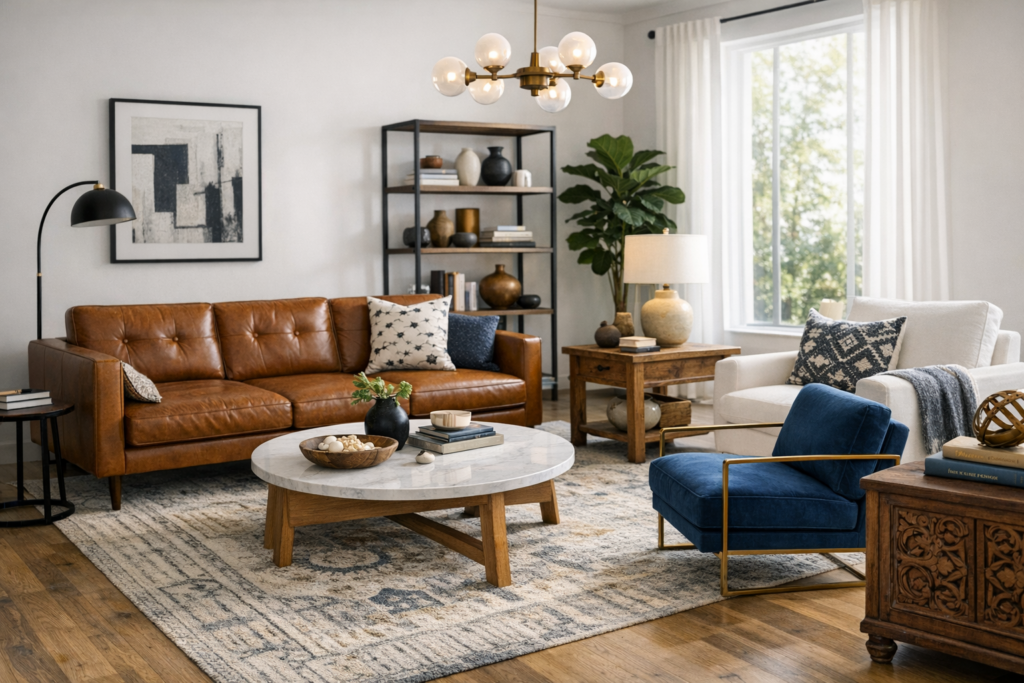
How to Match Furniture Styles in Your Living Room
October 2, 2025Mixing furniture styles can make a living room feel curated and personal—or chaotic and unfinished. The difference usually comes down to a few key choices: a clear “anchor” style, a consistent color story, and the right balance of shapes, materials, and scale. Whether you’re furnishing a new place or upgrading a few pieces, this guide will help you match furniture styles in your living room with confidence, without making everything look like it came from the same set.
Start With a Clear Plan: Anchor Style, Mood, and Everyday Function
Before you think about “matching,” decide what you want the room to do and how you want it to feel. A living room that’s used for movie nights, kids’ playtime, and working from the couch needs different choices than a formal sitting space.
Pick an anchor style (60% of the room)
The simplest way to mix styles is to choose one dominant style that sets the tone. Aim for roughly 60% anchor style, 30% supporting style, and 10% accent style. That structure keeps the room cohesive even when pieces come from different design families.
Common anchor styles that are easy to build on:
Modern: clean lines, minimal ornament, smooth surfaces.
Contemporary: current trends, flexible and mixed, often softer than modern.
Traditional: classic silhouettes, curves, detailed trim, warm woods.
Mid-century modern: tapered legs, organic shapes, walnut tones, vintage-inspired simplicity.
Scandinavian: light woods, cozy textures, airy palette, functional forms.
Industrial: metal, reclaimed wood, exposed hardware, darker tones.
Farmhouse: warm neutrals, rustic woods, casual comfort.
Boho: layered textiles, global patterns, relaxed eclectic vibe.
Example: If you love mid-century modern, let your sofa and main storage piece (like a media console) carry that style. Then you can add a traditional rug or industrial lighting without losing the plot.
Define your “non-negotiables” first
Matching styles gets much easier when you know which features you won’t compromise on. A few practical questions:
How many people need seating daily?
Do you need hidden storage for clutter control?
Will pets or kids require performance fabrics and rounded edges?
Do you entertain and need flexible seating (ottomans, nesting tables)?
If your living room has to work hard, prioritize comfort, durability, and layout. Style can be layered on top with smaller items like lighting, textiles, and décor.
How to Match Different Furniture Styles Without Looking “Mismatched”
When people say they want furniture to match, they often mean they want the room to feel intentional. Here are the most reliable ways to create that intention.
Use a consistent color palette (even when styles differ)
Color is your strongest unifier. You can mix a traditional rolled-arm sofa with a modern coffee table if the colors feel connected.
A simple palette formula:
Base color: walls and largest upholstery (soft white, warm beige, greige, charcoal).
Secondary color: a grounding tone (camel leather, walnut wood, navy, olive).
Accent color: used 2–3 times (rust, brass, forest green, black, or a bold jewel tone).
If you’re unsure, keep upholstery neutral and add personality through pillows, throws, art, and a rug. This also makes future swaps easier—ideal for renters or anyone who likes seasonal refreshes.
Repeat materials and finishes across the room
Materials create “visual rhymes.” Repeating them makes different styles feel like they belong together.
Easy material repeats that look polished:
Wood tone: match or closely coordinate your coffee table, console, and picture frames (they don’t need to be identical).
Metal finish: choose one main finish (brass, matte black, chrome, or bronze) and repeat it in lighting, table legs, or hardware.
Textiles: echo textures (bouclé, linen, velvet, leather) across pillows, curtains, and accent chairs.
Practical tip: If you already have mixed metal finishes, unify them by letting one dominate (about 70%) and using the others as accents (about 30%).
Balance shapes: pair curves with clean lines
Shape is an underrated tool. If everything is boxy, the room can feel rigid. If everything is rounded, it can feel overly soft. Mixing styles often works best when you mix shapes on purpose.
Try these pairings:
A square-armed modern sofa + a round coffee table to soften the center of the room.
A traditional curved accent chair + a streamlined console to keep the space fresh.
A low mid-century media unit + taller, more classic bookcase for height variation.
Keep scale and proportion consistent
Scale is where many living rooms go wrong. You can match styles perfectly, but if the coffee table is too small for the sofa or the rug is undersized, it will still feel “off.”
Helpful scale guidelines:
Coffee table length: about two-thirds the length of your sofa.
Coffee table height: within 1–2 inches of the sofa seat height.
Rug size: ideally, front legs of all main seating sit on the rug; in larger rooms, all legs can fit on the rug.
When shopping online (including at LifeDeals), check dimensions first and compare them to your existing pieces using painter’s tape on the floor. It’s a quick way to avoid returns and disappointment.
Style-Mixing Recipes: What to Combine and What to Avoid
If you’d like clear examples, these “recipes” are reliable combinations that look stylish without feeling random.
Modern + Traditional (a.k.a. “transitional”)
Why it works: Traditional silhouettes add warmth and depth; modern pieces keep the room from feeling heavy.
Try this:
A modern, straight-lined sofa in a neutral fabric + a traditional patterned rug + simple black or brass lighting.
Avoid this pitfall: Too many ornate pieces can overwhelm the modern base. Choose one traditional “hero” item (often the rug or an accent chair) and let the rest be calmer.
Mid-century modern + Scandinavian
Why it works: Both value function, clean lines, and natural materials.
Try this:
Mid-century media console in walnut + Scandinavian sofa in a light neutral + textured wool rug and minimal art.
Avoid this pitfall: If everything is pale wood and light fabric, the room can feel flat. Add contrast with black accents, a darker coffee table, or a bold throw.
Industrial + Farmhouse
Why it works: Both lean on sturdy materials and a relaxed vibe.
Try this:
A farmhouse-style slipcovered sofa + industrial metal-and-wood coffee table + warm ambient lighting (think soft bulbs, fabric shades, or warm LEDs).
Avoid this pitfall: Too much distressed wood plus too much black metal can look harsh. Balance it with softer textiles and a lighter rug.
Boho + Contemporary
Why it works: Contemporary shapes create structure; boho layers bring personality and comfort.
Try this:
A contemporary sofa in a solid color + boho rug with warm tones + woven baskets and textured pillows.
Avoid this pitfall: If every accessory has a different pattern, it gets busy fast. Pick one lead pattern (often the rug) and let smaller patterns support it.
Build the Room From Largest to Smallest (So It All Matches)
A practical order of operations prevents impulse purchases that don’t quite fit.
1) Sofa or sectional: your style anchor
The sofa is usually the biggest visual and budget commitment. Choose a silhouette that suits your anchor style and a fabric that suits your lifestyle.
Quick comparisons:
Leather vs. fabric: Leather feels tailored and is easier to wipe down; fabric offers more color options and can feel cozier.
Tight-back vs. cushioned-back: Tight-back looks cleaner and more modern; cushioned-back feels relaxed and lounge-friendly.
Sectional vs. sofa + chairs: Sectionals maximize seating; a sofa plus chairs can be easier to rearrange and scale to different rooms.
If you’re browsing at LifeDeals, focus on sofa dimensions, seat depth, and fabric performance details. Those factors matter more than a trendy color name.
2) Rug: the visual “glue”
A rug is one of the easiest ways to blend multiple furniture styles. It connects upholstery colors to wood tones, and it sets the mood—traditional, modern, playful, or serene.
Matching tip: Choose a rug that includes at least two colors already present in the room (sofa color, curtain color, wood tone, or accent color). That alone makes mixed styles feel coordinated.
3) Coffee table and side tables: coordinate, don’t clone
Tables don’t need to match each other perfectly. In fact, a matched set can look overly “showroom.” Instead, coordinate by repeating one element: wood tone, metal finish, shape, or design era.
Good combos:
Wood coffee table + metal side table (repeat metal in lighting).
Round coffee table + rectangular side tables (balance shapes).
Two different side tables in the same color family (intentional asymmetry).
4) Lighting: the finishing layer that elevates everything
Lighting is a high-impact way to unify mixed styles. A single statement floor lamp or pendant can set the design direction for the whole room.
Easy rule: aim for three layers of light:
Ambient: ceiling fixture or overall room light.
Task: reading lamp near seating.
Accent: small lamp or wall light for warmth and depth.
If your furniture styles feel slightly disconnected, choose lighting with a finish you repeat elsewhere (matte black, brass, or chrome) and a shape that echoes your main furniture lines (curved shades for curvy pieces, angular shades for clean-lined pieces).
5) Textiles and décor: repeat, edit, and leave breathing room
This is where the room becomes yours. But it’s also where clutter can creep in.
A simple styling approach:
Repeat the accent color in at least three places (pillow, art, vase).
Mix textures more than patterns (linen, knit, velvet, woven).
Leave some surfaces clear to keep the room looking intentional.
Storage baskets, trays, and shelves help keep everyday items contained. If you want to refresh your living room without replacing big furniture, browsing smaller accessories at LifeDeals can make a noticeable difference quickly.
Common Matching Mistakes (and How to Fix Them Fast)
Mistake: Buying a full matching set
Fix: Keep one or two “matched” elements at most (like sofa and loveseat), then bring in contrast with tables, lighting, and textiles. This reads more collected and less cookie-cutter.
Mistake: Ignoring undertones
Fix: Check whether your neutrals are warm (cream, camel, warm gray) or cool (crisp white, charcoal, blue-gray). Mixing warm and cool can work, but you’ll need a bridge color (like greige or natural wood) to connect them.
Mistake: Too many statement pieces competing
Fix: Choose one focal point: a bold rug, a standout sofa color, or a dramatic coffee table. Let everything else support it with simpler shapes and quieter colors.
Mistake: The room feels “unfinished”
Fix: Add one large piece of wall art (or a well-proportioned gallery arrangement), curtains that visually frame the windows, and lighting that creates warmth. These three moves often make the space feel complete even if furniture is mixed.
FAQ: Matching Furniture Styles in a Living Room
How many furniture styles can I mix in one living room?
Two is easiest, three is doable with a plan. Use one anchor style for the largest pieces, a supporting style for a few medium pieces, and a small accent style for décor. Keep the color palette and finishes consistent to avoid visual clutter.
Do my wood tones need to match exactly?
No. Exact matching can look flat. Aim for coordination: similar undertones (warm vs. cool) and a mix of light, medium, and dark. If wood tones clash, add a rug with blended tones or introduce black accents to create a deliberate contrast.
What’s the easiest way to make mismatched furniture look cohesive?
Use a unifying rug, repeat one metal finish, and limit your accent colors. Then adjust scale: a correctly sized rug and coffee table often make “random” pieces suddenly feel like they belong together.
Should I match my sofa to my coffee table or my media console?
Match by relationship, not by sameness. Your sofa should coordinate with the rug and overall palette. Your coffee table and media console should coordinate with each other through wood tone or finish. If your sofa is visually heavy, choose a lighter-looking table (glass, slim legs) to balance it.
Conclusion: Create a Living Room That Feels Collected, Not Complicated
Matching furniture styles isn’t about strict rules or perfectly identical pieces. It’s about creating a clear structure: an anchor style, a consistent palette, repeated materials, and balanced shapes and scale. Once those are in place, mixing becomes the fun part—where your room starts to feel personal and lived-in, not staged.
If you’re ready to refine your space, explore LifeDeals online for sofas, tables, lighting, rugs, and finishing touches that help tie everything together. With a few smart choices, you can mix styles confidently and end up with a living room that feels cohesive, comfortable, and unmistakably yours.