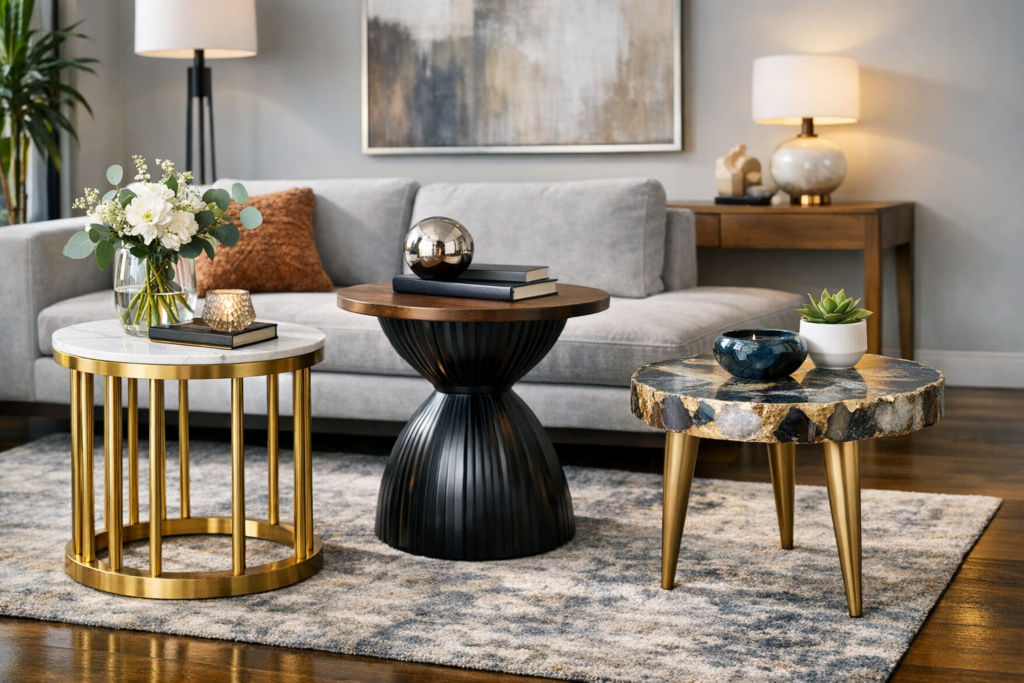
Accent Tables That Elevate Your Space
December 12, 2025Accent tables are the quiet workhorses of a well-designed home. They hold your coffee, spotlight a favorite lamp, corral clutter, and make a room feel finished without a major renovation. Whether you’re decorating a first apartment or updating a long-loved living room, the right accent table can elevate your space in both style and function. Below you’ll find practical guidance, easy comparisons, and shopping tips to help you choose a table that looks intentional and lives well—day to day.
Why Accent Tables Matter More Than You Think
Accent tables are often treated as “extras,” but they solve real design and lifestyle problems. They can balance a layout, add storage exactly where you need it, and introduce texture or color without committing to a large piece of furniture.
They make a room feel complete
A sofa without a side table can look unfinished and feel inconvenient. Adding one creates a natural “zone” for lighting, drinks, and décor. In bedrooms, a small accent table can stand in for a nightstand when space is tight. In entryways, a compact table becomes a landing spot for keys and sunglasses.
They deliver high impact with minimal footprint
If you’re renting or working with a smaller home, accent tables are a smart way to refresh a room without painting walls or replacing big furniture. A new table can tie together your metal finishes, echo the tones in your rug, or soften a modern space with warm wood.
They can add storage where you actually use it
Storage doesn’t have to be a giant credenza. A tiered end table, a drum table with a lift-top, or a C-table with a lower shelf can hide remotes, coasters, chargers, and magazines—right where they tend to pile up.
Choosing the Right Accent Table: A Practical Checklist
Before you shop, take five minutes to answer a few questions. These details help you pick a table that fits your room and your routines, not just your Pinterest board.
Step 1: Decide the job it needs to do
Start with function, then choose a style. Ask yourself:
- Will it hold drinks and snacks (needs stable surface and easy-to-clean finish)?
- Will it support a lamp (needs the right height and enough top space)?
- Will it act as a bedside substitute (consider drawers or a shelf)?
- Is it mainly decorative (sculptural base and smaller top can work)?
Tip: If you routinely work from the couch, consider an accent table that can slide close—like a C-table—or one with a wider top for a laptop.
Step 2: Get the height right
Height is the difference between “effortless” and “awkward.” Use these guidelines:
- Side table next to a sofa or chair: Aim for the table top to be within 2 inches of the seat height (slightly lower is usually more comfortable).
- Coffee table: Typically 14–18 inches tall, depending on sofa height and cushion depth.
- Accent table by a bed: About level with the top of the mattress, or up to 2 inches higher.
If your seating is low and modern, a tall table can feel top-heavy. If your sofa is higher and structured, an overly low table can look lost and be inconvenient.
Step 3: Choose the right footprint and shape
Measure the space you actually have, not the space you wish you had. Leave comfortable walking clearance so the room stays functional.
- Round tables: Great for tight walkways and small rooms; soften boxy layouts.
- Square tables: Best next to sofas with a wide arm or in symmetrical setups.
- Rectangle tables: Ideal for longer sofas or between two chairs.
- Nesting tables: Flexible in apartments—expand when you host, tuck away when you don’t.
Step 4: Match materials to your lifestyle
Looks matter, but durability matters too. Consider how you live:
- Wood: Warm, timeless, and forgiving. Great for everyday use. Dark stains hide wear; lighter finishes show grain beautifully but may reveal scuffs more easily.
- Metal: Sleek and sturdy; often lighter to move. Powder-coated finishes are easier to maintain.
- Glass: Visually light and modern; can make small rooms feel larger. Shows fingerprints and requires more frequent cleaning.
- Stone or faux marble: Elevated and substantial; pairs well with modern or luxe décor. Be mindful of weight and potential staining depending on the finish.
- Upholstered or ottoman-style: Softens a room and adds comfort. Works best when you use a tray for drinks.
Step 5: Decide how bold you want to go
Accent tables can blend in or become a focal point. A simple rule: if your sofa, rug, and media console are already visually busy, choose a table with a clean silhouette. If your room is neutral and minimal, a sculptural base, mixed materials, or a rich color can add personality.
Types of Accent Tables (and Where Each One Shines)
“Accent table” is a big category. Here’s how to choose the right type for your space and compare the pros and cons.
End tables: the everyday essential
Best for: Living rooms, reading nooks, and anywhere you sit regularly.
Why they work: End tables bring convenience to seating areas and help anchor lamps at the right height.
What to look for:
- Top space for a lamp plus a drink (or at least one of them)
- A lower shelf or drawer if you want to hide clutter
- A stable base if you have kids or pets that bump into furniture
Comparison tip: A table with a drawer looks tidier but can cost more. A lower shelf offers quick-access storage and keeps the surface cleaner.
C-tables: the small-space hero
Best for: Apartments, sectionals, and casual lounging.
Why they work: The base slides under a sofa, bringing the top closer to you—perfect for coffee, a laptop, or a snack.
What to look for:
- Solid weight and stability (lighter models can tip if overloaded)
- Durable top finish for daily use
- Comfortable clearance under your sofa (measure before buying)
Comparison tip: If you work from the couch, choose a slightly larger top. If you just need a perch for drinks, a slimmer profile keeps the room airy.
Drum tables: bold, sculptural, and surprisingly practical
Best for: Creating a statement next to a sofa or between two chairs.
Why they work: Drum tables add visual weight and polish. They’re often round, which helps traffic flow in tighter rooms.
What to look for:
- A finish that complements your main metal tones (brass, black, nickel)
- Enough diameter to be useful (too small can feel decorative only)
- Optional hidden storage if you prefer a clean surface
Nesting tables: flexible for hosting and everyday life
Best for: Multi-use living rooms and renters who like to rearrange.
Why they work: You can spread them out when guests arrive, then tuck them together when you want more floor space.
What to look for:
- Coordinated heights that feel intentional
- Durable surfaces if you plan to use both often
- Non-scratch feet to protect flooring
Comparison tip: Nesting sets with mixed materials (wood and metal, or glass and metal) can add dimension without adding clutter.
Console-style accent tables: perfect for entryways and behind sofas
Best for: Hallways, entryways, and the space behind a sofa.
Why they work: A slim table defines a pathway and provides a landing area for daily essentials.
What to look for:
- Depth that won’t interrupt walking flow (slimmer is usually better)
- Storage shelf for baskets
- Sturdy build if you’ll place a large mirror or heavier décor on top
Style and Finish: How to Make Accent Tables Look Intentional
The best rooms don’t look like furniture showrooms; they look collected. Accent tables are a great place to mix finishes carefully and bring a room together.
Mixing materials without creating visual chaos
A helpful approach is to repeat each finish at least twice in the room. For example, if your accent table has a black metal base, echo black elsewhere—picture frames, a floor lamp, or cabinet hardware.
Simple pairings that nearly always work:
- Warm wood + matte black: Modern, grounded, and easy to maintain.
- Glass + metal: Light and airy; great for small spaces.
- Stone look + wood: Elevated but welcoming; balances sleek and cozy.
Coordinating with your sofa and rug
If your sofa is plush and oversized, choose a table with a substantial top or a sturdy base so it doesn’t feel dainty. If your rug has bold pattern, keep the table silhouette clean. If your rug is neutral, a textured table (wood grain, ribbed base, or stone look) adds depth.
How to style an accent table (without clutter)
A styled table should still be usable. Use a simple structure:
- Anchor: a lamp or a medium-height object
- Practical: a coaster set or small tray
- Personal: a book, a candle, or a small plant
If you love décor but need functionality, choose a tray. It keeps items contained and makes it easy to clear the surface when you need space.
Room-by-Room Recommendations
Different rooms call for different priorities. Use these suggestions to narrow your search and avoid common sizing mistakes.
Living room: balance and convenience
For a typical sofa setup, a pair of matching end tables creates symmetry and makes the room feel polished. If your layout is more casual, mix one end table with a C-table to cover both lounging and entertaining.
Quick comparison: Matching end tables feel formal and cohesive. Mixed tables feel relaxed and collected—ideal for eclectic interiors.
Bedroom: small upgrades that feel luxurious
If you’re tight on space, skip bulky nightstands and use slim accent tables. Look for a surface large enough for a lamp and your phone, plus a lower shelf for a book or a small basket.
Practical note: If you charge devices overnight, consider cord management and keep outlets accessible.
Entryway: a landing zone that reduces daily stress
A narrow accent table in the entry makes mornings smoother. Add a small tray for keys, a bowl for loose change, and a catch-all basket below. Hang a mirror above to reflect light and make the space feel larger.
Home office corner: functional, not fussy
An accent table can act as a printer stand, a plant perch, or a mini coffee station. Choose a finish that’s easy to wipe down and a height that works with your chair or nearby furniture.
Smart Shopping Tips: How to Choose Quality Online
Buying furniture online is convenient, but the best outcomes come from checking a few key details before you click “add to cart.” LifeDeals shoppers often look for pieces that feel premium without being precious, and these tips help you get there.
Check dimensions in real life
Don’t rely on photos alone. Measure the intended spot, then use painter’s tape on the floor to outline the table footprint. For height, stack books to the listed measurement to see how it feels next to your seating.
Look for stability cues
For side tables, a wider base or sturdy legs usually means less wobble. If you plan to use the table daily (especially with drinks), stability matters more than a delicate silhouette.
Prioritize finishes that match your routine
If you have kids, pets, or frequent guests, choose surfaces that clean easily and won’t show every mark. Wood and powder-coated metal are typically more forgiving than high-gloss finishes.
Think about delivery, assembly, and maintenance
Consider whether the table arrives assembled or needs quick setup, and whether it’s easy to move for cleaning. A beautiful piece is only a win if it works with your lifestyle.
If you’re ready to browse, LifeDeals makes it easy to explore accent table options online by style, material, and size—so you can compare choices and find the right fit without guesswork. Whether you’re after a compact C-table for a sectional or a statement drum table, LifeDeals offers practical picks that elevate everyday spaces.
FAQ: Accent Tables That Elevate Your Space
What’s the difference between an accent table and a side table?
A side table is usually placed next to seating and used daily for function (drinks, lamp, remote). An accent table is a broader category that includes side tables, but also includes decorative or multi-use tables placed anywhere you need a surface—like an entryway, hallway, or bedroom corner.
How do I choose the right size accent table for a small apartment?
Start with height (match the seat height), then choose a smaller footprint like a round table or a C-table. Nesting tables are also ideal because they expand when you need extra surface area and tuck away when you want more open floor space.
Should my accent tables match my coffee table?
They don’t have to match exactly. Coordinating is more important than matching. Aim for a shared element—similar wood tone, repeating metal finish, or a complementary shape—so the room feels intentional without looking overly “set-like.”
What materials are easiest to maintain for everyday use?
In most homes, wood and powder-coated metal are the easiest. They handle daily wear well and clean up quickly. Glass looks great but shows fingerprints more easily, and stone or faux marble can require more care depending on the finish.
Conclusion: A Small Table, A Big Upgrade
The right accent table brings comfort, convenience, and a more finished look to your home—often with less effort than any other décor upgrade. Focus on the table’s job, choose the correct height and footprint, and pick materials that suit how you live. When you’re ready to refresh your space, explore LifeDeals online to compare styles and find an accent table that feels like it was made for your room. With the right piece, even a simple corner can look thoughtfully designed.