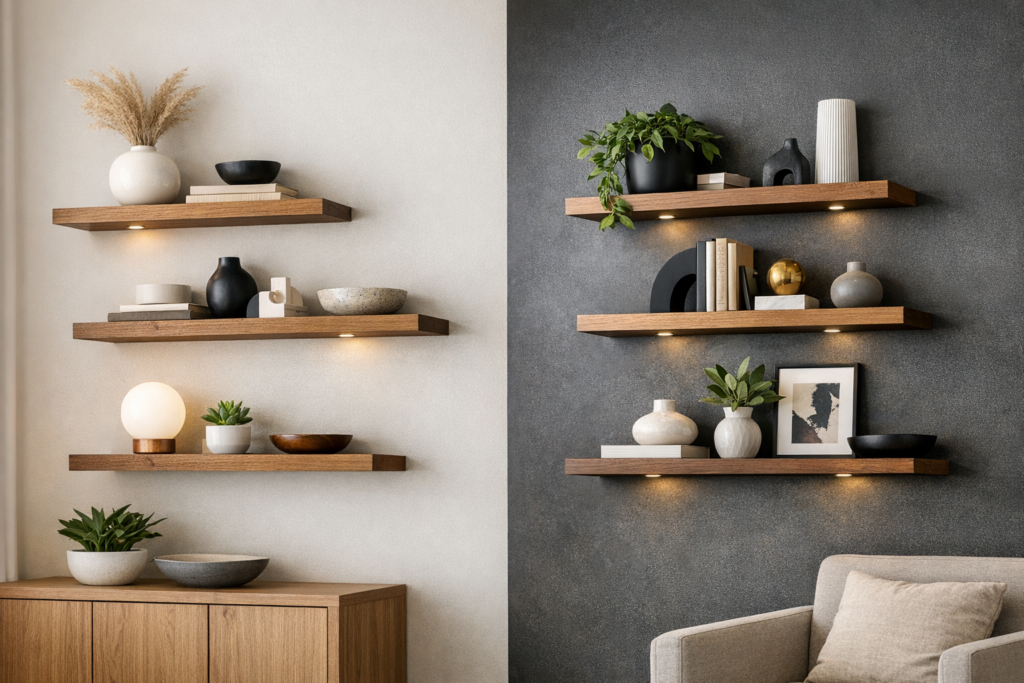
Floating Shelves Styling Ideas for Modern Homes
January 1, 2026Floating shelves are one of the simplest upgrades you can make to a modern home. They add storage without visual bulk, create display space for the things you love, and can help a room feel more finished in an afternoon. The trick is styling them with intention so they look curated, not cluttered. Below you’ll find practical, room-by-room floating shelves styling ideas, plus smart comparisons on materials, sizes, and bracket options to help you choose what works for your space and lifestyle.
Why Floating Shelves Work So Well in Modern Homes
Modern design favors clean lines, open space, and functional decor. Floating shelves fit right in because they’re visually “light” and can be styled to either blend in or become a statement. They also solve common home challenges like awkward wall sections, small rooms, and the need for storage in rentals where floor space is limited.
Before you start decorating, consider three styling principles that consistently make floating shelves look elevated:
1) Balance: Mix tall and short items, and avoid placing all the visual weight on one side.
2) Breathing room: Leave some negative space. Crowding every inch makes shelves look messy fast.
3) Repetition: Repeat a color, material, or shape (for example: black frames, warm wood, or ceramic vases) to create cohesion.
Quick Planning Checklist (So You Don’t Re-Style Twice)
Use this checklist before you hang or decorate:
Purpose: Storage, display, or both?
Viewing distance: Shelves in a hallway need bolder, simpler pieces than shelves above a desk.
Wall type: Drywall, studs, plaster, tile—this affects anchors and weight capacity.
Lighting: Natural light can fade books and textiles; consider UV-safe placement or rotate items.
Palette: Choose 2–3 core colors plus one accent for a modern, controlled look.
Material, Finish, and Bracket Choices: What Looks Best (and Lasts)
Floating shelves come in a few common categories. Choosing the right one makes styling easier and helps shelves stay sturdy long-term.
Wood vs. MDF vs. Metal: A Practical Comparison
Solid wood: Warm, timeless, and durable. Ideal for living rooms, kitchens, and anywhere you want a premium feel. Wood also photographs beautifully and pairs well with modern neutrals.
MDF (engineered wood): Often more affordable and can be very sleek when painted. Great for light decor displays. Keep MDF away from high-moisture areas unless it’s sealed well.
Metal shelves: Clean, minimal, and strong. Perfect for industrial-modern spaces, bathrooms (if rust-resistant), and small areas where you want a thin profile.
Finish Options That Instantly Modernize a Space
Matte black: Sharp and contemporary; pairs well with white walls and warm wood accents.
Natural oak or walnut: Adds warmth while staying modern—especially in Scandinavian and Japandi interiors.
White shelves: Great for a seamless “built-in” look; best when your styling includes contrast (dark books, greenery, or ceramic pieces).
Mixed materials: Wood shelf with hidden bracket hardware keeps the look streamlined without feeling sterile.
True Floating vs. Bracket Shelves: Which Should You Choose?
True floating shelves have hidden supports, giving that clean, modern line. They’re ideal for living rooms and bedrooms where aesthetics matter most. Make sure they’re installed into studs (when possible) if you’ll place anything heavy.
Bracket shelves can still look modern, especially with slim metal brackets. They typically offer higher weight capacity and are a smart choice for kitchens (plates, pantry items) or offices (heavier books).
If you’re shopping online, look for clear weight ratings and mounting hardware details. LifeDeals often highlights shelf dimensions and material specs so you can match the shelf to your intended use without guessing.
Room-by-Room Floating Shelves Styling Ideas (Modern, Practical, and Easy to Copy)
The best floating shelf styling depends on where the shelf lives. Use these ideas as templates, then adjust colors and objects to fit your home.
Living Room: Create a Gallery-Like Display Without the Clutter
In a modern living room, shelves should feel intentional. Instead of many small trinkets, go for fewer, larger pieces.
Try this layout:
One tall anchor: a vase, sculptural object, or tall plant.
One horizontal stack: 2–4 books laid flat with a small object on top.
One frame: lean a medium frame against the wall for a relaxed, modern look.
One organic element: greenery, driftwood, or a ceramic piece with texture.
Practical tip: Keep your color palette tight. A modern combo that rarely fails is black + white + warm wood + green. If your shelves are above a sofa, align the shelf length to roughly two-thirds the sofa width for better proportion.
Kitchen: Make Shelves Functional and Good-Looking
Kitchen shelves get used daily, so styling has to support real life. The key is grouping and repetition: matching jars, coordinated dishware, and consistent materials.
Styling ideas that stay practical:
Decant dry goods: Use clear containers with matching labels for cereal, pasta, coffee, and snacks.
Repeat a material: all-wood cutting boards or all-white ceramics creates instant cohesion.
Keep “grab items” low: mugs, bowls, and plates on the lower shelf; decor on the top shelf.
Add one soft element: a small plant or a linen towel to prevent the display from looking too hard and sterile.
Comparison to consider: If you cook often, bracket shelves may be the better choice for weight and stability. If your kitchen is more about entertaining and aesthetics, true floating shelves can look beautifully streamlined.
Bathroom: Spa-Like Styling That Handles Humidity
Bathrooms are perfect for floating shelves because they add storage without crowding tight square footage. Keep the look calm and uncluttered.
What to place on bathroom floating shelves:
Rolled towels: Choose one color for a spa vibe (white, sand, or charcoal).
Glass jars: cotton rounds, bath salts, or cotton swabs—clean and organized.
A small plant: faux if the room lacks natural light.
A tray: corrals smaller bottles and makes cleaning easier.
Material note: In humid spaces, sealed wood or rust-resistant metal performs better. If you love the look of wood, choose shelves with a protective finish and avoid direct splash zones.
Bedroom: Minimal Styling That Feels Personal
Bedroom shelves should support rest, so avoid overly busy displays. Focus on personal touches that still look clean.
Easy bedroom shelf formula:
One soft light source: a compact lamp or a candle (only if you can keep it safely away from textiles).
One personal item: framed photo, small art print, or a memento.
One calming element: a plant, ceramic diffuser, or a neutral-toned vase.
One practical item: a small catchall dish for jewelry or a neat stack of books.
Renters’ tip: If drilling is limited, consider shorter shelves that can be anchored into studs with fewer holes, or use shelving systems that distribute weight more evenly. When browsing LifeDeals, check for shelf sets that include hardware and clear installation guidance to simplify the process.
Home Office: Style for Focus (Not Distraction)
The modern office look is tidy and purposeful. Shelves can make your workspace feel established without adding visual noise.
Office styling ideas that work hard:
Use matching storage boxes: hides clutter instantly while keeping frequently used items accessible.
Keep books curated: organize by color for a modern look, or by topic for usability.
Add one “confidence piece”: a framed certificate, a striking print, or a sculptural object.
Leave open space: empty sections make the area feel calmer and more premium.
Entryway: A Slim Moment That Looks Designed
An entryway shelf can act like a mini command center without taking up floor space.
What to style:
A tray: for keys and earbuds.
A small bowl or dish: for loose change or rings.
A compact plant: adds life immediately.
A mirror above: makes the space feel bigger and more intentional.
Proportion tip: In narrow entryways, choose a shelf depth that won’t snag shoulders or bags. Many modern floating shelves come in slim profiles that look sharp and stay practical.
Modern Shelf Styling Formulas (When You Want It to Look “Done” Fast)
If you don’t want to overthink styling, use one of these formulas. They’re designed to create structure, which is what makes modern shelves feel polished.
The 60/30/10 Color Rule
Pick:
60% neutral base: white, cream, light gray, or natural wood.
30% secondary tone: black accents, darker wood, or muted earth tones.
10% accent: a single pop (deep green, terracotta, brass).
This keeps shelves cohesive even when you mix objects.
The “Triangle” Height Trick
Arrange objects so the tallest item sits near the center or one side, with medium and shorter items stepping down. This creates a visual triangle that looks balanced and intentional.
Odd Numbers Look More Natural
Group items in threes or fives, especially smaller objects like candles, vases, or framed photos. Odd groupings tend to feel less rigid and more “styled.”
Texture Is the Secret to Warm Modern
Modern doesn’t have to mean cold. Combine textures such as:
smooth ceramic
matte metal
natural wood
glass
linen or woven baskets
This adds depth while keeping the overall look clean.
Common Mistakes (and Easy Fixes)
Even great shelves can look “off” if a few details are missed. Here are quick corrections that make a big difference.
Mistake: Overcrowding Every Shelf
Fix: Remove 20–30% of items. Leave intentional gaps and let statement pieces shine.
Mistake: Everything Is the Same Height
Fix: Add one tall anchor (vase, plant, frame) and one low, horizontal stack (books or a tray).
Mistake: No Connection to the Room
Fix: Repeat one element from the space: pillow color, rug tone, or metal finish (black, brass, chrome). This makes the shelves feel like part of the design, not an afterthought.
Mistake: Choosing Shelves That Don’t Match the Job
Fix: Match the shelf type to what it will hold. Heavy cookware or lots of books usually does better with stronger support. Decorative vignettes can prioritize a sleeker, true-floating look.
If you’re upgrading multiple rooms, browsing curated options at LifeDeals can help you keep finishes consistent across your home—one of the quickest ways to get that modern, cohesive feel.
FAQ
How high should floating shelves be hung?
It depends on the room and what you’ll store. In living areas, shelves often look best when the center of the display is near eye level. Above a sofa or console, leave enough space so the shelf doesn’t feel like it’s hovering too low. In kitchens, place everyday items within easy reach and keep decorative pieces higher.
How do I style floating shelves without making them look cluttered?
Use fewer, larger items; repeat 2–3 colors; and leave open space. A simple formula is: one tall item, one stack of books, one framed piece, and one organic element (like a plant). Stop before the shelf feels “full.”
Are floating shelves strong enough for books?
Many are, but it depends on the construction, bracket type, and installation. For heavier loads like books, look for shelves with clear weight ratings and secure mounting that ideally hits studs. If you’re unsure, bracket shelves often provide extra support with a still-modern look.
What are the best floating shelf materials for bathrooms?
Rust-resistant metal and sealed wood are reliable options. Bathrooms have moisture swings, so avoid unsealed MDF and choose finishes designed to handle humidity. Also consider shelf depth so items don’t get knocked off in tight spaces.
Conclusion: Make Floating Shelves Look Intentional, Not Accidental
Floating shelves can transform a wall into a functional, modern feature—when the styling is balanced, breathable, and tied to the room’s palette. Start with the right shelf for the job, then use simple formulas (color control, height variation, and texture mixing) to create a clean, lived-in look.
If you’re ready to refresh a room, explore floating shelf options and coordinating home essentials online at LifeDeals. With the right pieces, it’s easy to create shelves that look designed on purpose—and work for everyday life.