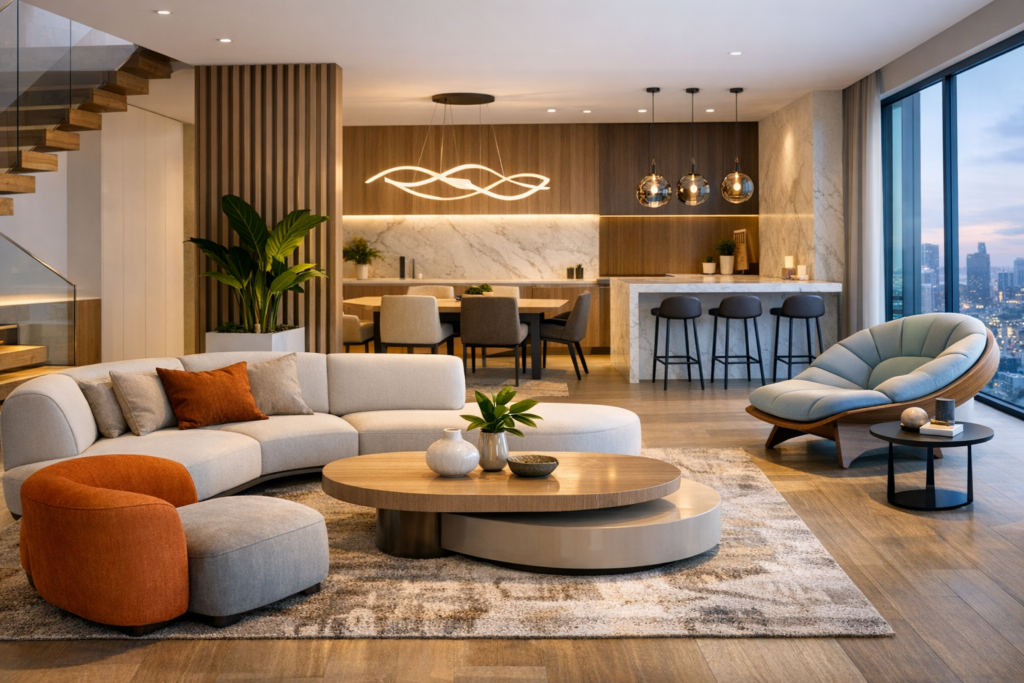
Furniture Trends for Modern Homes in 2026
September 11, 2025Modern homes in 2026 are all about making every square foot work harder, feel calmer, and look more personal. The biggest furniture trends aren’t just “new styles” for the sake of it—they’re practical shifts driven by smaller living spaces, flexible work, sustainability expectations, and a desire for comfort that still feels elevated. Below, you’ll find the key furniture trends shaping 2026, along with real-world tips, comparisons, and shopping guidance to help you choose pieces that look great now and still make sense years from now.
1) The new comfort: soft minimalism with smarter shapes
Minimalism isn’t going anywhere, but it’s getting warmer. In 2026, clean silhouettes are paired with softer edges, thicker cushions, and more inviting proportions. Think “streamlined” rather than “stark.” This trend works equally well for homeowners investing in long-term staples and renters who want a cohesive look without feeling like they live in a showroom.
What it looks like in real homes
Expect rounded corners, curved sofa arms, oval coffee tables, and dining chairs with gentle, ergonomic backs. You’ll also see low-profile seating that makes rooms feel larger and calmer—especially in open-plan living areas.
Practical buying advice
If you want the look without sacrificing usability, focus on these details:
- Seat depth: Deep seats feel loungey but can be tough for shorter users. If you’re between styles, choose a medium depth and add lumbar pillows.
- Arm shape: Rounded arms are cozy but can reduce sitting space. If you host often, consider a slimmer arm profile to maximize seat width.
- Leg height: Higher legs make small rooms feel airy and make cleaning easier. Low, blocky bases look modern but can feel heavy in tight layouts.
Comparison: curved vs. straight-line furniture
Curved pieces soften angular rooms and improve flow (great for open plans and households with kids). Straight-line pieces tend to be easier to place against walls and usually offer slightly more usable surface area (better for compact apartments). A balanced approach works well: one curved “hero” item (sofa or coffee table) with simpler, straight companions.
When you’re browsing online at LifeDeals, look for product photos that show angles and scale—curves can feel dramatically different in person than a flat front-on image suggests.
2) Modular living: furniture that adapts to real life
One of the strongest furniture trends for modern homes in 2026 is modularity. People are moving more frequently, rooms are doing double duty, and furniture needs to keep up. Modular doesn’t have to mean “futuristic” or “bulky,” either—many of today’s modular collections look tailored and design-forward.
Where modular matters most
These categories are leading the shift:
- Sectional sofas with reconfigurable pieces: Ideal for renters or anyone who likes to change layouts seasonally.
- Storage ottomans and nesting tables: Great for hiding clutter and expanding surface area when you need it.
- Expandable dining tables: A smart upgrade for hosts who don’t want a huge table dominating daily life.
- Modular shelving systems: Especially useful for awkward walls, sloped ceilings, or multipurpose rooms.
Practical advice: how to choose a modular sofa
Before buying, answer three questions:
- How do you actually use the sofa? If you sprawl, prioritize chaise modules and deeper seats. If you sit upright for conversation, choose supportive cushions and a slightly higher back.
- Will the configuration need to change? If yes, choose a system with universal corner/seat pieces rather than a fixed left-chaise/right-chaise design.
- Can it fit through your entryway? Modular helps here, but check the widest single piece dimension and your door/hallway measurements.
Comparison: built-in look vs. rearrangeable flexibility
Built-in look sectionals create a premium, seamless vibe and can anchor a large room, but they’re less forgiving if you move. Rearrangeable modular sets may show seams between pieces, yet they shine in apartments, shared living spaces, and evolving households.
If you’re shopping at LifeDeals, prioritize listings that clearly specify whether connectors are included and how the modules lock together—this is the difference between “always tidy” and “constantly sliding.”
3) Storage becomes part of the design (not an afterthought)
Clutter-free spaces remain a top priority in 2026, but the approach is changing: instead of hiding everything in random bins, storage is being designed into furniture in a way that still feels intentional and stylish. This is especially valuable for renters who may not be able to add built-ins.
Furniture categories to watch
Look for designs that blend storage and aesthetics:
- Media consoles with cable management: Ventilated compartments, hidden channels, and a cleaner front profile.
- Bed frames with drawers or lift-up platforms: A major space win in smaller bedrooms.
- Entry benches with shoe storage: A simple upgrade that instantly makes a home feel more organized.
- Coffee tables with hidden compartments: Perfect for remotes, chargers, and daily clutter.
Practical advice: match storage style to your habits
Choose storage based on what you’re storing and how often you access it:
- Open shelving works for curated items and things you use daily, but it demands visual discipline.
- Closed storage is best for mixed items and fast cleanups—ideal for busy households.
- Mixed storage (open + closed) is usually the most livable: display a few items, hide the rest.
Comparison: drawers vs. lift-top vs. cabinets
Drawers are great for smaller items and keeping categories separated, but they need clearance to open. Lift-top storage is space-efficient and sleek, but you’ll want quality hinges for daily use. Cabinets handle bulky items well, though interior organization matters more (add baskets or dividers).
When you browse LifeDeals online, check interior photos and hardware details—soft-close hinges and sturdy drawer slides are worth prioritizing for anything you’ll use every day.
4) Materials and finishes: natural, tactile, and easier to live with
In 2026, finishes lean warm and touchable. Even modern homes are moving away from ultra-glossy, high-maintenance surfaces. The goal is “design-forward” without feeling fragile. People want furniture that can handle everyday life—pets, kids, dinner parties, and the occasional spill—while still looking refined.
Trending materials and what they’re best for
- Light to medium woods: Oak tones, ash, and warm walnut-inspired finishes create a relaxed, modern feel.
- Stone looks (sintered stone, engineered surfaces): Popular for dining and coffee tables because they’re often more stain- and scratch-resistant than natural stone.
- Textured upholstery: Bouclé-inspired weaves are still present, but you’ll see more durable textured fabrics that don’t snag as easily.
- Matte metals: Brushed nickel, blackened steel, and softened champagne tones replace harsh shininess.
Practical advice: choose finishes that match your lifestyle
Instead of choosing purely by looks, pick by maintenance reality:
- If you have pets: Favor tight weaves, performance fabrics, and legs that allow easy vacuuming.
- If you host often: Choose tables with surfaces that handle heat, moisture rings, and quick wipe-downs.
- If sunlight hits your room: Consider fade-resistant fabrics and avoid super dark finishes that show dust and micro-scratches.
Comparison: genuine wood veneer vs. solid wood vs. engineered surfaces
Solid wood can be long-lasting and repairable but often costs more and may move slightly with humidity. Wood veneer offers a high-end look at a more approachable price; it’s a smart choice when you want beautiful grain without the premium. Engineered surfaces (for tabletops especially) can outperform natural materials for stain resistance and daily wear, making them ideal for busy households.
5) Color direction for 2026: calm bases with confident accents
Neutral doesn’t mean boring in 2026. The dominant palette is calm and grounded, but accents are getting bolder—used strategically rather than everywhere at once. This is great news if you want a modern home that feels current without needing a full redesign every year.
What’s trending
- Warm neutrals: Cream, sand, greige, and soft taupe instead of icy gray.
- Earthy greens and clay tones: Used for accent chairs, ottomans, or dining chairs.
- Deep accents: Inky blue, espresso brown, and charcoal are showing up in smaller doses for contrast.
Practical advice: the 70/20/10 approach
If you want an easy framework:
- 70% base: Your large pieces (sofa, rug, bed frame) in versatile neutrals.
- 20% supporting: Complementary mid-tones (side chairs, curtains, occasional tables).
- 10% accent: A bolder color or finish (statement chair, bar stools, lamps).
Comparison: trendy color upholstery vs. timeless neutrals
Trendy colors can make a space feel curated and fresh, but they’re harder to resell and can feel dated faster. Neutral upholstery is more flexible—then you can rotate accent colors through pillows, throws, and small décor. If you love color, consider a bold accent chair instead of a bold sofa.
6) Home office furniture that blends in (without sacrificing ergonomics)
Work-from-home is still shaping furniture choices in 2026, but the aesthetic is changing. People want work zones that integrate into living spaces—especially in apartments and open-plan layouts—without looking like a corporate cubicle. The best pieces feel like “real furniture” and still support good posture.
What to look for in 2026 office pieces
- Compact desks with built-in storage: A clean surface reduces visual clutter.
- Comfort-forward desk chairs: More residential styling, still supportive.
- Flexible lighting: Task lamps that look decorative when not in use.
Practical advice: don’t compromise on these features
- Desk height and leg room: Make sure you can sit comfortably without bumping storage rails.
- Chair support: A chair should support your lower back; if the chair is minimal, plan to add a lumbar cushion.
- Cable management: Choose desks or consoles that keep cords from spilling into the room.
Comparison: dedicated office room vs. “work corner” setup
Dedicated office rooms allow for larger desks and more ergonomic chairs, but many homes don’t have that luxury. A work corner can be just as effective if you choose a desk with storage, a comfortable chair, and lighting that visually defines the zone. In small spaces, a slim desk paired with a storage credenza can outperform a bulky all-in-one workstation.
For a cohesive look, explore coordinating desk-and-storage combinations online at LifeDeals—matching finishes across pieces makes even a small work area feel intentional.
FAQ: Furniture trends for modern homes in 2026
1) What furniture style is most “future-proof” for 2026 and beyond?
Soft minimalism is the safest bet: clean lines, warm neutrals, and a focus on comfort. Choose timeless silhouettes for big-ticket pieces (sofas, beds, dining tables) and use accents to bring in trend-forward shapes or colors.
2) Are curved sofas and round tables practical for small spaces?
They can be, especially round dining tables and oval coffee tables, which improve walkways and reduce sharp corners. For small rooms, keep the footprint modest and pair curved items with slimmer, straight companions to avoid a “crowded” feel.
3) What’s the best upholstery choice if I have kids or pets?
Look for performance fabrics or tightly woven textiles that resist snags and clean easily. Medium tones and textured weaves tend to hide everyday wear better than very light solids or delicate loops.
4) How do I make a modular setup look polished instead of temporary?
Unify the look with a large rug that fits under the front legs of seating, add a substantial coffee table, and keep accessories consistent (matching side tables or similar finishes). Also, choose modular pieces with secure connectors to prevent shifting.
Conclusion: making 2026 trends work in your home
The best furniture trends for 2026 share a common theme: flexibility without sacrificing style. Softer minimalism, modular layouts, integrated storage, durable materials, and calm-yet-confident color choices all support a home that looks modern and lives well. As you plan updates, prioritize pieces that solve real problems—seating that fits your routines, storage that matches your habits, and finishes you won’t tiptoe around.
If you’re ready to refresh a room, take a look online at LifeDeals for versatile seating, smart storage, and modern finishes that align with these 2026 trends. A few well-chosen upgrades can make your space feel brand new—without needing a full redesign.