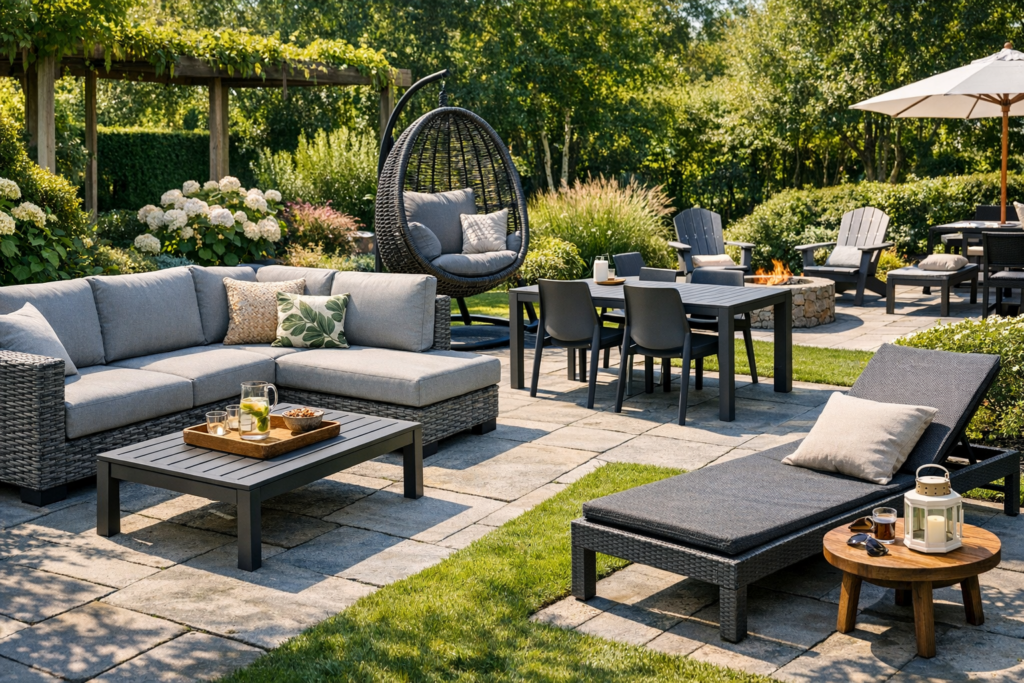
Garden Furniture That Can Stay Outside All Year
June 26, 2025Buying garden furniture is supposed to make outdoor living easier, not add another chore to your weekend list. If you want a patio or balcony that looks good in July and still feels ready to use in January, the key is choosing materials and finishes designed to handle rain, UV, frost, and everyday wear. This guide breaks down which garden furniture can stay outside all year, what “weatherproof” really means, and how to compare options so you can shop with confidence.
What “All-Year Outdoor Furniture” Actually Means
Brands often use terms like weather-resistant, waterproof, and all-weather interchangeably, but they’re not the same. Understanding the difference will save you from warped tabletops, rust stains on paving, and cushions that never quite dry.
Weather-resistant vs. all-weather: the quick reality check
Weather-resistant usually means the furniture can cope with occasional rain and sun, but may need covering or indoor storage in prolonged bad weather. All-weather implies the core materials can remain outside year-round with minimal damage, though even the best pieces benefit from basic care.
The four enemies of outdoor furniture
To choose year-round furniture, match materials to your climate and exposure:
- Moisture (rain, humidity, puddling): causes swelling, mould, and corrosion.
- UV rays: fades colour and can make plastics brittle.
- Temperature swings: lead to expansion/contraction, cracking, and loosened joints.
- Wind and grit: scratches surfaces and stresses frames when furniture shifts.
What to look for in product specs
When browsing LifeDeals or any retailer, scan descriptions for these practical details:
- Powder-coated aluminium (not just “metal”) for rust resistance.
- Stainless steel grade if stated (higher grades fare better near the coast).
- Teak or acacia with outdoor oil/finish notes.
- UV-stabilised resin or HDPE for plastics and “wood-look” furniture.
- Quick-dry foam and solution-dyed acrylic for cushions you can leave out more often.
- Drainage holes in frames, and slatted or vented surfaces to avoid standing water.
Best Materials for Garden Furniture That Stays Outside
Some materials genuinely thrive outdoors. Others can survive, but only if you’re realistic about upkeep. Below are the strongest contenders for leaving outside all year, plus how they compare.
Aluminium: lightweight, rust-proof, and low effort
If you want the simplest “leave it out” option, aluminium is hard to beat. It doesn’t rust, it’s easy to move, and modern powder-coating holds colour well.
Best for: dining sets, corner sofas, bistro sets, small patios and balconies.
Pros: rust-proof, low maintenance, usually affordable, modern styling.
Watch-outs: very lightweight pieces can shift in strong wind; darker colours can get warm in direct sun; joints and hardware quality matters.
Tip: choose wider feet or add outdoor furniture grips on exposed decking to reduce sliding during storms.
All-weather rattan (PE wicker): the “outdoor living” classic
When you see “rattan” advertised for outdoors, you want synthetic rattan made from PE (polyethylene) wicker, not natural rattan. A well-made PE weave paired with an aluminium frame can stay out year-round.
Best for: lounge sets, modular seating, relaxed entertaining.
Pros: comfortable look, doesn’t splinter, easy to wipe clean, generally stable outdoors.
Watch-outs: cheaper weaves can go brittle or sag; some sets hide steel frames that may rust if coating fails.
Tip: check for an aluminium frame in the description and a tighter, thicker weave for durability. On LifeDeals, this is often called out in the materials list.
Teak: premium timber that’s built to live outside
Teak is one of the few woods that can genuinely sit outdoors in wet weather. Its natural oils help it resist moisture and pests. Over time, untreated teak fades to a silvery grey, which many people love.
Best for: high-end dining tables, benches, statement pieces.
Pros: excellent longevity, classic look, strong and stable.
Watch-outs: higher upfront cost; can develop surface marks if leaves and water sit on it; will change colour unless maintained.
Tip: if you prefer the honey tone, plan to clean and oil it a couple of times a year. If you like the grey patina, simply clean it and let nature do the rest.
Acacia and eucalyptus: good value wood with a maintenance plan
These hardwoods can perform well outdoors, especially when they’re responsibly sourced and properly finished. However, they typically need more care than teak to stay looking their best.
Best for: mid-range dining sets, foldable chairs, compact spaces.
Pros: attractive grain, often more budget-friendly than teak.
Watch-outs: more prone to splitting and fading if neglected; finishes can wear in high exposure.
Tip: apply a suitable outdoor oil or sealer and keep the surface clean so moisture doesn’t sit in cracks.
HDPE and UV-stabilised resin: plastic done properly
Not all plastics are equal. HDPE (high-density polyethylene) and UV-stabilised resin furniture is designed for sun exposure and temperature swings. It’s a practical option if you want easy cleaning and zero worries about rust.
Best for: family gardens, pool areas, coastal air, fuss-free seating.
Pros: extremely low maintenance, hose-down cleaning, won’t rust, many colour options.
Watch-outs: cheaper plastics can fade or become brittle; very light chairs may move in wind.
Tip: look for “UV-stabilised” or “fade-resistant” in the product copy and choose slightly heavier designs for exposed locations.
Steel and iron: durable, but only if the finish is excellent
Powder-coated steel can work outdoors year-round, but it’s less forgiving than aluminium. Once the coating chips, rust can start. Wrought iron is heavy and wind-proof, but needs touch-ups over time.
Best for: classic bistro sets, heavy benches, decorative pieces.
Pros: stable in wind, often very sturdy, timeless designs.
Watch-outs: rust risk, especially in damp climates or near the sea; may require repainting.
Tip: choose pieces with thick powder coating and add felt or rubber feet to reduce scratching (which can expose metal).
How to Choose the Right Set for Your Space and Climate
The “best” all-year outdoor furniture depends on where you live and how your outdoor area behaves in real weather. Use these comparisons to narrow down what will actually last.
If you get lots of rain or high humidity
Moisture is the big test. Prioritise materials that don’t absorb water and designs that don’t trap it.
- Top choices: aluminium, PE rattan on aluminium frames, HDPE/resin.
- Wood choice: teak performs best; other woods need consistent sealing.
- Design detail: choose slatted tables and seating, and avoid deep channels where water pools.
If your space is very sunny
UV exposure fades, weakens, and heats surfaces.
- Top choices: UV-stabilised resin/HDPE, powder-coated aluminium, high-quality PE rattan.
- For cushions: look for solution-dyed fabrics (colour is built into the fibre), not just surface-dyed.
- Comfort tip: lighter frame colours stay cooler to the touch.
If you’re near the coast
Salt air accelerates corrosion. Material choice matters more than almost anything else.
- Top choices: aluminium, HDPE/resin, teak.
- Avoid if possible: untreated steel, cheaper mixed-metal frames.
- Routine: rinse frames occasionally with fresh water to reduce salt build-up.
If you have a small balcony or rented space
You may need flexibility without sacrificing durability.
- Top choices: foldable acacia sets (with maintenance), compact aluminium bistro sets, stackable resin chairs.
- Practical pick: modular seating that can be rearranged for guests, then compacted.
- Renter-friendly tip: opt for lighter pieces you can move indoors during extreme weather without needing a shed.
Quick comparison table (in plain terms)
Here’s a simple way to compare common options:
- Lowest maintenance: aluminium, HDPE/resin.
- Best “outdoor lounge” look: PE rattan on aluminium.
- Most premium natural feel: teak.
- Best in wind: wrought iron/heavier steel (with rust management).
- Best value wood: acacia/eucalyptus (with oiling/sealing).
Year-Round Setup: Cushions, Covers, and Smart Extras
Even if your furniture frames can stay outside, the accessories you choose will determine how “ready to use” your space feels on a random Tuesday. A few smart add-ons can make outdoor living effortless.
Can cushions stay outside all year?
Some can, most shouldn’t. “Outdoor cushions” vary widely:
- Everyday outdoor cushions: fine for light rain and regular use, but best stored during prolonged wet or freezing conditions.
- Quick-dry cushion systems: designed with fast-draining foam and breathable mesh panels; these are the closest to true leave-out cushions.
Practical approach: leave cushions out during the season, but store them in a deck box or indoor cupboard when heavy rain/frost is forecast. You’ll extend their life dramatically.
Choosing a cover that helps rather than harms
A cover is only useful if it reduces moisture, not traps it.
- Look for: breathable material, taped seams, adjustable hems, and vents.
- Avoid: thin plastic tarps sitting directly on surfaces (they can create condensation and cause mould or staining).
- Fit tip: choose a cover slightly larger than your set so air can circulate.
Winter-proofing in 20 minutes
Before the coldest months, do a quick reset:
- Deep clean frames and tabletops to remove grime that can stain over winter.
- Check screws and feet so freeze/thaw cycles don’t loosen joints.
- Protect wood with oil/sealant if your set needs it.
- Store soft items (cushions, throws) somewhere dry.
- Cover or position furniture so water can’t pool (slight tilt is better than perfectly flat).
Don’t forget the ground it sits on
Outdoor furniture often fails from the bottom up. If water sits under legs, it can stain decking, encourage corrosion on hardware, or soften wood fibres.
- Use feet caps or glides on stone and decking.
- On grass or soil, place furniture on pavers or a patio mat to prevent sinking and wobbling.
- For balconies, choose wider feet to protect surfaces and improve stability.
Smart Buying Tips: How to Spot Quality Online
Shopping online is convenient, but “outdoor” can mean a lot of different things. Use this checklist to separate genuinely durable pieces from those that look good for one season.
Check the frame material (and be wary of vague wording)
“Metal frame” isn’t enough. Look for specifics like powder-coated aluminium. If a rattan set doesn’t clearly state the frame material, it’s worth digging deeper or choosing a listing that does.
Look at joinery and structure, not just styling
- Dining tables: thicker legs and bracing underneath reduce wobble.
- Sofas: a solid base platform supports cushions evenly and prevents sagging.
- Stacking chairs: check weight limits and whether the feet are reinforced.
Choose finishes that match your tolerance for upkeep
If you want “hose it off and forget it,” go aluminium or HDPE/resin. If you enjoy the look and feel of wood and don’t mind seasonal care, teak or acacia can be incredibly rewarding.
Build a set that fits how you actually live
A common mistake is buying a large dining set because it looks impressive, then using it twice a year. Consider these realistic patterns:
- Daily coffee spot: compact bistro set, easy access, comfortable chairs.
- Weekend hosting: extendable table or modular seating with a few extra stackable chairs.
- Family-proof: wipe-clean surfaces, rounded corners, and sturdy frames.
If you’re ready to compare styles and materials side by side, browse the outdoor collection at LifeDeals. Filtering by material and set type makes it easier to land on furniture that suits your space and the way you’ll use it.
FAQ: Garden Furniture That Can Stay Outside All Year
1) What is the best garden furniture material to leave outside all year?
For the lowest maintenance, powder-coated aluminium and HDPE/UV-stabilised resin are top choices. If you prefer wood, teak is the most reliable for year-round outdoor exposure, especially in wet climates.
2) Will synthetic rattan crack in winter?
High-quality PE rattan is designed to handle temperature changes, but cheaper weaves can become brittle over time. Look for UV-stabilised PE and an aluminium frame. In harsh winters, using a breathable cover reduces stress and keeps it cleaner.
3) Can I leave outdoor cushions outside in the rain?
Many outdoor cushions can handle light showers, but frequent heavy rain can lead to waterlogging and mildew. If you want cushions that can stay out most of the time, look for quick-dry foam and breathable construction. Otherwise, store cushions in a dry box when storms are expected.
4) Do I need furniture covers if the furniture is “all-weather”?
You don’t strictly need covers for aluminium or resin frames, but covers reduce cleaning, protect finishes, and extend the “new” look. The key is choosing a breathable cover with vents so moisture doesn’t get trapped underneath.
Conclusion: Choose Once, Relax for Years
Garden furniture that can stay outside all year is absolutely achievable when you focus on the right materials, smart construction, and a few protective habits. Aluminium and HDPE/resin are the easiest wins, PE rattan offers a comfortable lounge feel with the right frame, and teak delivers premium longevity for those who love natural timber.
When you’re ready to upgrade your outdoor space, explore the options at LifeDeals and compare by material, size, and seating style. A well-chosen set won’t just survive the seasons—it’ll make your garden, patio, or balcony feel like an extra room all year round.