How to Choose the Right Rug Size for Your Living Room
September 4, 2025Choosing the right rug size for your living room seems simple—until you’re staring at a dozen options and realizing a few inches can make the whole space feel either polished or awkward. The good news: once you understand a few layout rules, rug sizing becomes straightforward. This guide walks you through the most practical ways to pick a living room rug that fits your furniture, your room dimensions, and your lifestyle.
Why Rug Size Matters More Than Pattern
A rug does more than add softness underfoot. It anchors seating, defines zones (especially in open-plan homes), and visually balances the room. When the rug is too small, furniture looks like it’s “floating” and the space can feel disconnected. When it’s too large, it can swallow the room or crowd walkways and door swings.
Before you get lost in colors and motifs, start with size. You’ll get a cleaner layout, and almost any pattern you love will look more intentional once the proportions are right.
Common Problems Caused by the Wrong Rug Size
Here’s what typically goes wrong when sizing is off:
- Undersized rug: The seating area looks separate and smaller than it is; coffee table feels stranded.
- Oversized rug: The room can feel crowded; rug edges may curl near doorways; it may be harder to vacuum around furniture.
- Wrong shape: A long rectangular room can feel even more tunnel-like with an overly narrow runner-style rug; round rugs can clash with boxy sectionals if the scale isn’t right.
Measure First: A Simple Method That Works
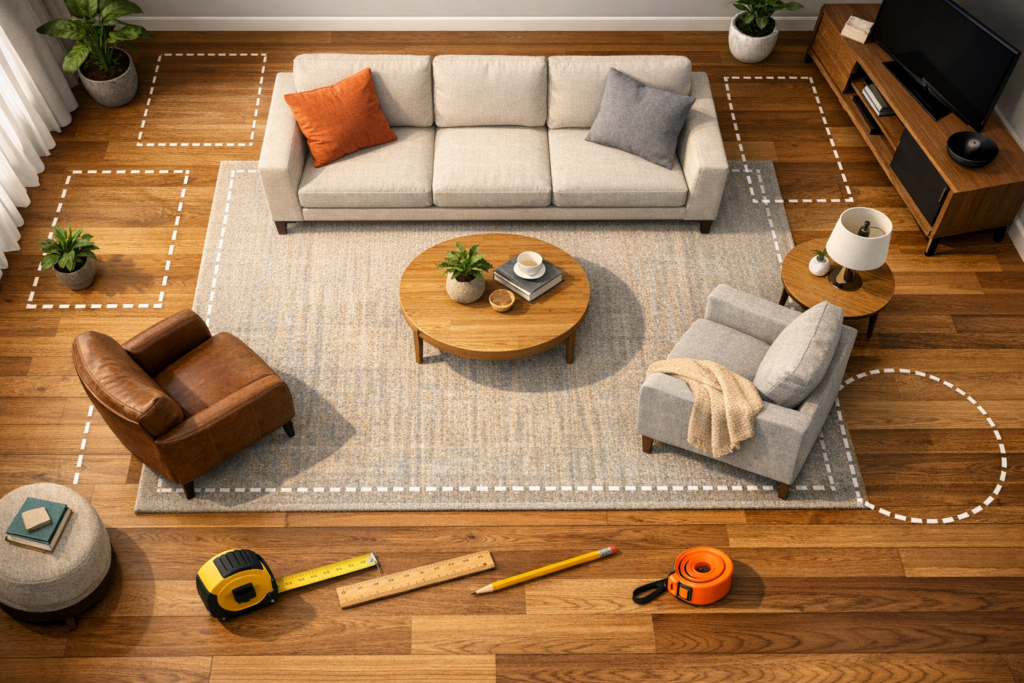
Accurate measuring is the fastest path to a rug that looks like it was chosen by a pro. You don’t need fancy tools—just a tape measure, painter’s tape (or newspaper), and a few minutes.
Step 1: Identify Your “Rug Zone”
Decide what you want the rug to do. Most living room rugs serve one of these purposes:
- Anchor the entire seating area: Rug supports the sofa and chairs so the layout feels unified.
- Frame only the coffee table area: Rug provides softness and style in the center while keeping edges open.
- Define a zone in an open-plan space: Rug separates the living area from dining or kitchen zones.
Step 2: Tape It Out on the Floor
Use painter’s tape to outline potential rug dimensions directly on your floor. Walk around it, open doors, and check how it relates to your furniture. This one step prevents the most common sizing regrets.
Step 3: Leave Breathing Room Around the Edges
In most living rooms, the rug looks best when you leave a visible border of flooring between the rug and the walls. A practical guideline is to keep about 8 to 18 inches of bare floor around the rug perimeter. Smaller rooms may need less; larger rooms can handle more.
Choose a Layout Style: 3 Proven Options
Rug sizing isn’t only about the room—it’s about how your furniture sits on it. The following layouts cover nearly every living room arrangement and make it easy to choose between common rug sizes like 5’x8′, 8’x10′, 9’x12′, and 10’x14′.
Option 1: All Front Legs on the Rug (Most Popular)
This is the go-to layout for a reason. The rug extends under the front legs of the sofa and chairs, creating a connected seating area without requiring an oversized rug.
Best for: Most standard living rooms, renters who want a polished look without covering too much floor.
Typical rug sizes: 8’x10′ for many spaces; 9’x12′ for larger seating groups or sectionals.
Quick check: Aim for the rug to extend at least 6 to 12 inches beyond each side of your sofa. If it stops short, it may look undersized.
Option 2: All Furniture Legs on the Rug (High-End, “Showroom” Look)
In this layout, the entire seating set—sofa and chairs—sits fully on the rug. It feels luxurious and cohesive, especially in larger rooms.
Best for: Spacious living rooms, open-plan layouts, homes where the rug is a major design feature.
Typical rug sizes: 9’x12′, 10’x14′, or larger depending on room scale.
Watch out for: Make sure you still have comfortable walkways (generally 24 to 36 inches) around the seating area. If paths feel tight, size down or switch to the “front legs on” layout.
Option 3: Coffee Table Only on the Rug (Budget-Friendly, Small Spaces)
This is the most minimal coverage option: the rug sits under the coffee table and typically doesn’t reach the sofa legs. When done well, it can work—especially if you choose a rug that’s large enough to visually connect the seating.
Best for: Very small living rooms, apartments, or when you’re layering rugs.
Typical rug sizes: 5’x8′ or 6’x9′ depending on furniture scale.
Pro tip: If your sofa is large, a tiny rug will exaggerate the size difference. It’s often better to go up one size and use a simpler pattern if you’re concerned about budget.
Rug Size Recommendations by Room and Furniture Type
Exact sizing depends on your layout, but these comparisons help you narrow down the best choice quickly.
Small Living Rooms (Apartment-Size)
Common goal: Keep the room open while still grounding the seating area.
- 5’x8′: Works with loveseats, compact sofas, or a small seating nook. Best when the coffee table and a portion of the seating area visually relate to the rug.
- 8’x10′: Often the “surprisingly better” choice even in smaller spaces, especially if you can fit at least the front legs of the sofa and a chair on the rug.
If you’re debating between 5’x8′ and 8’x10′, choose based on sofa length. A standard 84-inch sofa typically looks more balanced with an 8’x10′.
Medium Living Rooms (Most Homes)
Common goal: Make the seating area feel cohesive without overpowering the room.
- 8’x10′: A reliable everyday choice for standard sofas plus one or two chairs. Supports the “front legs on” layout well.
- 9’x12′: Ideal when you have a larger sofa, a sectional, or you want more rug visible beyond furniture edges.
In many medium rooms, an 8’x10′ rug looks good, but a 9’x12′ can look great if your room allows comfortable pathways.
Large Living Rooms and Open-Plan Spaces
Common goal: Define the living zone clearly and prevent the seating from looking adrift in the room.
- 9’x12′: Strong choice for larger sofas, roomy sectionals, and multiple chairs.
- 10’x14′: Best when you want all furniture legs on the rug or need a substantial rug to balance high ceilings and wide spaces.
In open layouts, a bigger rug often makes the space feel more intentional. If your living area blends into the dining space, sizing up helps the living room read as its own “room.”
Sectionals: The Rug Should Match the Footprint
Sectionals can trick people into buying a rug that’s too small because the seating already fills the room. The rug should still extend beyond the sectional’s edges to create a frame.
- Compact sectional: Often works with 8’x10′ if the chaise side isn’t too long.
- Standard to large sectional: Usually needs 9’x12′ or 10’x14′ to avoid the “tiny rug under a huge sofa” effect.
Shape, Placement, and Real-Life Details That Make a Difference
Once you know the approximate size, the finishing decisions—shape, exact placement, and daily-life considerations—are what elevate the end result.
Rectangular vs. Round vs. Square
- Rectangular rugs: The easiest choice and most common for living rooms. Works with standard sofas and sectionals.
- Round rugs: Great for softening a boxy room or highlighting a round coffee table. Better with smaller seating groups than with large sectionals.
- Square rugs: Best when your seating arrangement is symmetrical (for example, a square room with a sofa facing two chairs).
Where the Rug Should Sit Under the Sofa
For the “front legs on” layout, slide the rug under the sofa by about 3 to 6 inches. This keeps the rug from looking like it’s drifting away from the seating area and helps everything feel anchored.
Mind the Walkways and Door Swings
Check clearances near:
- Entry doors that open into the room
- Balcony or patio doors
- High-traffic routes (couch to hallway, living room to kitchen)
If a door catches on a thick rug, consider a lower-pile option or adjust placement slightly.
Layering Rugs (A Smart Fix for Tricky Sizes)
If you love the look of a statement rug but can’t find the right size, layering can help. Use a larger, neutral base rug (like jute or a flatweave) and place a smaller patterned rug on top. This works well in rentals where you want impact without buying a custom-size piece.
Practical Shopping Tips: Compare Options Before You Buy
Rugs are one of those purchases that feel very different in your home than they do online. A few checks can save time and returns.
Compare Two Sizes If You’re Unsure
If you’re on the fence between two sizes, the larger one usually looks more finished—provided it doesn’t crowd walkways. Many shoppers regret going too small more than going slightly bigger.
Think About Pile Height and Lifestyle
- Low pile: Easier to vacuum, great for high-traffic homes, and less likely to interfere with doors.
- Medium pile: Comfortable and cozy, a balanced choice for most living rooms.
- High pile: Plush underfoot but can be harder to clean and may show footprints and vacuum tracks.
If you have pets, kids, or frequent guests, lean toward durable weaves and patterns that hide everyday life gracefully.
Don’t Forget a Rug Pad
A rug pad helps prevent slipping, protects floors, and makes the rug feel thicker and more luxurious. It also helps the rug lie flatter and reduces corner curl—especially important in busy living rooms.
At LifeDeals, you can browse a range of rug sizes and styles online, compare dimensions quickly, and narrow options based on your space and traffic level. If you already know your preferred layout (front legs on vs. all legs on), shopping becomes much faster.
FAQ: Rug Size for Living Rooms
What is the most common rug size for a living room?
For many homes, 8’x10′ is the most common “works in most setups” size. It typically fits under the front legs of a standard sofa and chairs and creates a cohesive seating zone without requiring a very large room.
Should a rug touch the wall in a living room?
Usually, no. Leaving a border of flooring around the rug helps the room feel balanced and intentional. A common guideline is 8 to 18 inches of exposed floor between the rug edge and the walls, adjusted for room size and layout.
Can I put only the coffee table on the rug?
Yes, especially in small spaces or if you’re working within a tighter budget. The key is choosing a rug large enough that it still visually connects to the seating area. If the rug looks like a tiny “island,” sizing up will improve the look immediately.
How do I choose a rug size for a sectional?
Match the rug to the sectional’s footprint and aim for the rug to extend beyond the edges of the seating. Many sectionals look best with 9’x12′ or 10’x14′ rugs, though compact sectionals can sometimes work with 8’x10′.
Conclusion: Pick the Size That Makes the Room Feel Connected
The right rug size makes your living room feel pulled together—furniture looks grounded, walkways feel natural, and the whole space becomes more comfortable. Start by measuring, decide on a layout style, and choose a size that supports your seating area rather than floating in the middle.
When you’re ready to shop, exploring rugs online can be surprisingly efficient if you know your target dimensions. LifeDeals makes it easy to compare sizes and find a rug that suits both your space and your daily routine—so your living room looks great and lives even better. For more home essentials and lifestyle upgrades, you can also browse the broader LifeDeals collection to complete the look.