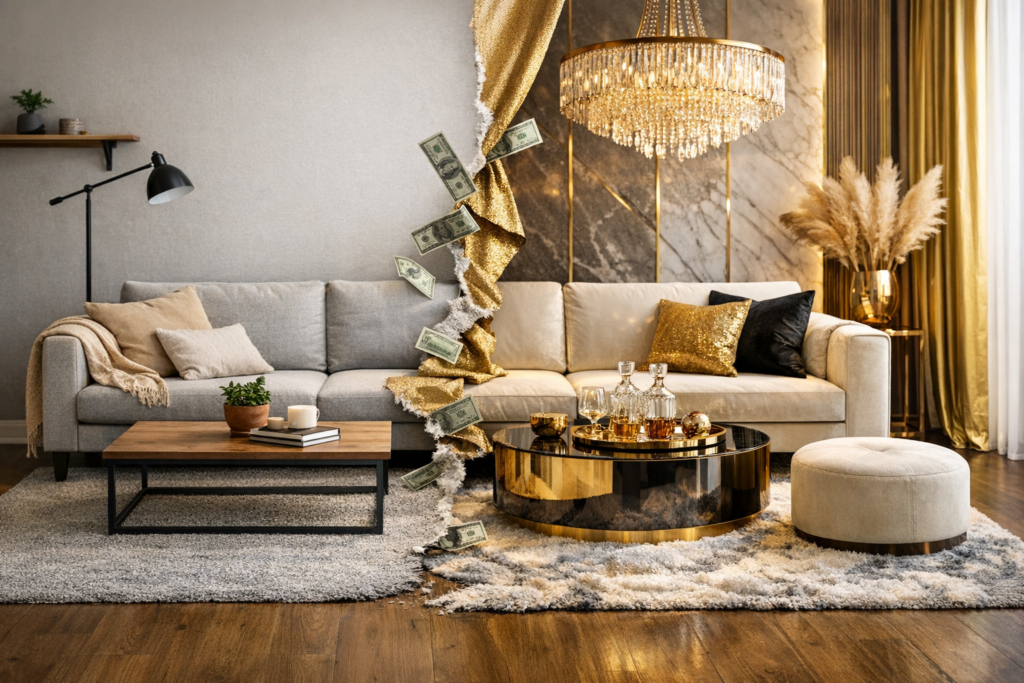
How to Design a Luxury Living Room on a Budget
January 3, 2026A luxury living room isn’t defined by a designer label or a five-figure renovation. It’s defined by how intentional the space feels: balanced proportions, layered textures, cohesive color, and a few standout details that look (and feel) expensive. The good news is that you can get there on a realistic budget—whether you own your home or you’re styling a rental.
Below is a practical, step-by-step guide to designing a luxury living room on a budget, with smart comparisons and upgrade priorities. You’ll also find product ideas you can shop online, including curated finds from LifeDeals when you’re ready to start swapping pieces in.
1) Start with a “Luxury Plan”: What to Buy First (and What to Skip)
Budget-friendly luxury comes from allocating money where it shows most. If you’re trying to elevate a room quickly, focus on high-visibility, high-touch items first.
Prioritize these upgrades (highest impact)
1. Lighting
Lighting changes the entire mood. A well-chosen floor lamp or pendant instantly reads “designed,” while harsh overhead lighting can flatten even the nicest decor.
2. A large rug
A too-small rug is one of the biggest giveaways of a “temporary” space. A larger rug anchors furniture and makes the room feel complete.
3. Window treatments
Curtains add height and softness and are one of the most affordable ways to create a luxury vibe—especially if you hang them correctly.
4. Textiles and soft goods
Pillows, throws, and a plush blanket are relatively low-cost but visually rich. Luxury often looks like comfort.
5. One statement piece
This could be a bold coffee table, a mirror, an oversized piece of art, or an accent chair. One strong focal point makes everything else look more intentional.
Save money (without sacrificing the look)
Side tables and small storage
These are easy to upgrade later. Choose simple shapes in finishes that mimic higher-end materials.
Small decor
A few quality pieces beat a shelf full of random items. Skip buying lots of knickknacks; invest in fewer, better objects.
Matching sets
A full matching furniture set can look flat. Luxury rooms feel collected over time, even when they’re created quickly.
2) Choose a Color Palette That Looks Expensive (Even with Affordable Pieces)
Luxury living rooms often feel calm, cohesive, and layered. You can achieve that with a limited palette and a little contrast.
Use the 60/30/10 guideline (simple and effective)
60% main color: walls and large surfaces (warm white, greige, soft taupe)
30% secondary color: sofa, rug, curtains (charcoal, camel, stone, soft gray)
10% accent color: decor and art (black, brass, deep green, navy)
This approach prevents “visual clutter,” which is a major reason rooms feel less premium. The room can still be interesting—just within a controlled range.
Comparison: Warm neutrals vs. cool neutrals
Warm neutrals (cream, beige, camel) tend to feel inviting and upscale, especially with brass accents and wood tones.
Cool neutrals (gray, bright white) can look modern and crisp but may feel sterile if you don’t add texture (wool, boucle, linen, natural wood).
If you’re unsure, start with warm white walls and bring in contrast with black frames, dark wood, or charcoal textiles.
Add “quiet contrast” for a designer look
Luxury interiors rarely rely on loud color. Instead, they use subtle contrast: matte black next to warm white, brass next to walnut, or ivory linen against a deep-toned sofa. This looks intentional and sophisticated.
3) Make Your Sofa Look Like a Splurge (Without Buying a New One)
Your sofa is usually the biggest item in the room. If you already have one, you can upgrade how it reads without replacing it.
Style it like a showroom
Use larger pillows
Instead of multiple small pillows, go for two or four inserts that are generously filled. A practical trick: use pillow inserts that are one size bigger than the cover for a fuller, tailored look.
Add one textured throw
Choose something that looks substantial: a knit, faux mohair, or a woven cotton blend. Drape it casually over one arm instead of folding it perfectly.
Create symmetry
Symmetry reads “polished.” Matching pillows on each side of the sofa or twin side tables can elevate the room instantly.
Comparison: Replace vs. refresh
Replace if the sofa is sagging, uncomfortable, or the scale is wrong for the room. Comfort is part of luxury.
Refresh if the frame is solid. Add a slipcover (especially in rentals), new legs, or improved styling. This is often the best budget move.
For budget-friendly upgrades, browse online for pillow covers, inserts, and throws. LifeDeals often carries living room essentials that help you get that layered look without overspending.
4) Get the Rug Size Right (The Fastest Way to Make the Room Feel Bigger)
If you only change one thing, make it the rug. A properly sized rug makes furniture feel grounded and expensive.
Quick sizing rules
For most living rooms: aim for an 8×10 or 9×12 if the space allows.
Placement:
Put at least the front legs of your sofa and chairs on the rug. Ideally, all main seating legs sit on the rug for a fully “designed” look.
Comparison: Natural fiber vs. plush pile
Natural fiber (jute, sisal-style) looks high-end and textured, but it can be rough underfoot and may not be ideal if you lounge on the floor.
Plush pile feels more luxurious and cozy, especially in a living room. Look for dense pile and subtle patterning that hides wear.
Tip for renters: If you’re stuck with wall-to-wall carpet, a rug on top can still add definition and style. Choose a rug with contrast so it doesn’t disappear into the carpet color.
5) Lighting: The Luxury Upgrade That Doesn’t Require Renovation
Lighting is what makes a room feel expensive at night. The goal is to layer light sources so the space looks warm and intentional, not like a single bright bulb is doing all the work.
Use the “three light sources” rule
Include at least three of the following:
- Floor lamp near the sofa or reading chair
- Table lamp on a console or side table
- Accent light (picture light, LED strip behind a console, or a small lamp on a shelf)
- Overhead if you have it (but don’t rely on it alone)
Comparison: Warm vs. cool bulbs
Warm (2700K–3000K) feels cozy and upscale—best for living rooms.
Cool (4000K+) can feel clinical and is better suited for task-heavy spaces like kitchens or garages.
Also consider dimmable bulbs or smart plugs so you can adjust the mood. If you’re browsing online, check LifeDeals for lighting options and small accessories that make a noticeable difference.
6) Curtains and Wall Decor: Two “Designer” Tricks That Work in Any Home
Walls and windows are often overlooked, but they’re key to that luxury feeling of height, softness, and cohesion.
Hang curtains the high-end way
Go higher and wider
Mount the curtain rod closer to the ceiling (or just below crown molding) and extend it beyond the window frame. This makes the window look larger and the ceiling look taller.
Choose the right length
Curtains should “kiss” the floor or slightly puddle for a dramatic look. Too-short curtains instantly read budget.
Make wall art look intentional (not random)
Go bigger than you think
A small piece of art floating above a sofa looks unfinished. Consider oversized art or a pair of large frames.
Use consistent framing
Matching frames (black, walnut, or brushed metal) make even inexpensive prints feel curated.
Try a mirror for instant luxury
A large mirror reflects light, visually expands the space, and adds that boutique-hotel feel. Place it opposite a window if possible.
7) Coffee Tables, Styling, and Materials: How to Fake “High-End” Finishes
Luxury rooms often mix materials: glass, metal, wood, and stone-like surfaces. You don’t need real marble to get that look—just be selective.
Comparison: Real marble vs. marble-look
Real marble is beautiful and heavy, but it stains and can be expensive.
Marble-look (sintered stone, quality laminate, faux marble tops) is easier to maintain and often more budget-friendly while still reading upscale from a distance.
Choose “simple shapes, rich finishes”
Clean-lined furniture in a convincing finish looks more expensive than ornate shapes in low-quality materials. Examples:
- Round coffee table with a wood veneer and slim black legs
- Glass-top table with a metal frame
- Nested tables that add flexibility in small spaces
Style your surfaces with restraint
A cluttered coffee table kills the luxury mood. Aim for a small “vignette”:
- One tray (wood, metal, or acrylic) to corral items
- One book stack or a single large coffee table book
- One organic element (greenery, branches, or a bowl)
- One candle or a sculptural object
For decor, focus on texture: ceramics, ribbed glass, matte finishes, and natural fibers. These details photograph well and look elevated in real life.
8) Budget Breakdown: Where to Spend vs. Save (Practical Examples)
If you’re building a luxury living room on a budget, it helps to decide what deserves more of your budget and what doesn’t.
Spend more on
- Rug (it anchors everything and takes daily wear)
- Lighting (it impacts mood and style instantly)
- Sofa comfort (if you need to replace, prioritize quality)
- Curtain panels (long, well-draped curtains look premium)
Save on
- Accent decor (choose fewer pieces, not pricier clutter)
- Side tables (simple is fine; upgrade later)
- Wall art prints (spend on frames, not necessarily the print)
A realistic “refresh” approach
If you’re trying to keep costs down, start with a mini-refresh:
- One larger rug
- Two new lamp sources (floor + table)
- Curtains hung high and wide
- Pillow inserts + two textured covers
This combination can make even a basic living room feel noticeably more luxurious. When you’re ready to shop, browsing LifeDeals online can help you compare styles and find deals on these high-impact items without committing to a full overhaul.
FAQ: Designing a Luxury Living Room on a Budget
1) What makes a living room look luxurious?
Luxury comes from cohesion and layering: a consistent color palette, properly scaled furniture (especially rug size), warm layered lighting, and a few high-quality textures (linen-like curtains, plush pillows, natural wood or metal accents). It’s less about quantity and more about intentional choices.
2) How can renters make a living room feel high-end without painting?
Use removable upgrades: curtains hung high, a large area rug, plug-in lighting, peel-and-stick hooks for art, and styling with textiles. Mirrors and framed prints also create a finished look without permanent changes.
3) Should everything match for a luxury look?
No. Matching can look flat. A luxury room usually mixes finishes and materials, but stays within a controlled palette. Think: warm wood with black accents and soft neutral textiles, rather than a full set in the same fabric and finish.
4) What’s the best “one purchase” to make a room look expensive?
A correctly sized rug is often the fastest upgrade. If your rug is too small, the entire layout can feel off. A larger rug instantly makes the seating area feel intentional and polished.
Conclusion: Luxury Is a Feeling You Can Build, One Smart Upgrade at a Time
Designing a luxury living room on a budget is all about priorities: get the rug size right, layer your lighting, hang curtains the designer way, and choose fewer, better textures. Even small changes—like fuller pillow inserts or warmer bulbs—can shift the entire feel of the room.
If you’re ready to start upgrading, explore LifeDeals online for lighting, rugs, curtains, and decor that help you create a high-end look while staying on budget. With a plan and a few strategic swaps, your living room can feel elevated, comfortable, and confidently “you.”