How to Maintain and Clean Your Rug Properly
July 17, 2025A rug can pull a room together in seconds, but it also quietly takes a daily beating: muddy shoes, pet paws, crumbs, spills, and dust that settles deep into the fibers. The good news is that most rugs don’t need complicated care to look great for years. With a few consistent habits and the right cleaning approach for your rug type, you can keep colors bright, fibers resilient, and your home feeling fresher.
Below is a practical, homeowner-and-renter-friendly guide to maintaining and cleaning your rug properly, including comparisons between materials, DIY methods, and when it’s worth calling in a pro. If you’re also considering an upgrade, LifeDeals makes it easy to browse rug-friendly home essentials online, from cleaning tools to rug pads and more.
Know Your Rug: Material, Construction, and Why It Matters
Before you clean anything, identify what you’re working with. A method that’s safe for one rug can cause shrinking, bleeding dyes, or warped backing in another.
Common rug materials and what they need
Wool rugs are durable, naturally stain-resistant, and luxurious underfoot. They can also hold onto fine dust and may shed a bit, especially when new. Wool dislikes harsh alkalines and heavy soaking.
Synthetic (polypropylene/olefin, nylon, polyester) rugs are often budget-friendly and designed to handle high traffic. They typically tolerate more vigorous cleaning and resist many stains, but oily soils can cling to some synthetics.
Cotton rugs are casual and easy to style, and many are washable. The tradeoff is that cotton can shrink, wrinkle, or fade if cleaned too aggressively or dried incorrectly.
Jute/sisal/seagrass (natural plant fibers) offer a coastal, textured look. These are sensitive to water; moisture can cause staining, browning, and warping. They do best with dry cleaning methods and quick spot care.
Viscose/rayon/bamboo silk rugs can look like silk at a lower price, but they are delicate. Water can leave marks, and fibers can crush. These often require professional care for anything beyond light vacuuming.
Construction affects cleaning, too
Tufted rugs may have latex backing that can degrade with excessive moisture or harsh chemicals.
Hand-knotted rugs are typically more resilient and valuable; gentle methods are safest.
Shag or high-pile rugs trap debris deeper and need different vacuum techniques to avoid pulling fibers.
If you still have the rug tag, read it. If not, do a quick test: dab a hidden corner with a damp white cloth. If you see dye transfer, avoid wet cleaning and stick to gentle spot methods or professional help.
Weekly and Monthly Rug Maintenance That Actually Works
The biggest difference between a rug that looks “tired” after a year and one that looks great after five years is simple routine care. Deep cleaning matters, but maintenance prevents buildup in the first place.
Vacuuming: the right way for your pile
Vacuuming removes abrasive grit that slowly cuts fibers. That grit is what makes rugs look dull and worn. Use these guidelines:
- Low-pile rugs: Vacuum 1 to 2 times per week in high-traffic areas. Use a beater bar if the rug allows it (check backing and manufacturer guidance).
- High-pile/shag: Vacuum 1 to 2 times per week, but consider turning off the beater bar to prevent tangling and fuzzing. Use a suction-only setting when possible.
- Fringe: Avoid vacuuming fringe directly; it can unravel. Use a handheld vacuum on low suction or gently shake it out.
- Pet households: Vacuum more often, and use a rubber-bristle tool or pet hair attachment. Pet hair weaves into fibers and can trap odors over time.
Pro tip: Vacuum in two directions (north-south, then east-west). This lifts embedded dust more effectively than a single pass.
Rotate and reposition to prevent uneven wear
Sunlight and foot traffic create visible “lanes” over time. Rotate your rug 180 degrees every 3 to 6 months. If furniture sits on top, shift it slightly so the same spots aren’t compressed for years.
Use a rug pad: comfort plus protection
A rug pad does more than stop slipping. It reduces friction that breaks down backing and fibers, adds cushioning, and helps your rug lie flatter. It can also improve vacuum performance by preventing the rug from bunching.
When shopping online, look for the right pad style for your floor:
- Hard floors: Choose a pad designed to grip without damaging finishes.
- Carpet-on-carpet: Choose a felt-heavy pad designed to prevent shifting.
- Radiant heat: Confirm the pad is rated compatible.
LifeDeals regularly features home care essentials that pair well with rugs, including pads and cleaning accessories that help you protect the investment you’ve already made.
Quick habits that reduce dirt fast
- Place a doormat outside and inside entry doors to catch grit before it hits the rug.
- Create a “shoes off” area if possible.
- Trim pet nails; it reduces snagging and pilling.
- Address spills immediately (details below). Time matters more than almost any product.
Spot Cleaning Spills and Stains Without Ruining the Fibers
Spot cleaning is where most rug damage happens, usually from rubbing too hard or using the wrong cleaner. The goal is to lift the spill out of the fibers, not scrub it deeper.
The universal spill response (works for most rugs)
- Blot, don’t rub: Use clean white cloths or paper towels to blot from the outside in. Rubbing frays fibers and spreads the stain.
- Scoop solids first: Use a spoon or dull knife to lift solids without pressing them into the pile.
- Use cool water first: A small amount of cool water can remove a surprising amount before you add any cleaner.
- Apply cleaner to the cloth, not the rug: This prevents over-wetting and ring marks.
- Rinse lightly: If you use a cleaning solution, follow with a small amount of clean water to remove residue.
- Dry thoroughly: Press dry towels into the area. If possible, elevate airflow with a fan.
Simple DIY cleaning solution (for many synthetics and some wool)
For many everyday spills (coffee, juice, light food stains), a mild solution can work well:
Mix: a few drops of gentle dish soap in a cup of cool water.
Test in a hidden spot first. If colors bleed, stop and switch to dry methods or consult a professional.
Stain comparisons: what works best for common messes
Red wine: Blot immediately. A small amount of mild soapy water can lift remaining color. Avoid hot water (it can set stains). On wool, keep moisture minimal and blot dry thoroughly.
Grease/oil: These stains often need absorption first. Sprinkle baking soda or cornstarch, let it sit 15 to 30 minutes, then vacuum. Follow with a small amount of mild soapy water if needed (synthetics typically tolerate this better than delicate fibers).
Pet accidents: Blot fast, then use an enzyme cleaner designed for rugs to break down odor-causing compounds. Avoid saturating the backing; deep moisture can create lingering odor or mildew.
Ink/makeup: These can spread quickly. Blot carefully and use a cleaner appropriate to the stain type. When in doubt, professional cleaning is often cheaper than replacing a damaged rug—especially for wool or viscose styles.
What to avoid (even if you’ve seen it online)
- Over-wetting: Too much water can cause backing separation, rippling, and mildew odors.
- Bleach: It can permanently discolor fibers and weaken them.
- Vinegar on delicate/natural fibers: It’s not universally safe. It can alter dyes and affect plant fibers.
- Scrubbing hard with a stiff brush: This can fuzz wool, distort pile, and create permanent texture differences.
Deep Cleaning: DIY vs Professional (and How to Choose)
Even with good vacuuming, rugs collect fine dust and oils that make them look flat. Deep cleaning restores bounce and brightness—but the method should match the rug.
DIY deep cleaning options and how they compare
Carpet cleaner machine (extractor): Effective for many synthetic rugs and some low-pile styles. The advantage is strong extraction, which removes dirty water. The risk is over-wetting and slow drying, especially on thick rugs.
Foam or dry carpet shampoo: Uses less water, which can be safer for rugs that shouldn’t be soaked. It’s convenient, but it may leave residue if not vacuumed thoroughly afterward.
Steam cleaning: Steam can help sanitize, but high heat and moisture can be risky for wool, natural plant fibers, and rugs with certain backings. If you steam, keep it light and ensure fast drying.
When professional cleaning is the smarter choice
Consider professional cleaning if:
- Your rug is wool, viscose, antique, hand-knotted, or has unstable dyes.
- You see rippling, curled edges, or backing issues already.
- The odor persists after careful spot cleaning.
- You have a large stain that soaked through.
Professionals can tailor methods (dusting, immersion washing, controlled drying) to the fiber and construction. It costs more upfront, but it can prevent expensive damage.
How often should you deep clean?
- High-traffic areas: Every 6 to 12 months.
- Low-traffic rooms: Every 12 to 18 months.
- Homes with pets/allergies: Closer to every 6 months, plus frequent vacuuming.
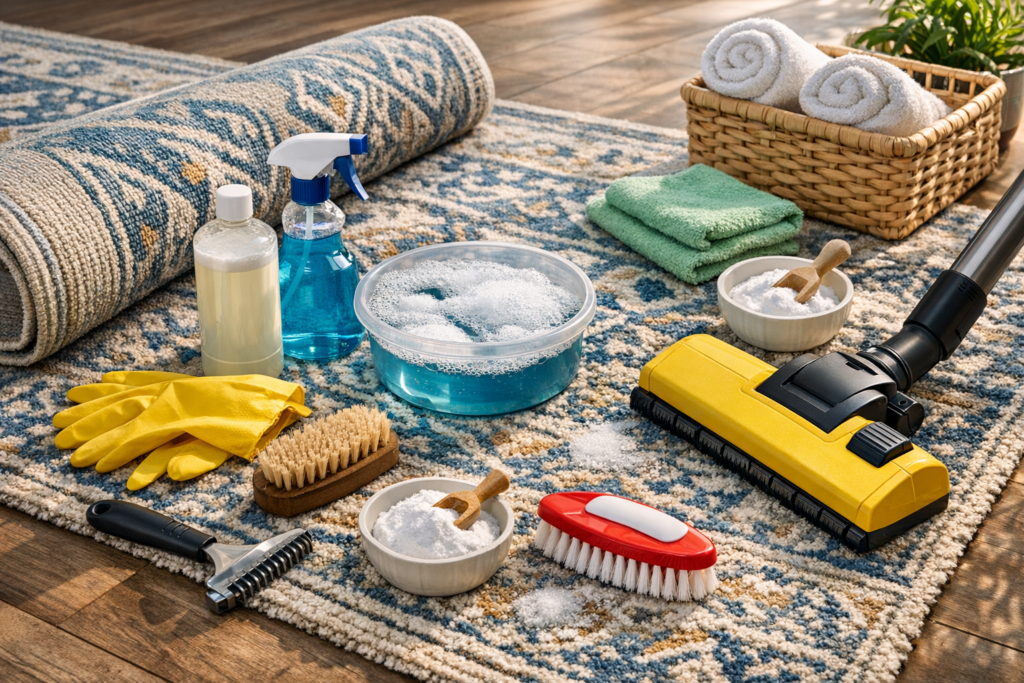
If you’re building a simple cleaning kit at home, LifeDeals is a convenient place to explore rug-care essentials online so you’re not improvising when the next spill happens.
Special Care by Rug Type
If you match the cleaning method to the rug, you’ll get better results with fewer surprises.
Wool rugs
- Vacuum regularly but gently; shedding is normal early on.
- Use mild cleaners and minimal moisture.
- Dry quickly to prevent odor and protect the backing.
Natural fiber rugs (jute, sisal, seagrass)
- Avoid water-based cleaning whenever possible.
- Spot clean with minimal moisture and blot thoroughly.
- Use dry absorbents (like baking soda) for odors, then vacuum well.
Shag and high-pile rugs
- Use suction-only vacuuming when possible to prevent fiber pull.
- Shake out smaller rugs outdoors occasionally (check local rules and pollen levels).
- Rake the pile gently with a carpet rake to revive texture after cleaning.
Washable rugs
- Follow label directions exactly (water temp, cycle type, drying method).
- Avoid high heat drying unless the manufacturer allows it.
- Air dry flat when possible to reduce warping and shrinkage.
Preventing Odors, Allergens, and That “Dull Rug” Look
Rugs act like filters for the room. That can be great for comfort, but it also means they collect what’s in the air and on shoes.
Deodorizing safely
For many rugs, a light sprinkle of baking soda can help with mild odors. Let it sit briefly (15 to 30 minutes is usually enough), then vacuum thoroughly. Don’t leave powders for hours on deep pile; they can be harder to remove.
If odor is persistent (especially pet-related), an enzyme-based product is often more effective than fragrance-based sprays because it targets the source instead of masking it.
Brightening and reviving flattened areas
- Use ice cubes on furniture dents: place an ice cube, let it melt, blot, then gently lift fibers with your fingers or a spoon.
- Brush the pile lightly in one direction after it dries.
- Rotate the rug regularly to spread wear evenly.
Sunlight: friend and foe
Sunlight can help freshen a rug, but it can also fade dyes. If your rug sits in strong sun, use curtains, UV window film, or rotate it more frequently. This is especially important for richly colored or patterned rugs.
FAQ: Rug Cleaning and Maintenance
1) How do I know if my rug can handle water-based cleaning?
Check the care label first. If there’s no label, do a dye test by dabbing a hidden corner with a damp white cloth. If color transfers, avoid wet cleaning and consider professional care, especially for wool, viscose, or vintage rugs.
2) Why does my rug smell worse after I cleaned it?
Usually because it stayed damp too long or moisture reached the backing/pad. Blot thoroughly, increase airflow with a fan, and avoid saturating the rug next time. For pet odors, use an enzyme cleaner and keep the application controlled.
3) Can I use a carpet cleaner machine on an area rug?
Often yes for many synthetic, low-pile rugs, as long as you don’t over-wet and you extract as much water as possible. Be more cautious with wool, tufted rugs with latex backing, natural plant fibers, and shag rugs. When in doubt, spot clean and consult a pro.
4) What’s the best way to stop a rug from slipping on hard floors?
A properly sized rug pad designed for hard floors is the most reliable option. It improves grip, comfort, and helps prevent edge curling. If you’re shopping, LifeDeals is a simple place to explore rug pads and home care add-ons online.
Conclusion: A Cleaner Rug, a More Comfortable Home
Maintaining a rug isn’t about constant deep cleaning—it’s about consistent vacuuming, quick spill response, and choosing methods that match the rug’s material. Rotate it, use a rug pad, and treat stains with a calm, controlled approach. Your rug will look better, feel softer, and last longer.
If you’re refreshing your space or tightening up your cleaning routine, take a look at LifeDeals online for practical rug-care essentials and home upgrades that make everyday maintenance easier. A little preparation now saves a lot of stress when the next spill happens.