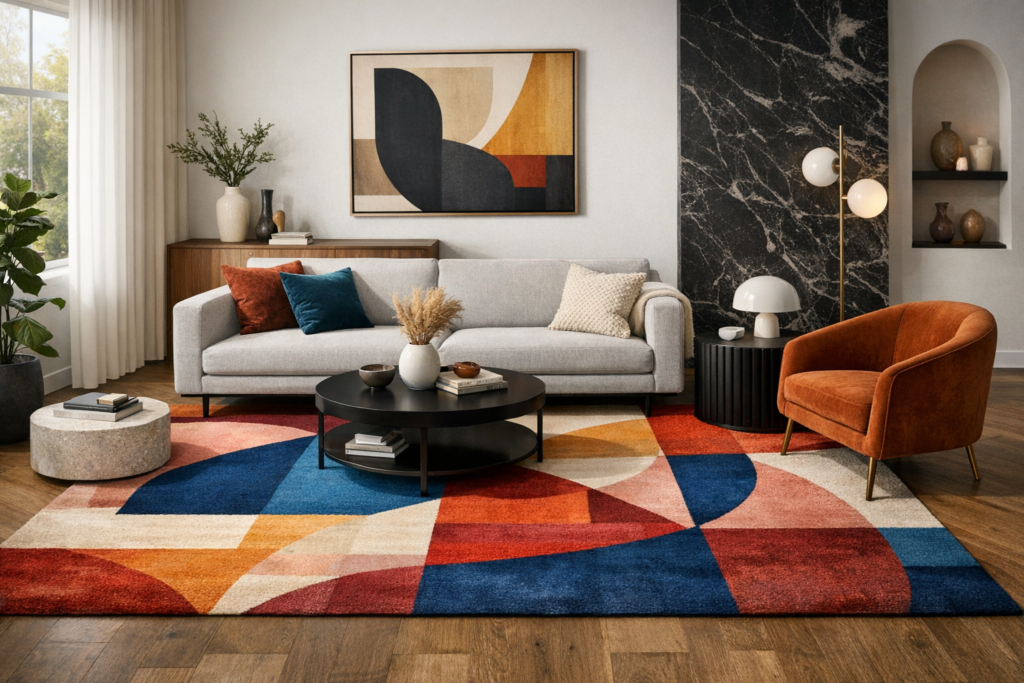
How to Style a Living Room with a Statement Rug
August 7, 2025A statement rug can do more than cover a floor: it can anchor your furniture, define zones in an open-plan space, add warmth, and set the entire mood of your living room. The challenge is making a bold rug feel intentional rather than overwhelming. With a few styling rules and some smart comparisons, you can build a room that looks polished, personal, and comfortable—whether you rent a studio or own a family home.
What Makes a Rug a “Statement” (and Why It Works)
A statement rug is the visual centerpiece of the room. It’s typically bold in at least one of these ways: color, pattern, texture, scale, or shape. The key is that it grabs attention and sets the design direction for everything around it.
Common statement rug styles
Not all statement rugs are loud. Some are dramatic because they’re textural or oversized rather than colorful.
- High-contrast patterns (geometric, stripes, checkerboard, bold florals)
- Vibrant color fields (deep jewel tones, saturated brights, ombré gradients)
- Vintage-inspired rugs (distressed Persian-style, Turkish motifs, faded medallions)
- Textural statements (shag, carved pile, chunky wool loops, jute with thick weave)
- Unexpected shapes (round, oval, abstract silhouettes)
Why statement rugs are a smart design shortcut
When the rug does the “heavy lifting,” you can keep other pieces more streamlined. This is especially helpful if you’re furnishing a living room on a budget or working with hand-me-down furniture. A strong rug instantly makes the room feel curated—without needing to replace everything.
Start With the Basics: Size, Placement, and Room Layout
The most common styling mistake isn’t color—it’s choosing the wrong size. A statement rug that’s too small looks accidental, no matter how beautiful it is. Prioritize size and placement first, then move on to styling.
Choose the right rug size (so it actually anchors the room)
Use your seating area as the guide. In most living rooms, you want the rug to connect your sofa and chairs into a single “conversation zone.” Here are practical placement options:
- All legs on: Sofa and chairs fully on the rug. Best for larger rooms and a luxurious, cohesive look.
- Front legs on: Front legs of sofa and chairs on the rug, back legs off. Most common and works in medium spaces.
- Floating rug: Rug sits in front of the sofa without touching furniture. This is hardest to pull off; it can make the room feel smaller and disconnected unless the rug is still generously sized.
As a general rule, aim for a rug that extends at least 6–10 inches beyond the sides of your sofa. If you’re choosing between two sizes, sizing up usually looks more intentional.
Rug placement comparisons: renters vs. homeowners
If you rent, your living room may have limitations like awkward corners, old carpeting, or strict rules about wall mounting. A statement rug becomes an easy “instant upgrade” because it changes the room without permanent alterations. Consider a larger rug to cover unattractive flooring, and use a quality rug pad to prevent slipping.
If you own, you can build more permanently around the rug. You might coordinate with wall color, built-ins, or lighting. Even then, a statement rug helps you avoid costly changes—like replacing a sofa—because it becomes the focal point.
Don’t skip the rug pad
A statement rug should feel stable underfoot. A rug pad helps with grip, comfort, and longevity. It also reduces rippling at the edges, which keeps your room looking crisp. If you’re placing the rug on carpet, use a pad designed specifically for carpet-on-carpet grip.
How to Pick the Right Statement Rug for Your Style (Without Regret)
Statement rugs are easier to love long-term when you choose them based on your lifestyle and the visual “role” they’ll play in the space. Start with how you want the room to feel, then narrow down by color, pattern, and material.
Decide what you want the rug to do
- Calm the room: Choose a statement rug with texture or subtle tonal pattern rather than high contrast.
- Energize the room: Look for bold geometry, saturated color, or a striking central motif.
- Make the room feel bigger: Large-scale patterns or lighter backgrounds can expand the feel of a space.
- Add warmth: Consider warmer palettes (terracotta, rust, camel, deep reds) or plush piles.
Color strategy: pull from what you already own
A statement rug doesn’t need to match everything. It just needs to connect to the room. Scan your existing items—sofa upholstery, curtains, art, throw pillows—and pick one or two colors to echo. That tiny repeat is what makes the rug look like it belongs.
If your sofa is neutral (beige, gray, cream, black), you have more freedom. If your sofa is already colorful, choose a rug that includes a softened version of that color, or go for a complementary palette that still feels balanced.
Pattern comparisons: bold geometric vs. vintage vs. abstract
Bold geometric rugs look clean and modern. They pair well with streamlined furniture, metal accents, and minimalist décor. The risk: too many other sharp patterns can compete, so keep secondary prints simple.
Vintage-inspired rugs add depth and hide everyday wear. They work beautifully with traditional shapes (rolled-arm sofas, wood coffee tables) and also create contrast in modern rooms. The risk: heavily distressed patterns can feel “busy,” so use calmer accessories.
Abstract rugs are flexible and forgiving. They can tie together mismatched furniture and make a space feel more contemporary. The risk: if the colors don’t echo elsewhere in the room, the rug can look disconnected.
Material comparisons: what’s best for real life?
Material affects both how the rug looks and how it behaves in a busy home.
- Wool: Plush, resilient, and naturally stain-resistant. Great for comfort and longevity.
- Cotton: Lightweight and often more affordable. Best for low-traffic spaces; may wear faster.
- Jute/sisal: Beautiful texture and a natural look. Less cozy underfoot; can be rough and may not love spills.
- Synthetic (polypropylene, polyester): Often budget-friendly and easy to clean. Ideal for kids, pets, and high traffic, though it can feel less luxe depending on weave.
When shopping online, check pile height and construction details. A lower pile is easier to vacuum and better for heavy furniture; a higher pile feels cozy but may show footprints and require more upkeep.
At LifeDeals, you can browse a range of statement rug styles and materials online—handy when you want to compare colorways, sizes, and textures from the comfort of your couch.
Build the Room Around the Rug: Furniture, Color, and Layering
Once you’ve picked the rug, styling becomes a process of balancing it with supportive pieces. Think of the rug as the “lead singer,” while your furniture and décor are the band—coordinated, not competing.
Choose a supporting cast: sofa and major furniture
If your rug is bold, let your sofa be simpler. A solid neutral sofa (cream, gray, tan, charcoal) is the easiest pairing and allows the rug to take center stage. If you already have a patterned sofa, keep the rug statement focused on texture or tone rather than a competing print.
Wood tones matter too. Warm wood (oak, walnut) tends to pair well with vintage rugs and earthy palettes. Cooler wood or black finishes often look sharper with high-contrast modern rugs.
Use the “rule of three” for color repetition
To make the statement rug feel intentional, repeat key colors at least three times across the room. Example:
- Color 1 appears in the rug, one throw pillow, and a piece of art.
- Color 2 appears in the rug, a vase or décor object, and a blanket.
This doesn’t mean everything needs to match. The goal is a gentle echo so the rug feels integrated.
Layer textures to keep a bold rug from feeling flat
Texture is what makes a living room feel “designed” rather than just decorated. If your statement rug is patterned, layer in calmer textures:
- Linen or cotton curtains for softness
- Velvet or boucle pillows for depth
- Woven baskets to add warmth and storage
- Mixed materials (wood, glass, metal) to keep the room balanced
Layering rugs: when it works and when it doesn’t
Layering can make a room feel cozy and styled, especially in rentals with old carpet or uneven floors. But it needs a plan.
When layering works: Place a smaller statement rug over a larger neutral base (like jute). This frames the bold pattern and adds texture without chaos.
When layering doesn’t work: Two competing patterns at similar scale can clash. If the statement rug is already busy, the base layer should be simple and solid.
Make It Practical: Cleaning, Traffic, and Pet-Friendly Styling
A statement rug should fit your real routines. The best-looking living rooms are the ones that are easy to live in—especially if you entertain, have kids, or share the space with pets.
Match the rug to the room’s traffic
- High traffic: Choose darker backgrounds, multi-tone patterns, or vintage-style distressing that disguises wear.
- Low traffic: You can go lighter, plusher, or more delicate in pattern.
Pet and kid considerations
If you have pets or young children, prioritize:
- Low to medium pile for easier vacuuming
- Patterned designs to camouflage crumbs and fur between cleanings
- Durable fibers (wool blends or quality synthetics)
Also consider the rug’s edge finish. Bound edges and tight weaves generally hold up better than loose loops, which can snag.
Styling tip: leave “breathing room” around high-use areas
If your living room is also a walkway, position furniture so the most traveled path doesn’t cut straight through the rug’s most delicate area (like a high-pile center). Sometimes shifting the rug a few inches or angling a chair makes a big difference in wear patterns.
If you’re looking to refresh your space with fewer surprises, shopping online at LifeDeals makes it easy to compare stain-resistant options, pile heights, and sizes before committing.
FAQ: Styling a Living Room with a Statement Rug
1) Should a statement rug be darker or lighter than the sofa?
Either can work. A darker rug under a lighter sofa creates a grounded, high-contrast look. A lighter rug under a darker sofa can brighten the room and feel airy. The best choice depends on maintenance: lighter rugs show spills more, while very dark rugs can show dust and pet hair.
2) Can I mix a statement rug with patterned curtains or wallpaper?
Yes, but keep one element dominant. If the rug has a large, bold pattern, choose curtains with a subtle texture or a smaller-scale print. With wallpaper, pull one color from the rug and keep the rest of the room’s patterns minimal so the space doesn’t feel visually crowded.
3) What rug shape works best for a living room?
Rectangular rugs are the easiest because they align with most sofas and seating layouts. Round rugs work well in small seating areas (like two chairs and a side table) or to soften a room with many straight lines. For open-plan spaces, a rectangle typically defines the living zone more clearly.
4) How do I choose a statement rug color if my living room is small?
In a small room, consider a statement rug with a lighter background and a bold pattern, or a single saturated color with minimal pattern. This keeps the room feeling open while still delivering impact. Also, going larger (not smaller) often makes the space feel more expansive.
Conclusion: Let the Rug Lead, Then Edit the Rest
Styling a living room with a statement rug is mostly about smart balance: choose the right size, anchor your seating, echo a few rug colors around the room, and keep competing patterns in check. When the rug is doing the talking, everything else can be simpler—clean lines, supportive textures, and practical materials that suit your lifestyle.
If you’re ready to update your living room without a full overhaul, a statement rug is one of the highest-impact swaps you can make. Explore LifeDeals online to compare styles, materials, and sizes, and find a rug that turns your space into a room you actually want to live in.