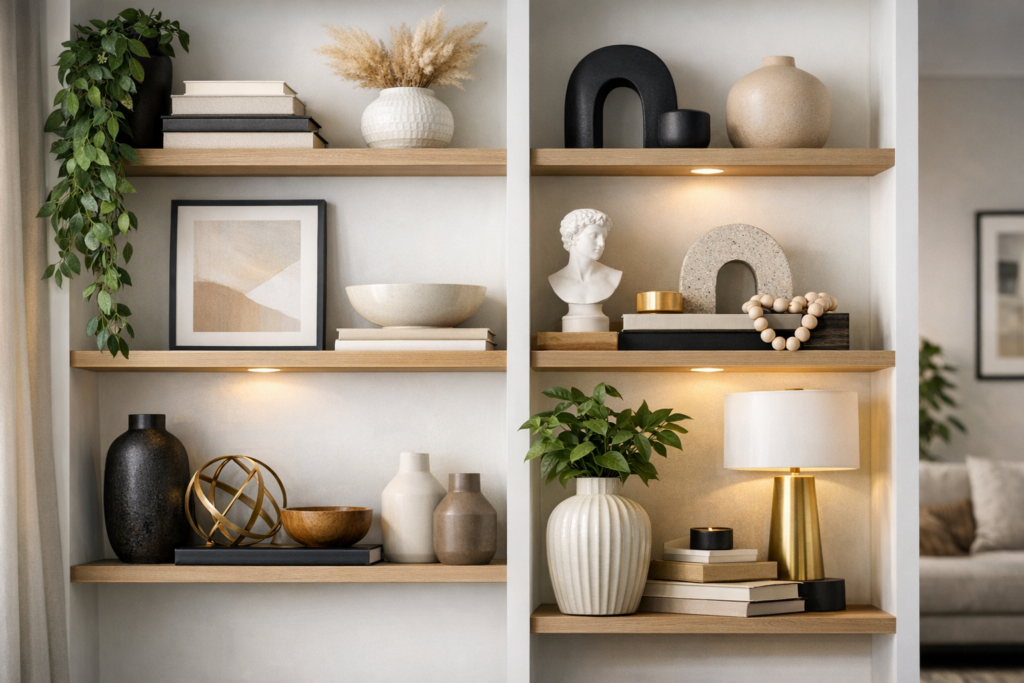
How to Style Shelves Like an Interior Designer
May 22, 2025Well-styled shelves can make a room feel finished, intentional, and effortlessly “put together.” The good news: you don’t need an interior design degree or a huge budget. With a few designer-style rules (and the right mix of functional and decorative pieces), you can turn any shelf into a focal point that looks curated rather than cluttered. Below is a step-by-step approach you can use for bookcases, floating shelves, built-ins, and even small bathroom or kitchen shelving.
Start Like a Designer: Plan Your Shelf Style Before You Decorate
Professional stylists rarely begin by randomly placing items. They start with a plan, a palette, and a purpose for the shelves. This approach keeps your shelves from looking chaotic and makes shopping for decor much easier.
1) Choose the shelf’s “job” (function + vibe)
Ask yourself what the shelves need to do in this space:
In a living room, shelves usually need to blend display and storage.
In a home office, they often prioritize function: books, files, baskets.
In a kitchen, they can be styled but must stay practical.
Designer tip: Decide on a ratio. A reliable starting point is 60% functional, 40% decorative for everyday spaces. For statement shelves (like built-ins around a fireplace), you can swing closer to 50/50.
2) Pick a tight color palette (it’s the secret to “curated”)
A consistent palette makes even inexpensive objects look elevated. Choose:
One neutral base (white, cream, black, warm wood, or gray).
One supporting neutral (brass, matte black, natural woven, or glass).
One accent color (sage, navy, terracotta, blush, or whatever suits your room).
If your room already has a strong color story (like a bold rug or artwork), pull your shelf accent color from that. This creates visual continuity.
3) Measure first, then shop with intention
Common shelf styling frustration: items that are too small. Measure shelf height and depth, then choose pieces that match the scale. As a rule, you want at least one or two larger anchor items per shelf section so the display doesn’t feel “sprinkled on.”
When you’re browsing online, look for product dimensions and compare them to your shelf measurements. LifeDeals makes this easier by offering lifestyle pieces across decor and storage, so you can build a cohesive look without hopping between ten stores.
Build the Foundation: The Designer Formula for Shelf Styling
Designers rely on repeatable structures. You can use the same “formula” on any shelf, then tweak it based on your taste.
The 5-piece shelf formula (simple and reliable)
For a typical shelf section, aim for five elements. Not every shelf needs all five, but this framework keeps you balanced.
1) Anchor piece: a tall vase, framed art, a sculptural object, or a large plant.
2) Stack: books (horizontal), magazines, or decorative boxes.
3) Organic element: greenery, dried stems, wood, stone, or woven texture.
4) Personal detail: a photo, travel object, ceramic you love, or a small collectible.
5) Negative space: intentional breathing room so the shelf looks high-end, not packed.
Practical note: If you’re styling open shelves in high-traffic areas (like kitchens), choose a few pieces that are easy to wipe clean and not overly delicate.
Work in “triangles” for instant polish
Interior designers often group objects so the eye moves in a triangular path: one tall item, one medium, one small. This is why “three objects together” usually looks better than two. It creates rhythm and reduces the feeling that items are randomly placed.
Try a tall vase beside a medium frame and a small candle holder. Or a small plant next to a medium bowl and a tall stack of books.
Mix materials to avoid a flat, showroom look
Great shelves have contrast. If everything is glossy ceramic, it can feel cold. If everything is rustic wood, it can feel heavy. Aim for a mix:
- Smooth: glass, ceramic, polished stone
- Textured: woven baskets, linen boxes, rattan trays
- Metal: brass accents, matte black frames
- Natural: wood tones, plants, dried botanicals
Comparison to guide your choices: Shiny objects reflect light and feel modern; textured objects soften and feel cozy. If your room already has a lot of sleek finishes (like modern furniture), add more texture on the shelves. If your room is already very cozy and layered, add a few sleek pieces for balance.
Use books the designer way (not just upright rows)
Books can look decorative even if you don’t have a massive library. Use them strategically:
- Vertical + horizontal mix: stand some up, stack others flat.
- Create platforms: a horizontal stack can elevate a small object (like a candle or mini vase).
- Color approach: choose neutral spines for a calm look, or group by color for a bolder statement.
Practical note: If you rent and don’t want to invest in pricey hardcovers, check thrift stores for large art books. They add scale and instantly look “designer.”
Style by Shelf Type: Built-ins, Floating Shelves, and Small Spaces
Not all shelves behave the same. Depth, height, and location affect what looks best and what stays practical.
Built-in bookcases: go symmetrical, then add a twist
Built-ins often look best with a slightly more structured layout. Start with a loose symmetry (similar visual weight on both sides), then add one or two surprises so it doesn’t feel like a catalog display.
Try this approach:
- Place two larger anchor pieces on opposite sides (for balance).
- Repeat one material (like brass or black frames) across shelves for continuity.
- Add one statement moment: a bold art piece leaning on a shelf, or a sculptural vase.
Comparison: Symmetry feels classic and calming; asymmetry feels modern and creative. Built-ins can handle a more classic approach because they’re architectural features and already draw attention.
Floating shelves: keep it lighter and more intentional
Floating shelves typically have less depth, so oversized decor can look cramped. They also read as “on display,” so clutter stands out fast. Use fewer objects with more breathing room.
- Use one leaning frame or art print as the anchor.
- Add a small stack of books or a lidded box for structure.
- Include one organic element (small plant or vase with stems).
Practical note for renters: If you can’t drill, consider freestanding shelving units or leaning ladder shelves. They create the same vertical display effect with less commitment.
Small shelves (bathroom, entryway, tight corners): function first, then finish
For small shelves, the key is choosing pieces that look good and solve a problem.
- Bathroom: a small tray to corral skincare, a lidded container for cotton pads, a plant for freshness.
- Entryway: a catchall bowl for keys, a small basket for sunglasses, a framed photo.
- Kitchen: matching canisters, a cutting board leaned as decor, a small plant or vase.
LifeDeals is a helpful place to browse coordinated storage-and-style pieces, especially when you want your everyday essentials to look intentional instead of messy.
Common Shelf Styling Mistakes (and Exactly How to Fix Them)
If your shelves feel “off,” it’s usually one of these issues. The fixes are simple once you know what to look for.
Mistake 1: Everything is the same size
If every object is small, your shelves will look scattered. Add one taller piece and one wider piece to create structure.
Fix: Choose a tall vase or plant for height, and a wide tray or box for grounding.
Mistake 2: Too many tiny decor items
Lots of small objects can read like clutter. Designers group small items on a tray or in a bowl so they look like one intentional “moment.”
Fix: Corral small items using a decorative tray, bowl, or lidded box. This is also easier to clean and rearrange.
Mistake 3: No negative space
Leaving some open space is what makes shelves look expensive. It gives your favorite pieces room to stand out.
Fix: Remove 20% of what’s on the shelves. If you’re unsure, start by taking out duplicates (three small vases, multiple figurines) and keep the strongest one.
Mistake 4: The shelf doesn’t relate to the room
Shelves can look disconnected if the colors and materials don’t echo anything else in the space.
Fix: Repeat two elements from the room on your shelf: a color from the rug, a wood tone from furniture, a metal finish from lighting, or a texture from pillows.
Designer-Approved Finishing Touches That Make Shelves Look Expensive
These are the details that elevate shelves from “decorated” to “designed.”
Layering: place items in front of and behind each other
Instead of lining items up in a single row, layer them:
- Lean a frame behind a small vase.
- Place a candle in front of a stack of books.
- Add a small object partially overlapping a tray.
Layering creates depth, which reads as high-end.
Add something living (or convincingly natural)
Plants and organic elements soften hard lines and bring warmth. If you struggle with plant care, choose low-maintenance options (like pothos) or high-quality faux stems.
Comparison: Real plants add movement and air-purifying benefits; faux plants offer consistent shape and zero maintenance. Either works if it suits your lifestyle.
Use warm lighting to create mood
If your shelves are near an outlet, a small lamp or subtle LED light can make them feel intentional at night. Warm-toned bulbs (around 2700K) flatter decor and feel cozy.
Rotate seasonally instead of buying more
Designers often “shop the house.” Swap a vase from your dining area onto your shelves, or rotate art prints. In fall, add warmer tones and textured pieces. In spring, lighten the palette and bring in fresh greenery.
If you do want to refresh your look, browse LifeDeals for versatile staples (like neutral vases, trays, and baskets) that work year-round and make seasonal swaps easier.
FAQ: Styling Shelves Like an Interior Designer
How many items should be on each shelf?
It depends on shelf length and depth, but a good guideline is 3 to 7 items per shelf section, grouped into 1 to 3 clusters. Prioritize a few larger pieces over many small ones, and leave visible negative space.
Should shelves match the room exactly?
They should relate to the room, not copy it perfectly. Repeat two or three elements (a color, metal finish, wood tone, or texture) so the shelves feel connected, then add one contrasting element for interest.
What’s the easiest way to make shelves look less cluttered?
Use trays, bowls, or lidded boxes to corral small objects, and remove about 20% of what’s currently displayed. Clutter usually comes from too many small items and not enough breathing room.
How do I style shelves if I have kids or pets?
Place breakables higher, use sturdy baskets or boxes for lower shelves, and choose heavier objects that won’t tip easily. Prioritize washable materials and keep one “pretty” shelf higher up for delicate pieces.
Conclusion: A Shelf Styling Routine You Can Reuse Anywhere
Styling shelves like an interior designer comes down to a repeatable approach: pick a palette, anchor each shelf with a few larger pieces, build clusters with varied height and texture, and protect your negative space. Once you get the hang of it, you can refresh your shelves in minutes by rotating a few objects or swapping in a new accent color.
If you’re ready to pull your look together, explore LifeDeals online for decor and storage pieces that mix beautifully across styles. A couple of well-chosen staples can make your shelves feel polished, personal, and done.