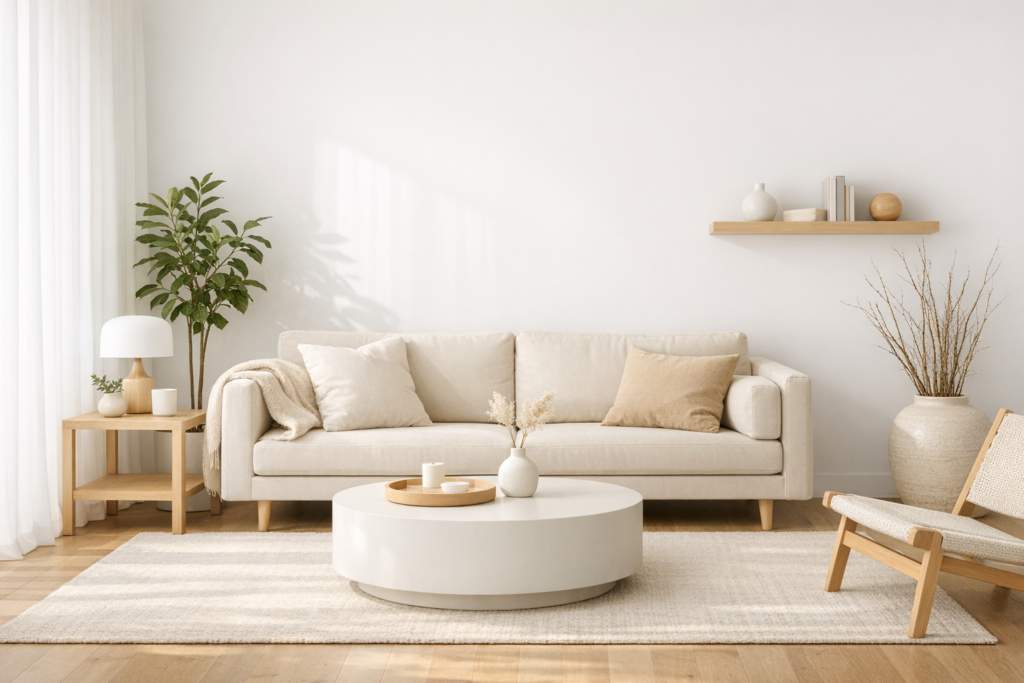
Minimalist Decor Ideas for a Calm Living Space
May 8, 2025Minimalist decor isn’t about living with nothing. It’s about living with what works: fewer distractions, more breathing room, and a home that supports your routine instead of competing for your attention. Whether you’re furnishing a new place or calming down a space that feels “busy,” the ideas below focus on practical choices that look intentional and feel easy to maintain.
Start With a Calm Foundation: Light, Space, and a Simple Palette
A minimalist home feels calm because the background stays consistent. Before buying anything new, make the biggest-impact decisions: color, lighting, and visual “noise.”
Choose a restrained color palette (and stick to it)
Minimalist spaces often use neutrals because they’re forgiving and help a room feel cohesive. You don’t need to go all-white; you just need fewer competing tones.
A reliable palette formula: one main neutral, one secondary neutral, and one accent color.
Examples that work in most homes:
- Warm minimal: creamy white + beige + matte black accents
- Cool minimal: soft gray + crisp white + brushed steel accents
- Organic minimal: off-white + sand + muted sage or terracotta
Keep the accent color subtle and repeat it in small ways (a throw pillow cover, a vase, a piece of wall art). This creates rhythm without clutter.
Use lighting to reduce stress (not just brighten rooms)
Lighting is a major mood-setter. A minimalist room with harsh overhead light can still feel tense. Aim for layered lighting that supports different moments of the day.
Practical approach:
- Ambient: ceiling light or a central fixture (use a warm bulb around 2700K–3000K)
- Task: desk lamp, reading lamp, under-cabinet light
- Accent: a small table lamp or wall sconce for evening softness
Comparison: A single bright overhead fixture is efficient, but it flattens the room and can feel clinical. Two or three smaller light sources create depth and a calmer atmosphere—especially in living rooms and bedrooms.
Let negative space do the decorating
Minimalism looks best when the layout has room to breathe. Instead of filling every corner, deliberately leave some surfaces open. Empty space isn’t “unfinished”—it’s what makes your favorite pieces stand out.
Try this quick test: if you can’t wipe a surface in one easy motion, it’s likely overloaded.
Minimalist Furniture That Still Feels Warm and Livable
Minimalist furniture shouldn’t feel stiff. The goal is comfort with clean lines, durable materials, and shapes that don’t visually overwhelm the room.
Invest in fewer, better anchor pieces
Anchor pieces are the large items your room revolves around: sofa, bed frame, dining table, media console. In a minimalist space, these should feel timeless.
What to prioritize:
- Neutral upholstery in performance fabric (easier to clean, less precious)
- Simple silhouettes (straight arms, slim legs, low-profile frames)
- Closed or semi-closed storage where possible (reduces visible clutter)
Comparison: A trendy, highly detailed sofa might look exciting, but it often limits what you can pair with it later. A clean-lined neutral sofa adapts for years—swap the throw, pillows, or rug to refresh the look without replacing the biggest item in the room.
Choose multi-functional pieces (without turning your home into a gadget show)
Minimalism loves function, but not every “multi-use” item is worth it. Aim for pieces that quietly solve daily problems.
- Storage ottoman: seating plus hidden storage for throws or games
- Bed with drawers: ideal for small closets or apartments
- Nesting tables: flexible surface area without permanent bulk
- Entry bench with shoe storage: reduces hallway chaos
Best practice: pick one multi-functional hero per room. Too many transformable items can make a space feel temporary.
Keep furniture off the floor (a little)
Pieces with legs—sofas, consoles, nightstands—create visible floor area, which makes rooms feel lighter and easier to clean. Even a few inches of clearance helps.
Declutter by Category: The Minimalist Method That Actually Sticks
Minimalist decor works only when the “stuff” has a system. If you simply hide clutter in closets, stress returns the moment you need something.
Use the “one zone, one purpose” rule
Each area of your home should have a clear job.
- Entryway: keys, shoes, outerwear
- Living room: relaxing and entertaining
- Kitchen counter: prepping food (not storing mail)
- Bedroom: sleep and getting ready
When an item doesn’t match the zone’s purpose, it either needs a new home or it needs to go.
Create hidden storage for high-frequency clutter
The most stressful clutter is the daily kind: chargers, remotes, mail, dog accessories, hair tools. Minimalist homes don’t magically lack these items—they store them well.
Storage solutions that look clean:
- Lidded baskets (great for blankets, toys, cables)
- Drawer organizers (so drawers don’t become “junk zones”)
- Wall hooks (keeps items off surfaces)
- Cable management boxes (instantly tidies a media area)
If you’re building your storage toolkit, browse quality everyday organizers online—LifeDeals often has practical home essentials that make minimalism easier to maintain, not just nice to look at.
Declutter with “replace, not add” thinking
Minimalist decor doesn’t mean you never buy anything new. It means you avoid accumulating duplicates and random extras.
Try this rule for non-consumables: if a new item enters, a similar item leaves.
Example: If you want a new throw blanket that better matches your palette, donate the old one rather than stacking both on the sofa.
Minimalist Decor That Feels Personal (Not Sterile)
A calm home still needs warmth and identity. The difference is that your personality shows through fewer, more intentional pieces.
Use texture instead of more color
In minimalist rooms, texture does the heavy lifting: it adds depth without visual chaos.
- Linen or cotton curtains
- Wool or flatweave rugs
- Wood accents (oak, walnut, bamboo)
- Matte ceramics or stoneware
Comparison: A room with three bold colors can feel energetic but busy. A room with two neutrals plus layered textures feels quiet, expensive, and cozy.
Follow the “one statement per sightline” guideline
Minimalist styling becomes cluttered when every surface competes for attention. Instead, make one item the focal point in any direction you look.
Examples:
- Over the sofa: one large art print instead of a gallery of tiny frames
- On the coffee table: one sculptural vase instead of multiple small trinkets
- In the bedroom: one textured throw and two matching bedside lamps
Style surfaces with the “3-object cap”
If you love styling shelves and consoles, a simple cap keeps it intentional.
Formula: a vertical object, a rounded object, and something natural.
- Vertical: a small framed print or a slim lamp
- Rounded: a bowl, candle, or ceramic vase
- Natural: a plant, branch in a vase, or a wooden object
This creates balance without adding clutter. For a cohesive look, repeat materials (for example, black metal + light wood) throughout the room.
Room-by-Room Minimalist Ideas You Can Apply Today
Minimalism isn’t one-size-fits-all. Here are quick wins for the spaces that tend to collect the most visual noise.
Living room: calm the “everyone hangs out here” chaos
- Rug sizing matters: choose a rug large enough for at least the front legs of your seating to sit on it. Small rugs make rooms look fragmented.
- Limit small decor: trade multiple tiny frames for one larger piece of wall art.
- Contain remotes and cables: use a lidded box or drawer tray inside the media console.
- Choose one soft layer: either a throw blanket or a couple of pillow covers in the same color family, not a mix of everything.
If you’re updating a living room on a budget, prioritize a clean-looking rug and a few matching storage pieces. Those two changes can make the biggest difference fast—and they’re easy to shop for online through LifeDeals.
Bedroom: build a minimalist sleep setup
- Nightstands: keep only essentials visible (lamp, book, water). Everything else goes in a drawer.
- Bedding: choose one solid duvet cover and add one textured layer (a knit throw or linen blanket).
- Closet overflow: store off-season items in under-bed bins to keep daily storage simple.
Comparison: Open shelving looks airy but often collects visual clutter in bedrooms. Closed nightstands and simple dressers usually create a calmer feel—especially if your bedroom is also your workspace.
Kitchen: reduce countertop clutter without losing convenience
- Clear the counter zone: keep only what you use daily (for many people: coffee maker, knife block, dish soap).
- Decant intentionally: matching containers for staples can look clean, but only do it for items you buy repeatedly (rice, pasta, coffee).
- Add a single tray: corral oils, salt, and pepper onto one tray so they feel like a set, not clutter.
Organizers and containers are where minimalist kitchens are won or lost. Look for durable, easy-clean options; LifeDeals carries lifestyle essentials that can help streamline the everyday without making your cabinets feel over-engineered.
Entryway: a minimalist home starts at the door
- Hooks at the right height: one set for adults, one lower for kids or bags.
- A “landing strip”: a small bowl or tray for keys and earbuds.
- Shoe control: one rack or bench; anything beyond that is stored elsewhere.
This is one of the highest-return areas to organize because it instantly reduces the feeling of mess the moment you walk in.
Buying Less, Buying Smarter: A Minimalist Shopping Checklist
Minimalist decor isn’t only an aesthetic—it’s a purchasing philosophy. Before you add to cart, run through a quick checklist.
The 6-question checklist
- Does it solve a real problem (comfort, storage, lighting, durability)?
- Will it still match my palette six months from now?
- Do I have a specific place to store it when not in use?
- Is it easy to clean and maintain?
- Would I buy it again at full price (or am I chasing a deal)?
- What will I remove or donate to keep my space balanced?
Quality vs. quantity: where to spend and where to save
Worth spending more: sofa, mattress, rug, lighting fixtures you use daily, blackout curtains if you’re sensitive to light.
Safe to save: baskets, organizers, pillow covers, simple wall frames, planters.
Shopping online makes it easier to compare sizes, materials, and reviews. If you want to build a minimalist home without overbuying, start with a short list, measure your space, and explore curated options on LifeDeals to find pieces that match both function and style.
FAQ: Minimalist Decor Ideas
How do I make my home minimalist if I have kids or pets?
Focus on containment, not perfection. Use lidded baskets, durable washable rugs, and closed storage for toys and pet supplies. Keep a simple routine: one quick reset daily (5–10 minutes) and a deeper reset weekly.
Do minimalist rooms have to be white and empty?
No. Minimalism is about edit and intention. You can use warm neutrals, muted color accents, and plenty of texture. The key is limiting competing patterns and keeping surfaces mostly clear.
What’s the easiest change that makes a room feel instantly calmer?
Clear one large surface completely (coffee table, kitchen counter, dresser) and then add back only one to three intentional items. The immediate visual relief is noticeable, and it sets the standard for the rest of the room.
How can I add personality without creating clutter?
Choose fewer, larger personal pieces: one framed print you love, one meaningful ceramic, one great-looking plant. Aim for one statement per sightline and repeat materials or colors for cohesion.
Conclusion: Minimalism That Supports Your Everyday
A calm living space comes from smart foundations, practical storage, and intentional decor—not from stripping your home of comfort. Start with a consistent palette, upgrade lighting, and use closed storage to contain daily clutter. Then add warmth through texture and a few meaningful statement pieces.
If you’re ready to simplify without sacrificing style, browse online for well-made organizers, soft furnishings, and timeless home essentials. LifeDeals can be a helpful starting point for finding minimalist-friendly pieces that look good, work hard, and keep your space feeling calm.