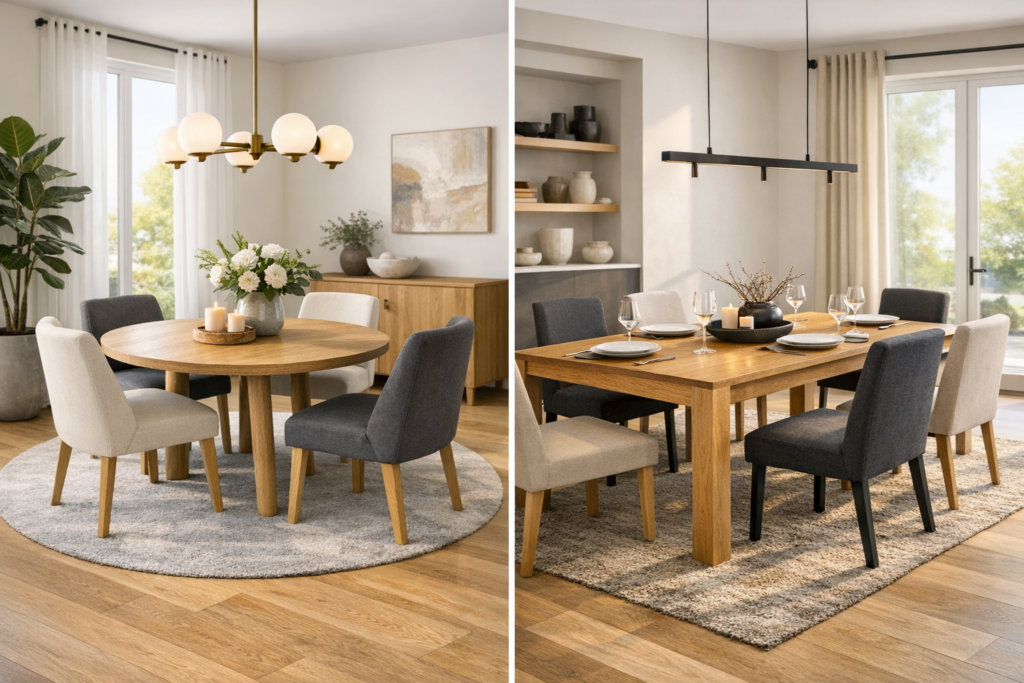
Round vs Rectangular Dining Tables: Which Should You Choose?
October 16, 2025Choosing a dining table sounds simple until you start measuring your room, thinking about how many people you host, and realizing your table will influence everything from traffic flow to the vibe of your meals. The biggest decision most people face is shape: round or rectangular. Both can look beautiful, both can be practical, and both can be the “wrong” pick if they don’t match your space and lifestyle.
This guide breaks down round vs rectangular dining tables with real-world comparisons, sizing tips, and design advice—so you can confidently choose the table that fits your home and the way you live. If you’re ready to browse, LifeDeals makes it easy to explore options online and narrow down styles by size, material, and budget.
How Table Shape Changes the Way a Room Works
Before comparing specific pros and cons, it helps to understand how dining table shape affects your everyday experience. Table shape influences movement around the room, how people interact during meals, and how well the table adapts to different occasions.
Traffic flow and walking space
In most homes, the dining area is also a pathway to the kitchen, living room, patio, or hallway. Shape matters because corners and edges change how easily you can pass by.
Round tables generally feel easier to walk around because they have no corners. If your dining area sits in a tight walkway or a smaller open-plan space, a round table can reduce the “bumping into corners” problem.
Rectangular tables can work beautifully in long or open areas, but they require more attention to clearance—especially near corners, where chair backs and table edges can become pinch points.
Conversation and connection
If you love dinners that turn into long chats, shape changes who can easily see and talk to whom.
Round tables naturally support conversation because everyone faces toward the center, and no one is stuck at a far end. They’re a classic choice for families that eat together often and for hosts who want a more intimate feel.
Rectangular tables work well for larger groups, but people at opposite ends may feel farther apart. The layout is still social, just a bit more structured.
Flexibility for daily living
Think beyond dinner: homework, laptop work, crafts, and quick breakfasts all happen at the dining table.
Rectangular tables typically provide more “useful” surface area for multitasking and spreading out. If you regularly use your dining table as a work zone, rectangular may be the easier fit.
Round tables feel cozy and inviting, but can offer less workable edge space for tasks that need straight lines (like laying out papers) or seating that needs defined personal zones.
Round Dining Tables: Strengths, Trade-Offs, and Best Fits
Round dining tables are having a moment—and for good reason. They soften a room, create an inviting gathering point, and make small spaces feel less boxed in. Still, they aren’t perfect for every home.
Why homeowners and renters love round tables
Round tables shine when you want a friendly, balanced layout.
Key advantages:
- No sharp corners: Great for tight spaces and families with young kids.
- Better “together” feeling: Everyone is equally positioned for conversation.
- Visual softness: A round silhouette breaks up hard lines in a room with lots of rectangular elements (cabinets, sofas, rugs).
- Often ideal for square rooms: A round table can make a square dining area feel intentional, not cramped.
Common drawbacks to know before you buy
Round tables can be less efficient in certain setups.
Potential downsides:
- Less seating per footprint (sometimes): A round table may seat fewer people than a rectangular table that takes up similar floor space.
- Large rounds can feel too wide: Once you get into larger diameters, passing dishes across the center can be awkward.
- Limited layout options: Round tables don’t tuck against a wall as naturally, which can matter in small apartments.
Best rooms and lifestyles for round tables
Choose a round dining table if you relate to several of these:
- You have a small dining nook or a square dining area.
- You host small-to-medium gatherings and want everyone in one conversation circle.
- You prefer a softer, more casual look.
- You have kids and want fewer sharp corners in high-traffic zones.
Round table sizing tips (practical and realistic)
Use these as general guidelines; chair size and table base design can change capacity.
- 36–44 inch diameter: Usually seats 2–4 comfortably.
- 45–54 inch diameter: Usually seats 4–6 comfortably.
- 55–72 inch diameter: Usually seats 6–8, but make sure there’s enough room to reach the center and enough clearance around the table.
If your round table has a pedestal base, you often gain extra knee room and easier seating compared to a table with four legs.
Rectangular Dining Tables: Strengths, Trade-Offs, and Best Fits
Rectangular dining tables are the go-to for many homes because they’re efficient, familiar, and easy to place. They also tend to scale well for bigger households and frequent hosting.
Why rectangular tables are a classic
Rectangular tables fit many room shapes, especially long or open-plan spaces.
Key advantages:
- More usable surface area: Great for meals, work, projects, and serving spreads.
- Seats more people more easily: Adding chairs on the long sides is straightforward.
- Easier to position: Can be centered, aligned with a rug, or even placed closer to a wall if needed.
- Often better for formal dining: The shape naturally creates “head” positions and a more traditional layout.
What to watch out for
Rectangular tables do require careful planning in smaller spaces.
Potential downsides:
- Corners can feel tight: Especially in narrow rooms or walkways.
- Conversation can split: Larger rectangles may feel like two separate side conversations rather than one group.
- Leg placement matters: Some designs have legs that interfere with chairs at the corners, limiting comfortable seating.
Best rooms and lifestyles for rectangular tables
A rectangular table tends to be your best bet if:
- Your dining space is long and narrow.
- You host often or have a larger household.
- You like buffet-style serving, holiday spreads, or tablescapes.
- Your dining table doubles as a desk or activity surface most days.
Rectangular table sizing tips (with everyday comfort in mind)
These are common starting points for comfortable seating:
- 48–60 inches long: Often seats 4–6 depending on chair width.
- 72 inches long: Often seats 6 comfortably.
- 84–96 inches long: Often seats 8, sometimes more with slim chairs.
As a comfort rule, plan about 24 inches of table edge per person for everyday meals (more if you prefer roomy seating). Also consider the table width: around 36–40 inches is common for easy reaching and serving; wider can feel luxurious but may be harder to pass food across.
Round vs Rectangular: Side-by-Side Comparison That Actually Helps
If you’re torn, compare these factors based on your home—not just what looks good in a showroom.
Space planning and clearances
Regardless of shape, you’ll want enough room to pull chairs out and walk behind them.
- Good minimum clearance: Aim for about 36 inches from table edge to wall or furniture for light traffic.
- More comfortable clearance: About 42–48 inches if people frequently pass behind seated diners.
Round tables often “feel” like they take up less space because the edges taper away from the corners of the room. Rectangular tables can be more space-efficient along walls and in long rooms.
Seating capacity for real life (not perfect symmetry)
In everyday use, seating depends on chair size, base type, and how much elbow room you like.
- Round: Great for equal seating and easy add-on chairs for a casual squeeze, but large groups can get tight fast.
- Rectangular: Easier to add two more seats along the long sides. Better for big gatherings and predictable place settings.
Extendable options
If you host occasionally, an extendable table can be the best of both worlds.
- Round-to-oval extension tables: A round table with a leaf becomes an oval, which is excellent for flexibility while keeping a softer shape.
- Rectangular extension tables: Typically offer the widest range of lengths and are great for holiday hosting.
If you’re shopping online, check product photos for leaf storage and extension mechanisms. LifeDeals product listings make it easier to compare these details so you’re not guessing.
Style and material considerations
Shape sets the tone, but material finishes the story.
- Round tables: Look especially good in pedestal bases, marble or faux marble tops, and lighter woods that keep the silhouette airy.
- Rectangular tables: Pair well with trestle bases, mixed materials (wood + metal), and statement legs that anchor a large room.
For renters, consider finishes that handle daily wear and are easy to clean. For homeowners, think about longevity and whether the table can evolve with your space.
Choosing the Right Table for Your Home: A Practical Checklist
If you want a confident decision without overthinking it, work through this checklist.
1) Measure your room the smart way
Don’t just measure the floor; measure the “usable dining zone.” Note doors that swing into the space, radiators, built-ins, or kitchen islands nearby. Mark the table footprint with painter’s tape so you can feel the difference between round and rectangular in real scale.
2) Decide your everyday seating first
Buy for your normal routine, not the once-a-year holiday dinner. If you usually seat 2–4, a compact round table can feel comfortable and intentional. If you’re regularly seating 5–6, a rectangular table may fit your daily life better.
3) Be honest about how you use the table
- If your dining table is also your home office: rectangular usually wins.
- If you want lingering conversations and a cozy vibe: round often wins.
- If you do puzzles, crafts, or big spreads: rectangular provides clearer “zones.”
4) Match the table to your chair plan
Some tables “seat six” only if you use slim chairs and don’t mind tight spacing. If you already own chairs, measure their width and consider armrests. A pedestal base can give you more flexibility with chairs, especially for round tables.
5) Consider delivery, assembly, and moving
Renters and frequent movers should think about weight and maneuverability. A solid wood rectangular table can be heavy and awkward through stairwells. A round table can be easier to pivot through tight corners, but a wide round top can still be bulky. When you browse LifeDeals, check dimensions and boxed shipping details so you’re prepared.
FAQ: Round vs Rectangular Dining Tables
1) Is a round dining table better for a small space?
Often, yes—especially in square rooms or tight dining nooks. A round table reduces sharp corners and can make walkways feel less cramped. Just ensure you still have enough clearance to pull chairs out comfortably.
2) Which shape seats more people: round or rectangular?
Rectangular tables typically seat more people for the same overall footprint because you can line up chairs along the long sides. Round tables can feel friendlier for conversation, but they may cap out sooner as the group grows.
3) Are round tables outdated or too casual?
Not at all. Round tables can look modern, classic, or formal depending on the material and base design. A round table with a substantial pedestal base and a refined finish can feel very elevated.
4) Should I choose an extendable table?
If you host occasionally or expect your needs to change, an extendable table is a smart investment. Round-to-oval extension tables are great for everyday coziness with extra capacity when needed; rectangular extensions are excellent for bigger gatherings and long dining rooms.
Conclusion: The Best Shape Is the One That Fits Your Life
Round dining tables excel at comfort, flow, and conversation—especially in smaller or square spaces. Rectangular dining tables offer surface area, scalability, and a natural fit for long rooms and larger households. When you choose based on room dimensions, daily routines, and seating needs, the “right” answer becomes obvious.
If you’re ready to narrow your options, explore dining tables online at LifeDeals and compare sizes, finishes, and extension styles from the comfort of home. A great dining table isn’t just furniture—it’s where life happens, and LifeDeals is here to help you find one that feels right. For more home upgrades and everyday lifestyle finds, keep browsing LifeDeals for practical pieces that match your space and budget.