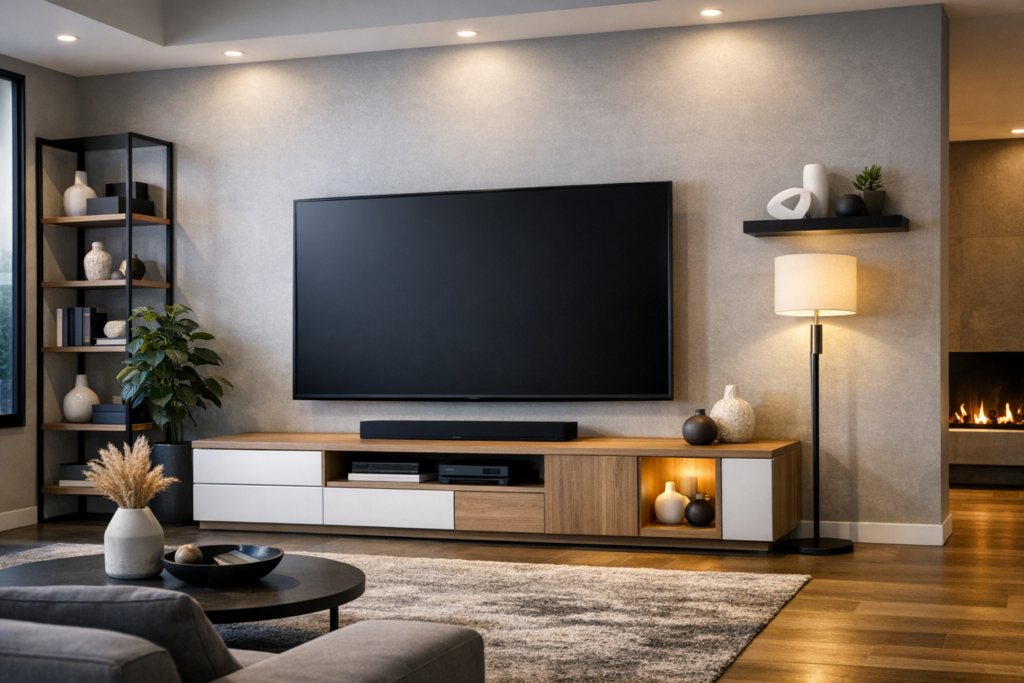
TV Stand Ideas for Modern Interiors
December 24, 2025A TV stand does more than hold a screen. In a modern interior, it anchors the room, controls visual clutter, and often doubles as storage for everything from streaming devices to board games. Whether you’re furnishing a compact rental or refining a long-term home, the right TV stand can make your space feel calmer, cleaner, and more intentional. Below are practical TV stand ideas for modern interiors, with clear comparisons so you can match style, size, and storage to how you actually live.
Choose the Right Size and Layout First (Before You Fall for a Style)
Modern rooms look best when proportions are spot-on. A stand that’s too small makes the TV feel top-heavy; too large can crowd the wall and dominate the space. Start with these sizing rules, then shop confidently.
Width: Aim Wider Than Your TV
As a simple guideline, choose a TV stand that’s at least 10–20 cm (4–8 inches) wider than your TV on each side. That extra width looks more balanced and gives you space for speakers or decor without feeling cramped.
Example: If you have a 55-inch TV (roughly 122 cm wide), a stand in the 150–180 cm range typically looks best in modern living rooms.
Height: Keep Viewing Comfortable
For seated viewing, the center of the TV should land close to eye level. In most living rooms, a TV stand height around 45–60 cm works well. If you have a low sofa or prefer a lounge-like look, a lower stand can feel more modern—just confirm it doesn’t force you to tilt your head downward too much.
Depth: Balance Slim Design With Real-World Devices
Many modern stands are sleek and shallow, but you still need room for cable boxes, game consoles, and soundbars. Check:
- Stand depth: 35–45 cm suits most setups.
- Back clearance: Leave room for cable bends and plugs.
- Ventilation: Enclosed cabinets should have airflow for consoles and receivers.
Wall-Mounted TV vs. TV on the Stand
Both can look modern. The right choice depends on flexibility and rental rules.
- Wall-mounted TV: Cleaner silhouette; easier to place a low profile stand below. Requires wall suitability and careful cable planning.
- TV on the stand: Great for renters; easier to reposition; fewer installation steps. Choose a sturdy top and consider anti-tip measures.
If you’re in a rental and want a polished look without drilling, focus on stands with integrated cable management and closed storage to keep things tidy.
Modern TV Stand Styles That Work in Real Homes
Modern interiors aren’t one-size-fits-all. You might love a warm minimalist space, a monochrome look, or something slightly industrial. Here are standout TV stand ideas that blend design with function.
1) Floating and Wall-Mounted Media Consoles
Floating stands instantly create a modern feel because they free up floor space and make the room look larger. They’re especially helpful in smaller apartments or open-plan spaces where you want visual lightness.
Best for: Minimalist rooms, small living areas, robotic vacuum owners (no legs to bump into), and anyone who wants a “gallery wall” vibe.
Considerations: You’ll need secure mounting into studs or proper wall anchors. Plan your cable routing—nothing ruins a floating look faster than dangling wires.
2) Low-Profile Minimalist Stands
A low, long console is a modern classic. It emphasizes horizontal lines, which helps a room feel wider and calmer. Look for clean fronts, push-to-open doors, and slim legs.
Best for: Scandinavian and Japandi interiors, modern condos, and spaces where you want decor to feel curated rather than crowded.
Pro tip: If your TV is large (65 inches and up), a longer stand prevents the screen from overpowering the furniture.
3) Slatted Wood and Textured Fronts
Slatted doors (vertical or horizontal) add depth without looking busy. They’re a smart way to introduce texture in modern rooms that lean neutral. Many slatted designs also allow remote signals to pass through while keeping devices hidden.
Best for: Warm modern, mid-century inspired, and organic contemporary interiors.
Style pairing: Combine with matte black hardware, a ceramic vase, and a soft rug for a balanced, elevated look.
4) Glass and Metal for a Sleek Contemporary Look
Glass shelving with metal frames feels light and architectural. It can be striking in modern spaces, especially with monochrome palettes and polished finishes.
Best for: Contemporary apartments, industrial-modern rooms, and smaller spaces where bulky furniture feels heavy.
Trade-off: Glass shows fingerprints and dust more easily. If you love a pristine look but prefer low maintenance, consider tinted glass or mixed materials.
5) Built-In Look With Modular Units
If you love the custom built-in aesthetic without committing to renovation, modular TV stands and matching cabinets can deliver that “designed as a set” feel. You can expand storage as your needs change.
Best for: Families, collectors, and anyone who needs more than just a surface for a soundbar.
What to look for: Units that align cleanly, have consistent gaps, and include cable cutouts so everything looks intentional.
At LifeDeals, shoppers often gravitate toward modern consoles with closed storage and a warm wood finish because they hide clutter while keeping the room inviting. If you’re browsing online, filter by width, door style, and storage type first—then refine by color.
Storage and Cable Management: The Difference Between “Modern” and “Messy”
Modern interiors rely on clean lines. That means the best TV stand is the one that keeps daily-life chaos out of sight.
Closed Storage vs. Open Shelving
Both can work, but they solve different problems.
- Closed cabinets: Best for hiding routers, controllers, spare cords, and kids’ items. Creates a calmer look fast.
- Open shelving: Best for easy access to consoles and for styling books or decor. Works well if you’re disciplined about tidying.
- Hybrid designs: Often the most practical: closed doors on the sides, open center shelf for frequently used devices.
Smart Cable Management Features to Look For
When comparing options, small construction details matter:
- Rear cutouts: Let cables pass through without bending sharply.
- Cable channels: Keep wires grouped and guided downward.
- Ventilated backs: Helps prevent overheating in closed compartments.
- Power-strip space: A dedicated area prevents cords from getting crushed.
Soundbar-Friendly Setup
If you have a soundbar, confirm you have a clear plan for placement:
- On top of the stand: Most common. Make sure the TV feet don’t block the soundbar and the stand is deep enough.
- On an open shelf: Looks tidy, but confirm shelf height so the soundbar isn’t “boxed in.”
- Wall-mounted soundbar: Cleanest look; ideal when paired with a floating console.
Material and Finish Comparisons: What Works Best for Modern Interiors
Modern doesn’t have to mean cold. The right material choice can soften the room, improve durability, and make cleaning easier.
Engineered Wood (MDF/Particleboard) vs. Solid Wood
Engineered wood: Often more budget-friendly, smooth for painted finishes, and consistent in look. Great for glossy white, matte black, or seamless minimalist designs.
Solid wood: Typically more durable over time and brings natural character. Ideal for warm modern and mid-century styles, especially if you want visible grain.
Practical advice: If you’re a renter who moves often, a well-built engineered wood console can be easier to transport and less stressful to live with. If you’re furnishing a long-term home, solid wood can be a worthwhile investment.
Matte vs. Gloss Finishes
Matte: Hides fingerprints better, feels contemporary, and pairs nicely with textured decor. A top choice for busy households.
Gloss: Reflects light and can make small rooms feel bigger, but shows smudges and scratches more easily.
Light Wood, Dark Wood, or Black/White?
- Light wood: Bright, airy, and timeless in modern interiors. Great for small spaces and neutral palettes.
- Dark wood: Adds contrast and sophistication, especially with cream walls and warm lighting.
- Black: Bold and architectural. Looks sharp with metal accents and monochrome rooms.
- White: Clean and minimalist. Works well if you want the TV wall to feel unobtrusive.
If you’re unsure, light wood is often the safest modern option because it blends with many color schemes and keeps the room feeling open.
Room-by-Room TV Stand Ideas (Including Small Spaces)
The “best” modern TV stand depends on where it’s going and how the room functions day to day.
Small Apartments and Studios
Space-saving is the priority, but you still want it to look intentional.
- Choose a floating console to open up the floor visually.
- Look for sliding doors so you don’t need clearance for swing doors.
- Use vertical storage nearby (a tall shelf or cabinet) if you need more room for books and baskets.
Open-Plan Living Rooms
In open spaces, the TV area should feel like a defined zone rather than an afterthought.
- Go wider than you think so the console visually anchors the wall.
- Consider a modular “built-in” look with matching side cabinets.
- Add symmetry with lamps or decor on both ends for a more finished feel.
Bedrooms
Bedroom TV stands should be functional without adding visual noise.
- Prioritize closed storage to keep the room restful.
- Pick a lower height if you mostly watch from bed.
- Skip overly glossy finishes if you’re sensitive to reflections from lamps.
Family Homes
Durability and safety matter more when kids (and pets) are involved.
- Rounded corners help reduce bumps and scrapes.
- Stable bases and strong legs prevent wobble.
- Anti-tip hardware adds peace of mind, especially with tall or heavy TVs.
If you’re shopping online, LifeDeals makes it easy to compare widths, finishes, and storage layouts so you can choose what fits your room and your routine. It’s worth saving a few options and measuring your wall before you commit.
Styling Tips: Make Your TV Stand Look Designed, Not Decorated
Modern styling is about restraint. You don’t need much—just the right pieces in the right proportions.
Use the “Three-Item” Rule on Top
A simple formula: one vertical item, one horizontal item, and one organic element.
- Vertical: a table lamp or tall vase
- Horizontal: a small stack of books or a tray
- Organic: a plant, branch, or textured ceramic
Keep Decor Low If the TV Sits on the Stand
If the TV is on the console, avoid tall decor that competes with the screen. Low-profile objects look more modern and keep sightlines clean.
Hide the “Unpretty” Stuff
Controllers, remotes, chargers, and random cables are what make a room feel messy. Use:
- Small baskets inside cabinets
- Cable ties behind the unit
- A labeled organizer for adapters and spare cords
Add Lighting for a High-End Finish
Soft lighting instantly elevates a media wall. Consider a warm table lamp on one end of the console or subtle LED backlighting behind the TV for a modern glow that’s also easier on the eyes at night.
FAQ
What size TV stand do I need for a 55-inch or 65-inch TV?
For a modern, balanced look, choose a stand that’s wider than the TV by at least 20–40 cm (8–16 inches) overall. Many 55-inch TVs pair well with stands around 150–180 cm wide; 65-inch TVs often look best on 180–220 cm stands, depending on your wall width and room layout.
Are floating TV stands safe?
Yes, when properly installed into studs or using wall anchors rated for the load. The key is following the manufacturer’s mounting instructions and keeping heavier items (like receivers) in ventilated compartments designed to hold them.
Should I choose open shelves or closed cabinets for a modern look?
Closed cabinets usually read more “modern” because they hide clutter and keep the front clean. Open shelves can still look modern if you limit what’s visible and manage cables carefully. A hybrid design is often the best day-to-day choice.
How do I hide cables without opening the wall?
Use the stand’s rear cutouts, add adhesive cable channels down the back, and bundle cords with cable ties. If your TV is wall-mounted, a paintable surface-mounted raceway can conceal wires neatly while staying renter-friendly.
Conclusion
The best TV stand for a modern interior combines proportion, storage, and a finish that fits your space. Start with measurements, decide how much you want to hide, and then choose a style—floating, low-profile, slatted, or modular—that supports your daily routine. When you’re ready to compare options, explore LifeDeals online to find TV stands that match modern design with practical features like cable management and smart storage. A well-chosen console doesn’t just hold your TV—it makes the whole room feel more put together.