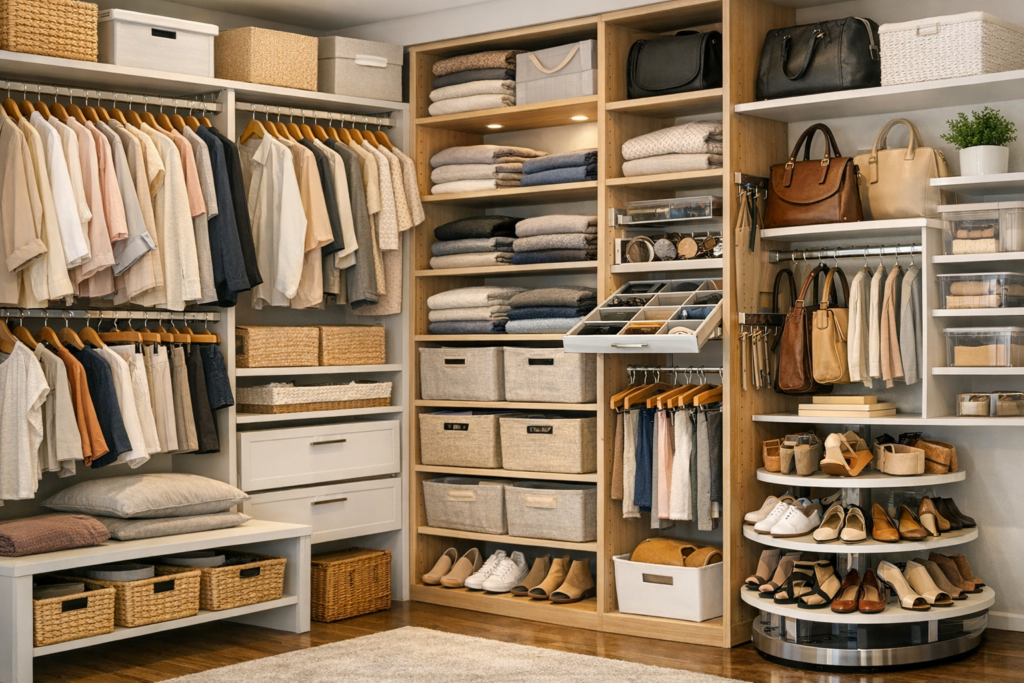
Wardrobe Organization Ideas That Save Space
December 2, 2025A cluttered closet makes mornings harder than they need to be. The good news: you don’t need a huge walk-in to have an organized wardrobe. With a few smart layout choices, the right storage tools, and simple habits, you can free up space, protect your clothing, and find what you need quickly. Below are wardrobe organization ideas that actually work in real homes and rentals, with comparisons so you can choose the best options for your space and budget.
Start With a Quick Closet “Reset” (The Step People Skip)
Before buying organizers, take 30–60 minutes to make sure your closet is storing the right items in the right way. This prevents the common problem of adding bins and dividers… only to end up with a nicer-looking mess.
1) Edit by category, not by “vibes”
Pull everything out by category: tops, jeans, dresses, workout wear, outerwear, shoes, accessories. Category sorting makes it obvious where you have too much and where you’re short on space.
Practical tip: If you’re overwhelmed, do it in two rounds. First round: anything damaged, uncomfortable, or never worn goes immediately. Second round: items you’re “not sure” about get a 30-day test (hang them at one end of the rod; if unworn in 30 days, consider donating).
2) Measure your actual closet dimensions
Even a small measurement check prevents wasted purchases. Note:
Closet rod length, height from rod to floor, top shelf height, and back-wall depth.
3) Choose a “prime zone” and a “back-up zone”
Your prime zone is eye level to waist level, front-and-center. Store daily staples there. Back-up zones include high shelves, floor corners, and the far ends of rods—ideal for off-season pieces and special-occasion items.
Maximize Hanging Space (Without Creating Wrinkles)
Hanging space is valuable, but it’s easy to waste. The goal is to hang smarter, not necessarily more.
Use matching slim hangers vs. standard plastic
Switching to slim hangers is one of the fastest ways to gain space. Here’s how they compare:
Slim velvet hangers: Great for slippery fabrics, take up less room, keep shoulders supported. Ideal for tops, blouses, and dresses.
Thick wooden hangers: Excellent for structure and heavy coats, but they can reduce rod capacity quickly. Use selectively for outerwear or suits.
Basic plastic hangers: Cheap and lightweight, but often bulky and inconsistent. They can also let silky items slide.
Recommendation: Use slim hangers for most garments and reserve sturdy wooden hangers for heavy pieces only.
Add a second hanging rod (best for rentals, too)
If you have a single rod with unused space below it, a second rod can nearly double capacity for shorter items like shirts and folded pants.
Best choices:
Telescoping tension rods (no drilling) for renters, or modular closet systems for homeowners who want a cleaner built-in look.
Space-saver note: Keep 2–3 inches of breathing room between hangers so clothes don’t compress and wrinkle.
Try cascading hooks and multi-tier hangers (use them strategically)
Cascading hooks let you hang multiple items vertically. They’re great for:
Tank tops, camisoles, lightweight scarves, or “outfit sets” you wear together.
Multi-tier hangers work well for pants and skirts, but they can make items harder to access. If you tend to forget what you own, prioritize visibility over maximum compression.
Short-on-rod-space alternatives
If your closet is narrow or you share it, consider these swaps:
Over-the-door garment hooks: Useful for tomorrow’s outfit, robes, and frequently worn jackets.
Wall-mounted hooks (if allowed): Perfect for bags, hats, and belts near the closet entrance.
Use Vertical Space: Shelves, Cubes, and Stackable Solutions
Most closets have underused vertical space. The trick is to avoid tall, unstable stacks that topple over.
Shelf dividers vs. storage bins: which is better?
Shelf dividers: Best for folded denim, sweaters, and handbags. They keep stacks from sliding and improve visibility. They’re faster for daily use because you can pull one item without lifting a whole pile.
Storage bins: Best for smaller items, seasonal accessories, or categories you don’t need daily. Choose bins with a front label area and an easy-grab handle.
Rule of thumb: Use dividers for “grab often” items; use bins for “grab sometimes” items.
Add stackable shelf risers
Shelf risers create a second level on an existing shelf—ideal for shoes, folded tees, or clutches. Compared with buying a whole shelving unit, risers are lower-cost and easy to reposition when your wardrobe changes.
Create a “drawer effect” with fabric cubes
If you don’t have built-in drawers, fabric cubes act like flexible drawers for socks, underwear, workout gear, and tees. They also fit neatly on closet shelves or inside cube organizers.
Pro tip: Sort cubes by category and keep a consistent order (left to right). Consistency is what makes a system effortless.
Small Closet, Big Results: Space-Saving Layout Ideas
When square footage is limited, layout matters more than having more containers.
Use a capsule-style front row
Keep 20–30 of your most-worn items at the front of the closet, seasonally appropriate and ready to go. Less-used items can live toward the sides or on higher shelves.
This approach reduces decision fatigue and prevents the “everything is jammed in and I still have nothing to wear” feeling.
Store shoes vertically (and protect them)
Shoes can eat your closet floor. Consider these options:
Shoe rack on the closet floor: Simple and accessible. Choose a narrow, tiered rack for small closets.
Clear shoe boxes: Great for keeping shoes dust-free and visible. They stack well, but require a shelf or stable surface.
Over-the-door shoe organizer: Best when floor space is tight. Works for flats and sandals; bulky sneakers can be a squeeze.
Care note: Let shoes air out before storing in closed boxes to avoid odor buildup.
Make the closet floor work for you
If you have even a small strip of floor space, use it intentionally:
Use a lidded hamper (prevents visual clutter), a slim rolling cart for accessories, or a low-profile bin for gym shoes and gear.
Organize Accessories So They Don’t Multiply Overnight
Accessories are small, which makes them easy to misplace and easy to overbuy. The best systems keep them visible and contained.
Belt and scarf organization: hooks vs. hangers
Ring hangers: Great for scarves and ties, easy to see everything at once.
Wall or door hooks: Better for belts and bags, especially if you want grab-and-go access.
Space-saving tip: Keep accessories near where you get dressed, not scattered across bedrooms and bathrooms.
Jewelry: prevent tangles and save time
Use a divided tray inside a drawer if you prefer a clean look, or a wall-mounted organizer if you want everything visible. If you’re short on space, a compact jewelry box with sections is often more efficient than multiple small dishes across the room.
Handbags: keep shape without hogging shelves
Stuff bags with soft items like scarves to maintain shape. Use shelf dividers to prevent slouching and collapsing. If your shelf height is limited, store clutches and small bags in a labeled bin.
Seasonal Rotation: The Simplest Way to “Find” Extra Space
If your closet is bursting year-round, seasonal rotation is the fastest fix. You don’t need to own less (though it helps); you need to store less in your prime zone.
What to rotate out
Off-season coats, heavy knits, boots, beachwear, and special-occasion outfits you won’t wear for months.
Best storage options (and when to use them)
Under-bed storage containers: Ideal for renters and small spaces. Choose low-profile containers with sturdy zippers or lids.
Vacuum-seal bags: Great for bulky items like puffer jackets, spare bedding, or thick sweaters. Not ideal for delicate fabrics that need airflow.
High-shelf labeled bins: Good for items you want protected but still accessible.
Labeling advice: Be specific (for example, “Winter scarves + beanies” instead of “Winter”). You’ll save time later.
Choose Products That Match Your Habits (Not Just Your Aesthetic)
The most beautiful organizing setup won’t last if it’s hard to maintain. When deciding what to buy, match the solution to how you actually live.
If you value speed in the morning
Prioritize open-front bins, shelf dividers, and a dedicated “workweek” section. Avoid storage that requires lifting stacks or unzipping multiple layers.
If you love a minimalist look
Go for matching hangers, neutral bins, and closed containers with clean labels. A cohesive look makes closets feel calmer and more spacious.
If you’re organizing a shared closet
Use clear boundaries: separate sides, separate hampers, and separate accessory zones. Identical containers in two colors or with name labels eliminate confusion quickly.
At LifeDeals, we see customers get the best results when they combine a few high-impact basics: slim hangers, shelf dividers, a shoe solution, and labeled bins. If you’re ready to upgrade your setup, browsing organizers online can help you compare sizes and styles before you commit—especially helpful for small closets and rentals.
Maintenance That Takes 5 Minutes (So It Stays Organized)
A good system should be easy to keep. Try this simple routine:
Weekly: Put away “in-between” items (half-worn jeans, hoodies). Return accessories to their zones.
Monthly: Do a quick scan for items you didn’t wear once. If they’re in good condition, donate or list them.
Seasonally: Rotate, wipe shelves, and re-evaluate what deserves prime-zone space.
Small habit, big payoff: Keep a donation bag or box in the closet. When you try something on and it’s a “no,” it goes straight in. This single habit prevents re-cluttering.
FAQ
What’s the fastest way to create more closet space without remodeling?
Swap to slim hangers, add a second tension rod (if you have vertical space), and move off-season items into labeled bins or under-bed storage. These three changes usually make the biggest difference quickly.
Are vacuum-seal bags safe for clothing?
They’re great for bulky items like puffer coats and spare bedding, but they’re not ideal for delicate fabrics or items that need structure (like tailored pieces). If you use them, store in a cool, dry place and avoid long-term compression for delicate knits.
How do I organize a closet if I don’t have drawers?
Use fabric cubes or bins to create a drawer-like system on shelves. Add dividers to keep folded stacks stable, and label each cube by category (socks, underwear, tees, gym wear) for quick access.
What’s the best shoe storage for a small apartment?
If floor space is tight, an over-the-door organizer works well for flats and sandals. If you want better protection, clear stackable shoe boxes on a shelf are a strong option. For everyday sneakers, a narrow tiered floor rack is usually the most convenient.
Conclusion
Wardrobe organization isn’t about perfection—it’s about making your space work for your routine. Start with a quick reset, optimize hanging and vertical storage, then keep accessories and shoes contained so clutter doesn’t creep back in. When you’re ready to upgrade, explore LifeDeals online for space-saving organizers that fit your closet size, style, and daily habits. A few smart changes now can make getting dressed feel simpler every single day.
Whether you’re outfitting a rental closet or refining a primary suite, LifeDeals makes it easy to compare practical storage options and build a setup you’ll actually maintain.